Friends of Donovan Balanta denounce racist police violence in Ciudad Bolívar, Bogotá
Seven police officers beat and tasered Donovan Balanta Paz, 34, in the Caracolí neighbourhood; he died en route to hospital. Relatives and neighbours denounce systematic racial profiling against Afro-Colombian population.
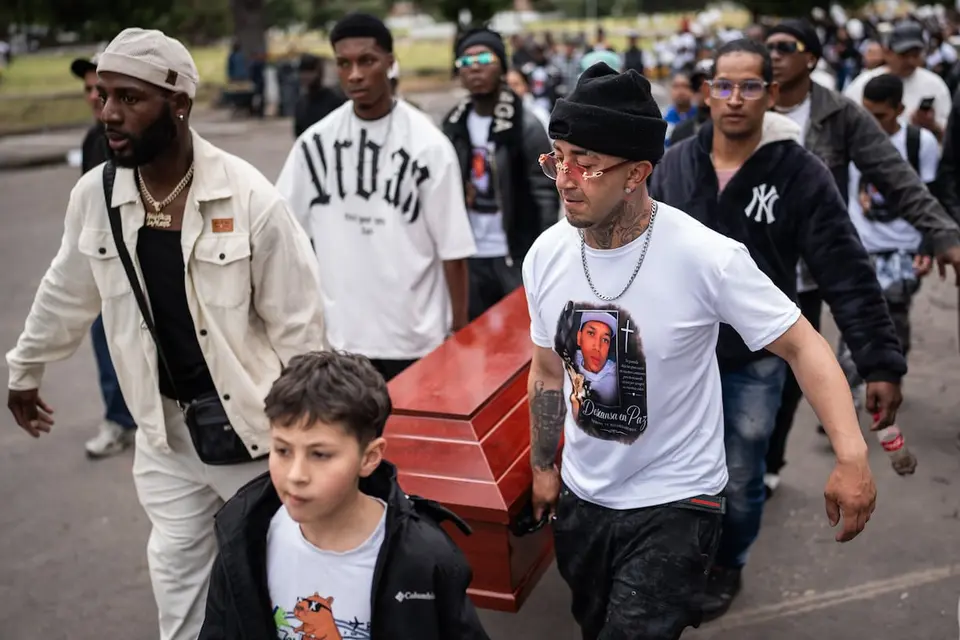
Death of Donovan Balanta sparks accusations of police racism in Bogotá
Seven police officers stopped, beat and discharged their tasers on Donovan Balanta Paz, 34 years old, on 20 September in the Caracolí neighbourhood, on the border between Bogotá and Soacha, within the Ciudad Bolívar district. He never returned home: the uniformed officers transported him to a hospital, where he was declared dead. This is documented by elpais.com, which gathered testimonies from family members, neighbours and social leaders.
Those who knew him describe him as a loyal man: the economic and emotional support of his family, always present for his friends and a reference point in the Caracolí neighbourhood community, an area with high concentration of Afro-Colombian population, mostly families displaced by violence from departments such as Chocó, Nariño and Cauca.
"If it hadn't been him, perhaps it would have been me"
According to Elisair Viveros, Balanta's brother-in-law, everything began in front of his own house. Donovan was spending time with several friends when two motorcycle police arrived and, Viveros recounts, told them something like "Black people are too rowdy". Tensions escalated, and one of the officers allegedly threatened to shoot him. Shortly afterwards, the police called for reinforcements by radio, claiming they were being attacked.
Security videos that came to light in the days following show the arrival of at least a dozen uniformed officers, including members of the Special Operations Group, assigned to combat organised crime. It was midday in a residential neighbourhood. The images record children in the street and women—among them Balanta's mother, an elderly lady—attempting to intervene whilst several police officers threw themselves at the man.
Donovan managed to run one block, but was intercepted. On a narrow, steep unpaved street, the seven police officers surrounded him, hit his head, removed one of his shoes and applied electric shocks whilst he screamed. Already immobilised, they put him in a patrol car. Viveros reports that the family received no information about his whereabouts and searched from police station to police station, until they were informed he had been transported to a hospital. When they arrived, doctors and other police officers told them he had been admitted with no vital signs.
Several neighbours also assure that during the intervention the police officers made racist insults against Balanta. "Bloody n-word", they shouted at him, according to his brother-in-law. Viveros fears reprisals when media attention fades, and states: "If it hadn't been him, perhaps it would have been me".
"Justice!", dozens chanted at the burial
The Thursday following his death, dozens of people accompanied Balanta's burial at El Apogeo cemetery with white flowers in hand. "What do we want?!", some shouted. "Justice!", others responded, among tears and afflicted faces. Amongst the murmurs could be heard: "What makes us most angry was the way they killed him".
For Yeison Martínez, a 28-year-old social leader and childhood friend of Balanta—whom they called "Piri"—the death is the most tragic expression of the structural racism suffered by the neighbourhood. He points out that, after the case, several people have approached him to tell him that other young people have died in similar circumstances. He adds that one of the police officers involved assaulted him himself weeks before.
Police suspend seven officers; mayor calls for investigation to be accelerated
The Wednesday following the incident, the Police announced that they suspended the seven officers involved from their posts whilst the investigation advances. The institution maintained that the intervention was legitimate, motivated by a fight between neighbours, that it provided all guarantees to Balanta and referred him to hospital alive.
For the family, that measure is insufficient. "We will not rest until we see them behind bars," affirmed Viveros. On Thursday, Bogotá's mayor, Carlos Fernando Galán, promised via X his support for the family and requested that the competent authorities "accelerate the investigation and get to the bottom of what happened".
Defender of Afro population: "Impunity is nearly 100%"
Ali Bantú, defender of Afro populations and leader of the legal collective Racial Justice, took on the case and called a sit-in the Friday before outside the headquarters of the General Prosecutor's Office. "The Police in Colombia enjoy an impunity that is nearly 100% when they commit this type of crime and in this case we do not want that to happen," Bantú declared to elpais.com. The lawyer requested to meet with the general prosecutor so that a commission could be created to address cases of police violence against Black people which, according to him, are filed away without consequences.
Bantú also recalled the case of Zamir Martínez Pacheco, 24 years old, who died in 2023 from a gunshot during a police procedure in the Brisas del Diamante neighbourhood, to which he had arrived displaced from Chocó. "The 20 police officers who killed Zamir remain unpunished," he affirmed.
A neighbourhood with accumulated wounds
The videos from 20 September, recorded from multiple angles and devices, were widely circulated and opened a debate about excessive use of police force and possible racial profiling. Caracolí residents assure that it is common for people of African descent in the area to be accused of some crime solely based on their skin colour.
Martínez described the conditions faced by displaced families that arrive in Ciudad Bolívar: recruitment of minors, renewed displacement when they resist working for criminal organisations and lack of opportunities. For him and for those who marched this Thursday with white flowers, the death of Donovan Balanta was neither a brawl nor a misunderstanding, as some official accounts initially suggested. "They did not kill him in a brawl nor out of confusion," his friends repeat.
Source: Google News CO — Crime