Digital fraud in Colombia: 36.6% of citizens were victims in the past year
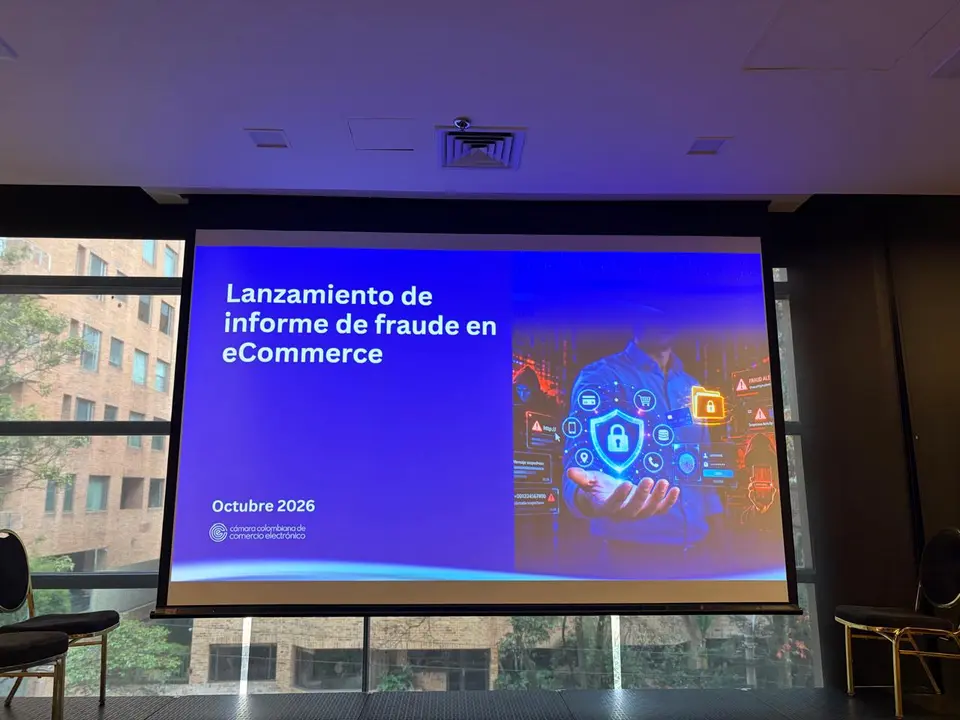
The CCCE published a report identifying the main types of fraud in Colombian e-commerce and its impact on consumer confidence.
Digital fraud erodes confidence in Colombian e-commerce
The Colombian Chamber of Electronic Commerce (CCCE) published a report on digital fraud that identifies the main types of crime in online shopping and warns about its effect on consumer confidence. According to mobiletime.la, the document brings together contributions from organisations specialised in payments, electronic commerce, digital identification and cybersecurity.
36.6% of Colombians claim to have been victims of fraud over the past twelve months. At the same time, 97.7% believe that this type of crime occurs with high frequency in the digital environment.
Carlos Güisa, manager of economic analysis at the CCCE, clarified that this second figure does not mean that nearly all Colombians have suffered fraud, but rather that there is widespread awareness of the risks. "Companies have to take their measures to protect consumers, but consumers also need to understand the risks that exist and take measures to protect themselves when they browse the internet," Güisa stated.
Most common types of fraud
The report identifies four predominant types of fraud: fake shops and platforms, identity fraud and account takeover, social engineering—deception through messages, calls, links or profiles with a trustworthy appearance—and payment fraud involving abuse of purchase processes.
These practices do not operate in isolation. They frequently combine throughout the same shopping experience to maximise the impact of the crime. Artificial intelligence amplifies this capacity: it facilitates the creation of more convincing messages, false audiovisual content and more sophisticated fraudulent pages. However, the report notes that the same technology can be used to detect suspicious patterns and assess risks.
Mistrust as a structural barrier
The impact extends beyond the economic losses from each transaction. According to figures from the ENTIC Colombia survey cited in the document, 21 million Colombians do not make online purchases. 60.7% of those who avoid digital channels cite concerns about privacy and the handling of their personal data. Additionally, 47.3% identify a lack of financial and digital education as a factor that increases their exposure to fraud.
For the CCCE, these results reflect the challenges facing the digital ecosystem in building confidence, especially as the discount season and year-end mass shopping period approaches, one of the highest-activity periods for e-commerce in the country.
Coordination with the Prosecutor's Office and the private ecosystem
Güisa reported that the CCCE has established approaches with the Prosecutor's Office, particularly with the areas of cybercrime, kidnapping and extortion, in order to define clear reporting protocols that reduce barriers to addressing these cases. "We are working on that so far. The idea is to be able to establish those channels and those protocols for how to report more easily and that this actually results in actions that help mitigate this phenomenon," he explained.
The goal is that, when fraudulent behaviour is detected, the authorities can act more quickly and do not depend on procedures that delay the response for months.
One of the outstanding challenges is coordination among the different players in the ecosystem. Payment companies, identification providers and public entities currently operate with fragmented information, limited to their own sphere. In contrast, groups dedicated to fraud work in an organised way and share tools, data and methods. "Fraudsters do work jointly, in an organised manner, they share information, they have Telegram groups, forums, where they share technologies and best practices for defrauding," Güisa noted.
To counter this asymmetry, the CCCE participates in inter-institutional forums with private companies, industry groups and public entities, where experiences and best practices are exchanged, and prevention campaigns are promoted with coordinated messages to consumers.
Next stages of the process
The CCCE clarified that publication of the report is the first step of a process with several phases. The initial phase focused on identifying types of fraud and building a specific taxonomy for e-commerce, with the purpose of establishing a common framework for understanding the problem.
The next phase will aim to quantify the phenomenon. To do this, it seeks to have participating organisations provide data that allows them to measure the frequency and scope of crimes, as well as understand how they manifest themselves at different stages of a digital purchase. "Collaboration also requires showing and making public that data on how the phenomenon is materialising," Güisa indicated.
In a subsequent phase, the entity plans to promote joint working tables to develop roadmaps with concrete actions for each player in the ecosystem: shops, financial entities, technology providers and authorities.
Source: Google News CO — Crime