Murder in Czechia without statute of limitations? Chamber to decide on key amendment
The Senate approved almost unanimously a bill on the absolute non-prescription of murders. The Chamber will consider it no earlier than November or December 2026.
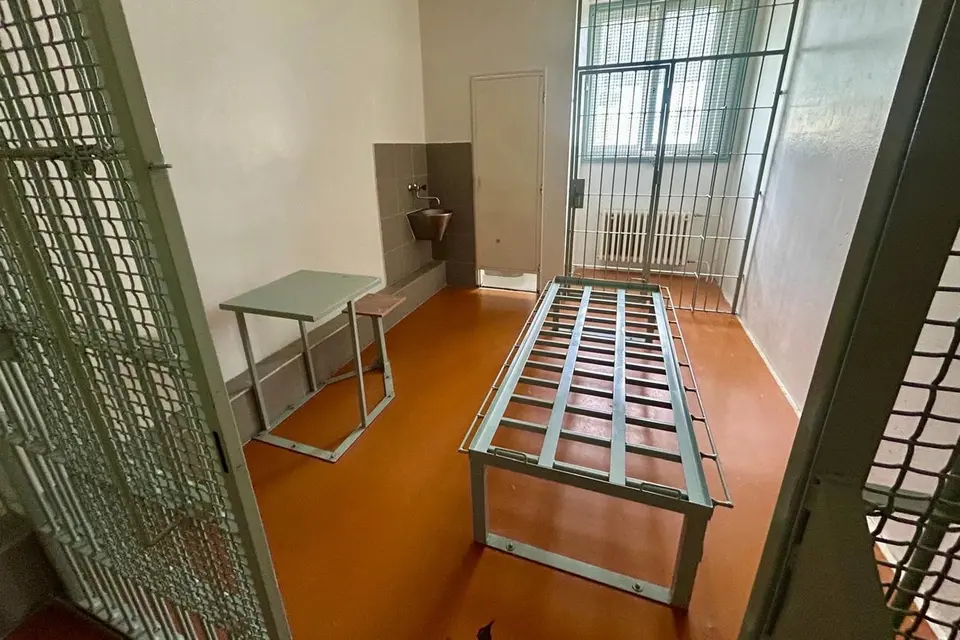
The Kraslice case from 1998 gave rise to the debate on murder statute of limitations
On Sunday, 4 October 1998, Jutta Majerová and her daughter Krista disappeared from Kraslice in the Karlovy Vary region. The women set out to the forest to collect pine cones. Their bodies were found only on 2 November — in a mine shaft outside the town. The murderer or murderers have never been caught to this day.
"Those beasts who murdered my aunt and cousin are apparently still walking around Kraslice among the people," the relative of the victims, Roman Jaworski, told denik.cz. "Neighbours from Kraslice, do not forget," he added. According to his words, the family has suspicions about two specific people who work in one of the state institutions.
Jaworski annually recalls the fate of his relatives. At the same time, he fears one thing: that the case will be prescribed and the perpetrators will escape justice. "Let them rest in peace, their souls will have no peace until the murderer is found. It is terrible, poor things," one of the neighbours said.
Fifteen to twenty unsolved murders each year
The case of the Majer family is not an exception in Czechia. According to data cited by denik.cz, between 15 and 20 murders remain unsolved each year. Their perpetrators may escape punishment permanently after a thirty-year statute of limitations expires. It is precisely this fact that stands behind the Senate initiative, which is now heading to the Chamber of Deputies.
The Senate proposal to amend the law on the absolute non-prescription of murders was delivered to the Chamber on 1 October 2026. The upper chamber approved it on 30 September — 60 out of 61 senators present voted in favour. The main authors of the proposal are Senate Vice-Chairwoman Jitka Seitlová (KDU-ČSL) and Senator Jan Pirk (TOP 09).
Government position by 1 November, first reading in autumn
The Cabinet received the proposal on 2 October and has a statutory thirty-day period to express its position — this expires on 1 November 2026. If the government does not express itself by this date, a positive stance applies under law. After the position is submitted or the deadline expires, the amendment will be included in the first reading. The specific date depends on the schedule of Chamber sessions; according to denik.cz, the first reading is expected no earlier than November or December 2026.
The planned effective date of the law is set for 1 July 2027. Because of the prohibition on retroactivity, the amendment would apply exclusively to murders committed after the law takes effect — old cases would thus continue to be subject to prescription.
Czechia would approach the European standard
Absolute non-prescription of murders is widespread in Europe. Perpetrators cannot escape punishment regardless of elapsed time in nine European countries. By accepting it, Czechia would approach this standard. Currently, following an amendment from January 2026, a thirty-year statute of limitations applies — the same as in Italy, Spain or Switzerland. Neighbouring Poland has a forty-year period.
Bar Association and some legal professionals oppose it
The Senate proposal does not have the support of everyone. The Czech Bar Association (ČAK) officially distanced itself from it: according to it, it is such a fundamental intervention in criminal law that it should not arise as a parliamentary initiative without prior deep expert debate. Advocates also point out that another amendment — extending the period from 20 to 30 years — came into force only in January 2026.
Senator, lawyer and former Justice Minister Daniela Kovářová argues about the weakening of evidence and the rights of the accused. "If a person were accused of murder, for example, 35 or 50 years later, the value of both memory and material evidence weakens extremely and the accused would no longer be able to secure adequate evidence in their defence, which contradicts the principles of fair trial," she emphasised. According to her, prescription has a firm place in the legal system in order to preserve legal certainty.
In broader professional circles, according to denik.cz's findings, there are concerns about violations of legal certainty, especially in very old cases. Most judges do not publicly comment on the political debate.
Retired judge: forensic science changes the equation
Retired criminal judge Kamil Kydalka expressed the opposite view to denik.cz. He acknowledged that after forty years, memory and evidence-gathering possibilities will necessarily be weakened and the perpetrator may already be dead — yet he sees a fundamental argument for non-prescription in modern forensic science.
"Forensic techniques have advanced to such an extent that it is possible to gather evidence that was previously unthinkable. If someone today can lift fingerprints from the neck of a strangled victim, it will be hard to argue against such evidence in court," Kydalka said. He added that if he were a legislator, he would probably speak in favour of non-prescription.
He also pointed to the value of court proceedings for the bereaved, even if the murderer were not caught: "The court could in these cases put a clear full stop after the tragedy. That would certainly have significant value for the bereaved and relatives of the victim."
Modern forensic methods generally make it possible to identify the perpetrator even after decades from microscopic DNA traces that were previously impossible to detect — this argument is repeatedly emphasised by supporters of the amendment in parliamentary debate.
The Chamber will decide
The majority of government and opposition politicians support current efforts to abolish the statute of limitations for intentional murder. The final word will rest with the Chamber of Deputies. For families such as that of Jaworski from Kraslice, who have been waiting for justice for 27 years, it is a decision with direct impact — although, because of the prohibition on retroactivity, the law will not apply to them.
Source: Google News CZ — Crime (cs)