Trial over murdered Fabian: verdict expected in Rostock
On Tuesday, the verdict will be delivered in the case of eight-year-old Fabian from Güstrow, who was killed in 2025. The prosecution is calling for life imprisonment for the 30-year-old defendant; her defence team has requested acquittal.
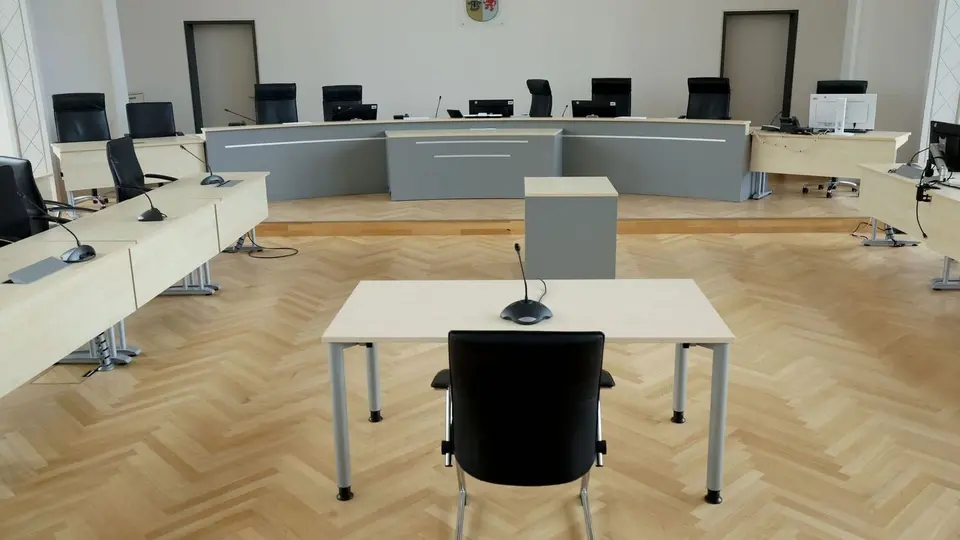
Verdict announcement in the Fabian case
This is the 35th and final trial date at Rostock Regional Court. According to tagesspiegel.de, the verdict will be delivered on Tuesday in the case of eight-year-old Fabian from Güstrow, who was killed. The prosecution alleges that the 30-year-old woman picked up the boy from home on 10 October 2025 and stabbed him to death shortly afterwards at a pond south-west of Güstrow.
The prosecution authority is demanding a conviction for murder, a life sentence and a finding of particularly grave culpability. Prosecutor Oliver Schley cited treachery as a factor constituting murder. The defendant is said to have exploited the boy's innocence and his trust in her. As a second murder factor, the prosecution argued that the act was committed for other base motives – because Fabian was, in the defendant's eyes, a "disruptive factor" in her relationship with his father.
Schley accused the defendant of acting methodically. A single stab to the heart would have been fatal; however, the defendant stabbed the boy multiple times. Moreover, it was an indignity to leave the body at a location also referred to as a pig wallow. The woman herself has repeatedly protested her innocence.
Should the court find particularly grave culpability and the verdict become final, early release from prison after 15 years would be practically impossible. Schley noted as a mitigating factor that the defendant had previously shown no criminal record and that a repetition of such acts was unlikely.
Acquittal remains the defence objective
Both defence lawyers for the defendant have requested acquittal. In their view, "many questions remain unanswered and therefore there is no complete chain of evidence", said lawyer Thomas Löcker. The defence relies on the principle "in dubio pro reo" – when in doubt, for the defendant.
Court spokesperson Anne Kruse explained that theoretically a conviction for manslaughter could also come into consideration if the chamber were to establish the defendant's authorship but find no murder factors present. However, she considers this a theoretical possibility: "Basically, from my perspective, apart from conviction and acquittal, there are no relevant options."
Fabian's mother's lawyer, who is participating in the trial as a co-prosecutor, has made the same demands as the prosecution authority.
Voting procedure and verdict announcement
The verdict will be decided by one lay judge and one lay assessor along with three professional judges – a total of five persons whose votes carry equal weight. Since a two-thirds majority is required to reach a decision, four votes are needed for a guilty verdict. The reporting judge presents his proposed verdict, after which the individual points are discussed. Finally, votes are cast on the question of guilt and the legal consequences. Presiding Judge Holger Schütt will deliver the verdict and subsequently the reasons for the verdict.
Kruse estimates that the oral reasoning will take two to three hours because of the scope of the evidence presented. The defendant announced after her final statement that in the event of a conviction she will appeal all the way to the highest court: "I will keep fighting until I am free again."
Possibilities of appeal
The verdict is unlikely to be the final word. The parties have the option of filing an appeal with the Federal Court of Justice (BGH). In an appeal, the evidence is not re-examined; instead, it is reviewed whether the trial and verdict were legally correct. The BGH typically decides such cases in written proceedings. Only in approximately five per cent of criminal appeals does it deliver a judgment following an oral hearing. In the event of an acquittal, the prosecution and co-prosecution would likely appeal.
Source: Die Zeit Kriminalität