Guayaquil, narco epicentre: alliance between gangs, Sinaloa and Colombian paramilitaries
Guayaquil has become one of the global centres of drug trafficking, driven by a criminal network connecting local gangs, the Sinaloa Cartel and Colombian paramilitaries.
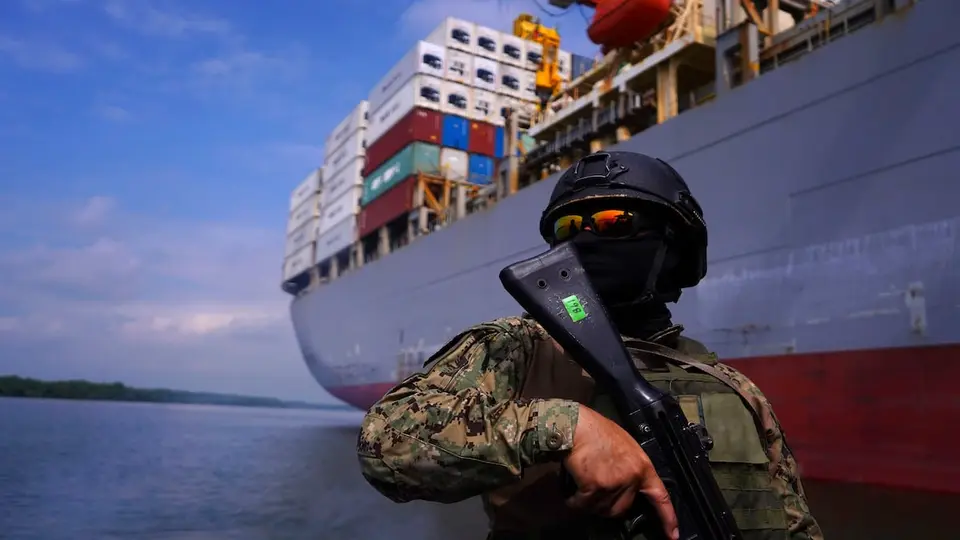
Guayaquil: how a port city became a global narcotics hub
Germán—a fictional name used for security reasons—remembers when his neighbourhood in Guayaquil was a place where children played in the street and weekends brought football matches and music. That time ended in less than two years. Today no one goes out after dusk, many children study virtually to avoid stray bullets, and everyone, without exception, pays extortion fees.
According to elpais.com, in January of this year Ecuador's homicide rate reached one person murdered every hour. Guayaquil is one of the epicentres of that violence in a country that just a few years ago ranked among the safest in Latin America.
Three decisions that changed the narcotics map
Ecuador's transformation into an organised crime hub was not accidental. In the late 2010s, international drug traffickers made three strategic decisions to maximise their profits: they prioritised bulk trafficking through containers, opened new markets—primarily in Europe—and diversified routes away from Colombia, where ports face greater surveillance.
Ecuador fitted that blueprint: active maritime commerce towards Europe and institutions unprepared to confront the onslaught of narcotics trafficking. The result was an easy target for the major cartels.
A fragmented but more resilient network
A recent study by the International Crisis Group, based on fieldwork in Ecuador, Colombia, Honduras, Guatemala and Mexico, documents how decades of policies focused on capturing kingpins and fragmenting criminal groups have produced the opposite of their intended effect. Organised crime became decentralised and more resilient. Today more drugs are produced and consumed than at any other point in history, and the proliferation of gangs has created a flexible criminal network that expands globally.
A single trafficking route, according to the research, can easily involve half a dozen groups in different countries, connected by fluid alliances. The so-called "invisible narcos" provide the initial capital, select the operators and organise the logistics. They then associate with larger-scale organisations—such as the Sinaloa Cartel or the Jalisco New Generation Cartel—that have the sophistication necessary to manage transnational routes.
Criminal subcontracting: from cartels to local gangs
These large conglomerates, in turn, subcontract national organisations. In Ecuador, Los Choneros provide that service: they obtain the raw material, refine the drug and prepare it for export. In Colombia, the Gaitanista Army serves a similar function. One rung lower, even smaller gangs are responsible for storing the merchandise, controlling routes, borders and ports, and managing the local market.
In Guayaquil, much of the violence suffered by the population is the direct result of disputes between these local bands competing for access to scarce international clients. In this model, violence is not a system dysfunction: it is its foundation.
The cost to communities
The consequences for the civilian population are profound. Local gangs, empowered by their links to higher-ranking groups, regularly extort and kidnap. The recruitment of minors is systematic. Confrontations between armed groups generate displacement, forced confinement and invisible borders that no resident can cross without tacit permission.
In areas where young people lack access to formal work, criminal structures offer income, power and possibilities for advancement that more exclusionary societies deny them. Women face a particularly severe situation: they are pressured to maintain relationships with members of armed gangs. Even in countries with a long tradition of narcotics trafficking, such as Mexico and Colombia, inhabitants of various regions report that violence against the civilian population is today more intense than ever.
State agents are not exempt either. Throughout the region, more and more officials face the dilemma known as "silver or lead": accept co-option by drug traffickers or put their lives at risk.
Hard-line approaches versus evidence
Faced with this scenario, many Latin American communities demand that their governments act decisively to reduce violence. However, available evidence indicates that hard-line policies and militarisation produce only temporary successes and can generate, in the medium and long term, more violence.
Donald Trump has placed the strengthening of the war on drugs at the centre of his agenda, betting on traditional strategies such as high-value arrests. This position has given political backing to regional governments that opt for similar approaches, although data on their sustained effectiveness remains controversial.
Guayaquil, meanwhile, continues to be the most emblematic case of a trend that transcends borders: the expansion of organised crime towards countries that until very recently were considered islands of peace in a convulsive region.
Source: Google News EC — Guayaquil