Estonian Defence Minister resigns over €70 million scandal involving non-existent ammunition
Hanno Pevkur resigned on Wednesday after Estonia paid €70 million to a shell company for ammunition destined for Ukraine. The projectiles eventually delivered were declared defective and unusable.
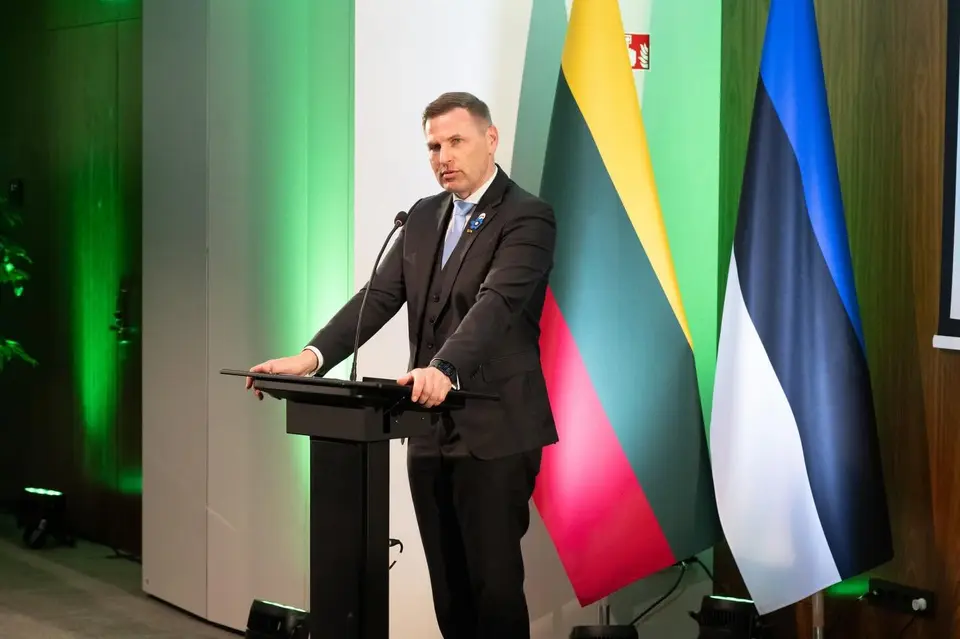
Estonian Defence Minister resigns after €70 million transferred to shell company
Hanno Pevkur, Estonia's defence minister, announced his resignation on Wednesday evening after Gândul reported that the institution he has headed since 2022 transferred €70 million to a company that had never delivered artillery projectiles. The scandal came to light following a report by Estonia's Court of Audit, published on 28 August.
The report criticised the defence ministry's military acquisitions in recent years and immediately prompted public calls for Pevkur's resignation. The document is the latest in a series of unfavourable episodes relating to the ministry's spending, according to the same source.
Contract with Datasel S.R.L.
In 2024, Estonia signed an agreement to purchase artillery shells from Datasel S.R.L., a company registered in Italy and owned by Indian firm Neco Defence Munitions, according to Eesti Ekspress. The agreement was intended to provide Ukraine with ammunition for operations against Russian forces, with funding coming from the EU's European Peace Facility.
Estonia's Defence Investment Centre (RKIK) made advance payments of millions of euros to Datasel, but the company repeatedly reported delays and deliveries did not arrive for months. When an initial shipment eventually arrived in 2025, Eesti Ekspress reported that the projectiles were defective and "unusable".
The contract had been signed at a critical moment: Ukrainian forces were facing a severe shortage of shells, worsened by delays in American aid and the EU's failure to deliver one million projectiles by March 2024.
"We should never have signed"
The current chief executive of RKIK, Elmar Vaher, who did not oversee the initial contract, told Eesti Ekspress that the agreement should never have been made.
"In my opinion, we should never have signed a contract with them," Vaher said. "If I start to build a house and hire a company that has never built a house before, there is doubt that the house will be completed."
Pevkur acknowledged that he had not read the contract with the Indian company, noting that the ministry does not normally involve itself in the details of acquisitions. He claimed he was unaware of the transaction's problems, but that he accepts political responsibility for the consequences.
"A leader must have the strength and courage to take responsibility. Even if the minister does not count cartridges and does not conduct contract negotiations, the Court of Audit's findings raise the question of political responsibility," Pevkur wrote in a Facebook post announcing his resignation.
"For this reason, today I must take political responsibility for the entire defence sector and hand over the defence minister position to the prime minister."
Pevkur added that he was leaving "with the firm conviction that I made the right decisions to strengthen national defence" and that "Estonia is better protected than ever".
Criminal investigation and cabinet meeting
Estonian Prime Minister Kristen Michal convened a cabinet meeting for 3 September, with Pevkur's resignation and the conclusions of audit reports on the agenda. The national prosecutor's office has meanwhile opened a criminal investigation into aspects highlighted in 2025 and 2026 reports.
Context: rapidly increasing defence spending
Estonia's defence spending has increased significantly since Russia's full-scale invasion of Ukraine in 2022. According to the Organisation for Economic Co-operation and Development (OECD), its share rose from 2% of GDP in 2022 to 3.4% in 2025. For 2026, Estonia announced an increase to 5.4% of GDP, with a defence budget 42% higher than the previous year.
Tallinn has also committed to providing Ukraine with military aid exceeding 117 million dollars for 2026. The Court of Audit has repeatedly warned that the accelerated pace of spending increases the risk of public funds being misused.
On 1 September, Estonia reported drone incursions into its airspace, on the same day Russia launched a large-scale air attack on Ukraine and Ukrainian drones targeted western Russia. The Baltic states continue to strengthen their defence capabilities in the context of persistent threats from the east.
Source: Gândul