Trappes attack: suspect Kévin T., 39, monitored for schizophrenia
Kévin T., 39, opened fire on 23 October in Trappes and La Verrière, killing a Congolese MMA fighter and injuring five other people. The suspect, a former car factory worker receiving treatment for schizophrenia, had booby-trapped his flat and possessed military equipment.
The alleged perpetrator of the Trappes attack
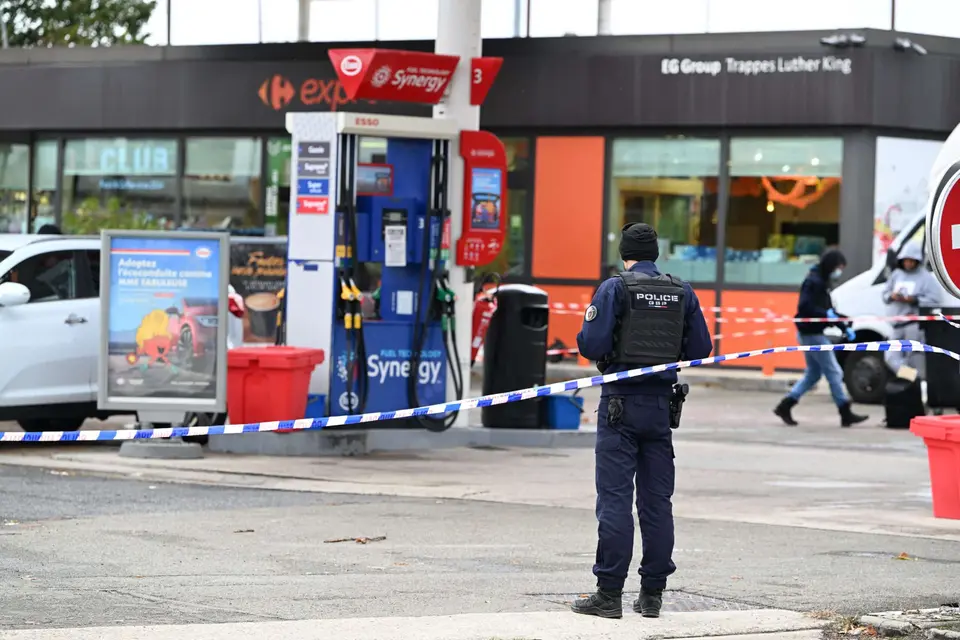
On Friday 23 October, a man fired in bursts from a Renault Clio through the streets of Trappes and then La Verrière, in Yvelines. Pengo Bossio Wangi, a 26-year-old MMA fighter of Congolese origin, was killed. Five other people were injured, including a 12-year-old child who was seriously hurt. Kévin T., 39, was arrested shortly afterwards by BAC police officers in Coignières.
The National Anti-Terrorism Prosecutor's Office opened an investigation into murder and attempted murders in connection with a terrorist enterprise, with the circumstance of a true or presumed affiliation to a race, ethnicity, nation or religion.
According to causeur.fr, the suspect was not on the S file and was unknown to the DGSI as well as territorial intelligence before the attack. His criminal record reveals four previous convictions dating from before 2012, concerning notably drink-driving, theft, shoplifting and drugs.
Preparation and seized materials
Investigators discovered that Kévin T. had booby-trapped his flat in Plaisir with gas bottles and electrical wires connected to a timer. In his car, they seized a Sten-type submachine gun and a tear-gas bomb. A copy of Mein Kampf, a Bible and a Quran were also found at his home.
Several people close to him described him to investigators as racist. These elements support the hypothesis of an ideological motive, although the investigation must still determine how his convictions, his psychiatric condition and his drug consumption may have contributed to the carrying out of the attack.
Psychiatric and toxicological diagnoses
During an initial hearing, Kévin T. stated that he suffered from schizophrenia and was receiving treatment. This diagnosis and medical follow-up are known to investigators. After a psychiatric examination carried out on Saturday evening, his custodial detention was lifted and he was transferred to the psychiatric infirmary of the police prefecture for a 48-hour observation period, to determine whether his condition is compatible with resuming questioning.
Toxicological analyses revealed the presence of cannabis and cocaine in his blood at the time of the facts. Under criminal law, experts will need to distinguish between an impairment of judgment, which does not prevent prosecution, and an abolition of judgment, which may result in criminal irresponsibility.
Three dimensions to untangle
The majority of people suffering from schizophrenia do not commit acts of violence. Investigators must precisely avoid confusing three elements: a declared psychiatric condition, a possible racist motivation documented by several material elements, and drug consumption at the time of the facts.
Kévin T.'s profile is surprising because it does not correspond to the usual categories. Unknown to the DGSI and territorial intelligence before the attack, he was not identified as an activist belonging to a structured organisation. Investigators nevertheless have elements suggesting preparation of his carrying out of the attack and a possible ideological motive.
This combination recalls, with the necessary caveats, certain profiles of "lone wolves" encountered in jihadist cases — not because of an ideological comparison, but because several attacks carried out by isolated individuals posed the same difficulty for investigators: determining what stemmed from ideological conviction, psychiatric disorders, a chaotic personal trajectory or the interaction between these factors.
Specific legal questions
The case raises questions that have resurfaced following several attacks committed by individuals with psychiatric histories: what mental state was the suspect in at the time of the facts, was his judgment intact, impaired or abolished, and what place did a possible racist ideology occupy in his carrying out of the attack?
Weapon, preparation of the flat, choice of victims and elements likely to shed light on a racist motive must be examined separately. An individual can be radicalised without belonging to a network and simultaneously present significant psychological disorders. Investigators have several days to clarify these points before a possible referral to the competent judicial authorities.
Source: TF1 Info