School shooting in Aubagne: the deadly fascination of the True Crime Community
A 14-year-old teenager arrested after shooting two staff members at his school in Aubagne admitted being influenced by the True Crime Community. This movement of online extremists glorifies mass murderers and spreads rapidly amongst vulnerable young people.
The radical movement that inspires violent acts
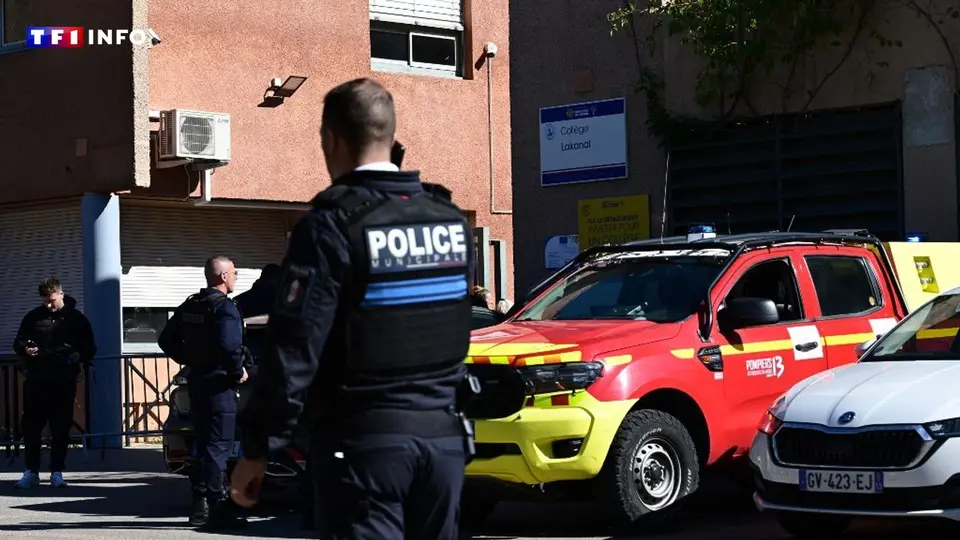
A 14-year-old teenager was placed in provisional detention after shooting and wounding the headmaster and a teacher at his school in Aubagne, in the Bouches-du-Rhône, on Monday 12 October. According to the national counter-terrorism prosecutor's office (Pnat), he admitted to "having been influenced" by the True Crime Community (TCC) movement. TF1 Info reports that this phenomenon, identified for more than a decade, now translates into concrete acts of violence on French territory.
Interior Minister Laurent Nuñez confirmed that "this is a phenomenon that is growing in France", with "around dozens" of young people currently being monitored by intelligence services. The explosion is worldwide: in September 2025, the FBI director flagged 1,700 investigations into domestic terrorism, representing a 300 per cent increase in cases opened in one year.
Who are the members of the True Crime Community?
The TCC corresponds to a radical fringe that glorifies mass murderers and valorises their acts, according to Alexandre Ledrait, professor of clinical psychopathology and psychocriminology at the University of Caen. It is not a centralised organisation, but rather a set of digital communities sharing references, images and narratives related to extreme violence.
Mass murderers, particularly those who strike in schools, are transformed into figures of identification, elevated to the rank of heroes or idols. Members feed on videos of shootings on platforms such as Watch People Die and put in place a strategy of imitation with quasi-obsessional fascination: mimicking the writings, appearance and acts of the authors of massacres so as to become a recognised figure within the community and "inscribe themselves in the pantheon of killers".
This movement can be found on virtual chat rooms Discord and on the Roblox platform, renowned for enabling extremist groups to recruit through virtual replicas of mass shootings playable from a first-person perspective.
A narcissistic profile fuelled by school humiliation
Young people who slide into this fascination seek above all notoriety through an extremely sudden act of violence and violence that "explodes all at once". The central element is the valorisation of violence rather than a shared political project. According to Ledrait, the radicality is "eminently narcissistic", based on a misanthropic and destructive vision of the world with the aim of creating chaos.
There is an extremely strong link between the choice to commit a terrorist attack in a school setting and a process of humiliation suffered at school. This experience provokes an "extremely strong narcissistic wound" that these young people seek to remedy by reversing invisibility: becoming known, feared, talked about, even studied, and thus existing in posterity.
Unlike other extremist movements, the TCC accepts people of colour and women. Members present particular psychological vulnerabilities, often linked to experiences of social exclusion.
The inevitable effect of social contagion
The dimension of social contagion is crucial. Following the Columbine shooting in the United States in 1999, which gave rise to "Columbiner" communities considered precursors of the current movement, 354 threats of violence against school establishments had been reported in Pennsylvania in the 50 days that followed, including nearly 56 per cent within the first 10 days.
Between the first point of entry into this movement and the act of violence, sometimes only a few months elapse. Ledrait warns: "A few months ago, I could have said the threat was coming to France. Today, it is here. And we can fear the same phenomenon of imitation after what happened in Aubagne."
Insufficient awareness-raising by the authorities
According to the expert regularly consulted by the Paris Pnat to carry out psychological assessments, the public authorities have absolutely not grasped the gravity of the situation. He emphasises that persistent lack of knowledge of this phenomenon impedes effective prevention. The threat, once imminent, is now firmly concrete on French territory, and the urgency of coordinated government action is being felt in the face of this adolescent radicalisation fuelled by digital networks.
Source: TF1 Info