Hackers disabled refrigerators in 700 supermarkets across France
Cyber-attack on supermarket refrigerators and freezers raised temperatures to 80°C. Up to 700 stores from major chains targeted.
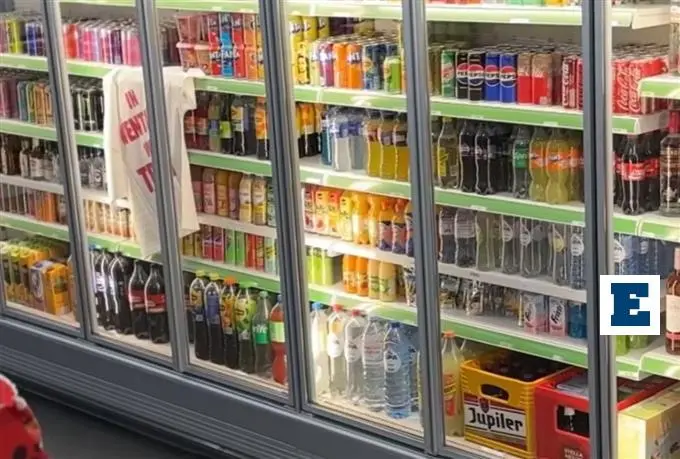
Cyber-attack on supermarket refrigerators across France — tonnes of spoiled food
On Sunday night, shortly before midnight, digital thermostats in thousands of refrigerators and freezers in supermarkets across France began to malfunction. Temperatures shot up from minus 27 degrees Celsius to over 50 degrees. According to Ethnos, hackers remotely breached temperature settings in cooling units at dozens of stores, in an attack described as "strange and unprecedented".
Over the next four to six hours, food thawed and then began to "cook". Staff who arrived early in the morning to restock shelves described being hit by a wave of hot air — "like opening an oven" — as soon as they tried to fill the freezers. In a supermarket in Normandy, the temperature in some freezers had reached 80 degrees Celsius.
In some stores, the extreme temperature rise triggered fires, activating automatic water-based fire suppression systems and causing additional damage, according to the Guardian.
"Disaster" in Issy-les-Moulineaux
"It was a disaster," said an employee at an Intermarché store in Issy-les-Moulineaux, a south-western suburb of Paris. "They raised the temperature in the freezers here to 62 degrees. Everything had to be thrown away. It was massive waste."
After removing tonnes of spoiled food, workers continued their shift until nearly midnight Monday to order new stock and restock shelves. "Fortunately we managed to get things back to near normality the same day," added another employee. "However, we had to empty all the freezers."
Up to 700 stores targeted
Initially, store managers assumed it was an isolated technical malfunction. However, it soon became clear that the attack had affected up to 700 stores — including supermarkets from the chains Intermarché, Cooperative U, Carrefour, Leclerc and Monoprix, as well as smaller independent stores.
Dominique Selseler, president of Cooperative U, announced that 80 of the group's 2,000 supermarkets had been targeted. "This is a completely unprecedented, unexpected and extremely serious attack. In my entire professional career I have never seen anything like it," he stated on a French radio station.
The Paris public prosecutor's office immediately launched an investigation into the case, which is part of a series of incidents that have made France the country in Europe with the most data breaches.
Possible political motives
Jérôme Billoué, from cyber-security firm Wavestone, believes the attack shows characteristics of political sabotage. "The two most likely scenarios are either that this is a group of young people or activists who wanted to prove what they could do, or a destabilising attack — what we call sabotage — from state actors, domestic or foreign," he said.
According to Billoué, the aim of such an operation is to send citizens a message that they are not safe, to create the impression that the government is collapsing, and ultimately to cultivate fear. Two international actors are currently known for using such methods, he added: Iran and Russia. To date, it has not been confirmed who is behind the attack.
Breach via Danfoss controllers
The hackers breached temperature controllers from Danish company Danfoss, which are widely used to operate cooling units in supermarkets. Most refrigerators and freezers are connected to the internet to allow remote maintenance and to send alerts in case of malfunction.
Initial investigations indicate that the hackers disabled alarm systems before tampering with the thermostats, or prolonged the defrost cycle for several hours, so as to avoid triggering warning alerts. Danfoss announced that it had identified the security gaps the previous year and had "long recommended" its customers to install updates or replace old, no-longer-supported systems. The cooling units that were hit were operating with outdated firmware, according to the company.
Unheeded warnings
In the days that followed, France's National Information Systems Security Agency (ANSSI) confirmed that supermarkets using controllers from two other companies were also in hackers' sights.
Cyber-security researcher Marta Ribčínská said she had found earlier warnings concerning both freezers with outdated software and newer models without installed updates. "Some of these freezers had not been supported by their manufacturers for several years and there were announcements stating that they needed to be replaced. Others were newer, but their software had not been updated," she said. "The hackers identified these security gaps and exploited them."
Source: Ethnos