Trial of the A10 child: mother confronted with silences on violence
Halima El Bakhti, 72, is being tried for acts of torture resulting in the death of her daughter Inass, abandoned on the motorway in 1987. Her interrogation reveals progressive violence but also gaps in explanations for the fifteen bite marks discovered during autopsy.
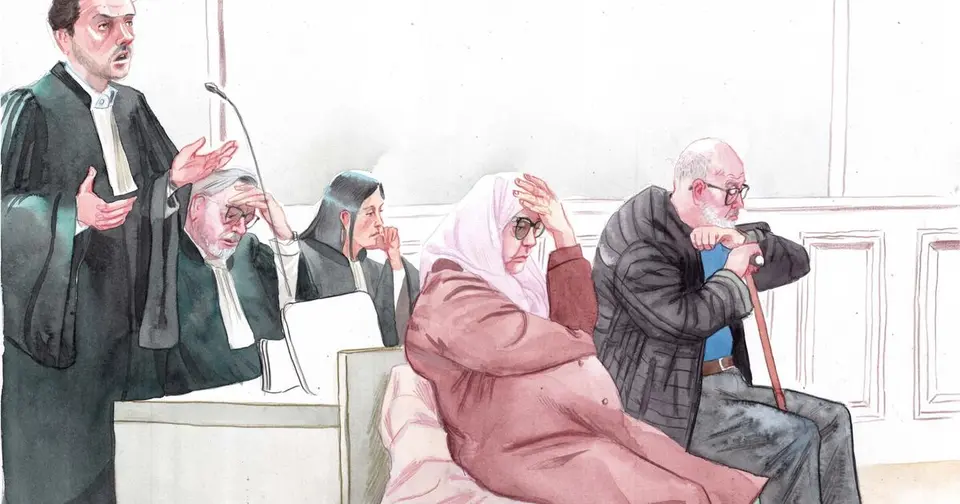
The mother of the A10 child in the witness box: between confessions and denials
The body of a young girl abandoned along the A10 motorway in Loir-et-Cher on 11 August 1987 mobilised investigators and magistrates for four decades. In 2023, Le Figaro published an investigation into this criminal enigma. The trial of her mother began on Monday 2 November at the Blois assizes court, finally bringing an awaited resolution.
Halima El Bakhti, 72, is standing trial for "acts of torture and cruelty resulting in death without intention to cause death". Ahmed Touloub, the father, is being tried for complicity. According to Le Figaro, during her interrogation on Friday evening, the mother recounted the early life of her daughter, Inass, born on 3 July 1983 in Casablanca. "I only saw her tiny feet, her tiny fingers," she recalled saying at her birth.
The child was left with her maternal grandmother in Morocco for more than a year. Ahmed Touloub reportedly demanded that his wife not bring the infant back to France, where the family lived in a two-room flat in Vitry-sur-Seine. Halima El Bakhti eventually went to fetch her daughter the following summer and brought her back to France. "After that, it was awful all the time. It was all dark," she told the court when speaking of the period that followed.
During the projection of autopsy photographs, the same tiny feet and tiny fingers visible at birth were covered in bite marks, burns, lesions and bruises. This child became known as "the martyr of the A10". However, the mother's interrogation was characterised by prolonged silences regarding the fifteen recent bite marks and the multiple lesions discovered on the victim's body.
Halima El Bakhti described the progressive isolation of her daughter and the violence she suffered. But when confronted with specific questions about the torture marks recorded, she became entangled in denial, refusing or being unable to explain these acts. "I didn't know why I was hitting my daughter," she notably stated, according to court records, a formulation that illustrates her inability — or her refusal — to account for the systematic abuse suffered by the child.
The course of the trial places Halima El Bakhti in a position where her own words contradict her: she admits to violence whilst denying its extent or her intention. The absence of clear answers about the precise circumstances of her daughter's death leaves a gap between fragmentary confessions and the reality of the lesions documented on the child's body.
Source: Le Figaro