Conviction of 68-year-old for hidden camera in student's bedroom in Thessaloniki
The Three-Member Court of Appeal for Misdemeanours in Thessaloniki upheld a prison sentence of 24 months with suspension for a property owner who installed a concealed recording system in a student flat in 2019.
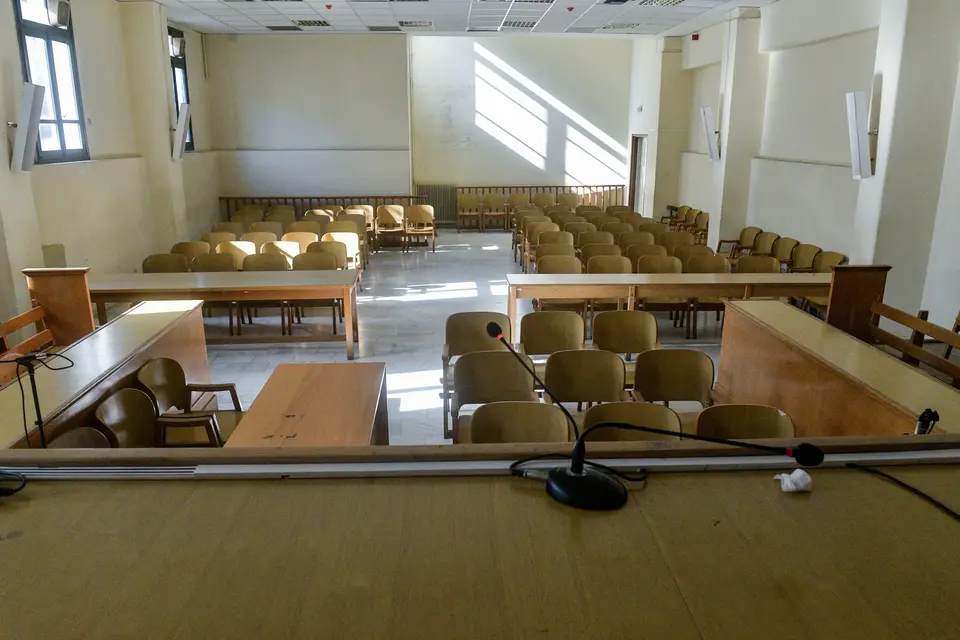
Thessaloniki Court of Appeal: 24 months with suspension for hidden camera in student accommodation
A prison sentence of 24 months with a three-year suspension was imposed at second instance by the Three-Member Court of Appeal for Misdemeanours in Thessaloniki on a 68-year-old property owner of a flat in the city centre. The trial took place on 6 October 2026. The defendant was found guilty, with the prosecutor's agreement, of installing and operating a concealed recording system in the bedroom of student accommodation, which the victim, Ch.K., had rented in 2019.
According to Dikastiko.gr, the conviction upholds the first-instance judgment and constitutes, according to the defence counsel, full vindication of the student following a serious violation of her private life.
Irrefutable physical and technical evidence
The case was examined within the framework of an exceptionally thorough evidentiary procedure, both at first and second instance. The physical and technical evidence remained consistent throughout all stages of the proceedings, whilst the defendant's rights were fully observed, according to the announcement of the law firm.
By contrast, the defendant's account did not remain consistent. His positions changed during the course of the proceedings and, at critical junctures, one contradicted the other. His claim that the device was "inactive" found no support in the objective evidence.
Particular evidential weight was also attached to the defendant's conduct during the critical period: whilst he contested the sufficiency of the evidence, he went into hiding instead of appearing and confronting the situation that had already been exposed. This conduct was considered in light of the totality of the evidentiary material.
Statement from Makri Law Firm
Following the final judicial decision, the law firm Anastasios A. Makri and Associates issued a statement. The head of the firm and defence counsel emphasised that the conviction was not based on narratives:
"The conviction was not based on narratives. It was based on specific, objective and unchanging evidence. On the basis of such evidence, the conviction is the result of a complete, fair and exhaustive judicial evaluation, and leaves no room for complaint as to the manner in which justice was administered. Justice, in this case, did what it was obliged to do: it listened, examined, evaluated and decided on the basis of the evidence."
The law firm further emphasised the significance of the decision at the level of principle:
"For our client, this significant decision constitutes vindication following a particularly serious violation of her private life. For us, it constitutes confirmation of a fundamental principle of criminal law: when objective evidence remains consistent, contradictory accounts cannot neutralise it."
Source: Dikastiko.gr