Croatia searching for 1,725 missing from Homeland War: Serbia has provided no new information since 2014
Thirty-five years after the start of the Homeland War, Croatia is still searching for 1,725 missing and deceased persons. Serbia has not provided operationally useful information since 2014.
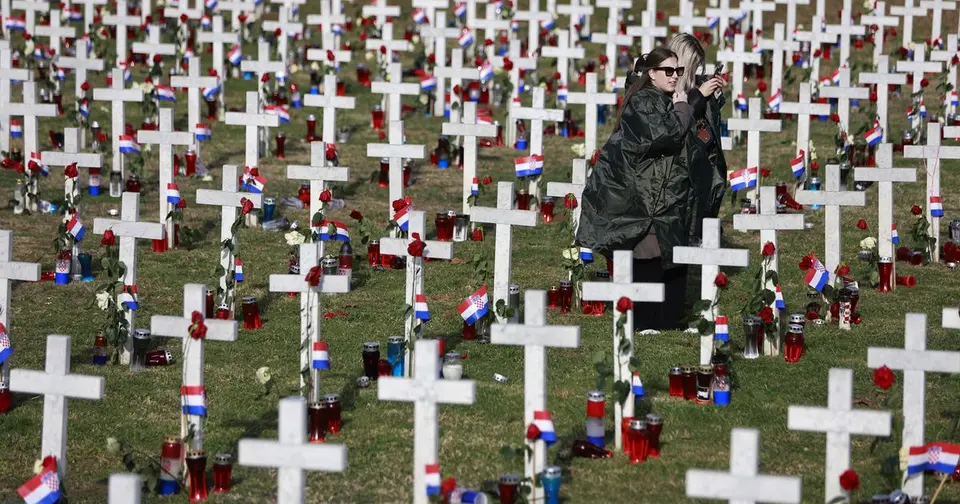
1,725 missing: Croatia marks 18 November and continues searching for victims
Croatia is still searching for 1,725 missing and deceased persons from the Homeland War whose burial sites are unknown, Večernji list reported ahead of the Day of Remembrance for Homeland War victims and the Day of Remembrance for the victims of Vukovar and Škabrnja, which is observed on 18 November. The Ministry of Croatian Veterans provided the data to HINA ahead of that date.
On 18 November 1991, after a three-month defence, Vukovar fell — which had been attacked by JNA units and Serbian paramilitary forces — and a serious crime against civilians was committed in Škabrnja. Thirty-five years after the outbreak of Serbian aggression, over the past year the search process has been concluded for just 21 persons.
Vukovar as the largest concentration of unsolved cases
Since October 2016, during the tenure of Minister Tomo Medved, the remains of 343 persons have been finally identified, of whom 108 had been unidentified for a long time. Among the 1,725 persons still being sought, 320 are linked to Vukovar — representing the largest group of unsolved cases connected to a single city.
In the Vukovar-Srijem and Osijek-Baranya counties, 72 mass graves have been discovered, and 539 persons are being sought. In Sisak-Moslavina county, 44 mass graves have been recorded with 463 persons still missing. In total, from October 2016 to October 2026, comprehensive field research has been conducted at 453 locations, where more than one million square metres of surface area has been searched.
Witnesses dying, graves buried under waste
The Ministry warns that the lack of reliable data on grave locations remains the greatest obstacle in the search. The passage of time simultaneously narrows the possibilities for gathering new information and makes it harder to verify existing information.
"Witnesses are dying, and grave sites today are located in areas whose configuration has changed significantly through landfilling, construction, waste disposal or other interventions," the Ministry warns. Misinformation is an additional obstacle — particularly when unverified claims are presented as established facts through repetition. Despite everything, seven mass graves and more than 45 individual graves have been discovered, and since October 2016 the remains of at least 235 persons have been exhumed.
Petrovačka dola: 17 metres deep to reach victims
The most demanding site under investigation is Petrovačka dola in Vukovar, where systematic investigations have been conducted since April 2022. So far they have resulted in the discovery and final identification of the remains of 38 Croatian defenders and civilians, mostly forcibly taken away from the Vukovar area in autumn 1991.
Prime Minister Andrej Plenković, who visited Petrovačka dola with Minister Medved in early November, stated that the waste pile had to be excavated to a depth of 17 metres to reach the remains. "This area is nominally a long-term landfill, but also the site of a mass grave containing the most heinous crimes committed during the Homeland War, where bodies of the killed were moved to conceal the location where they ultimately ended up. The intention here was key," Plenković said.
Minister Medved explained that removing a pile of asbestos and hazardous waste was a prerequisite for continuing the work. "After we found the remains here, we removed a pile of asbestos and hazardous waste, and as a prerequisite for continuing further work we must remove this pile too, because it is impossible to proceed further into this area without removing it," Medved said.
Prilje and the old Vuka riverbed: research without findings
At Prilje in Vukovar, exceptionally complex field research is being conducted, with its configuration significantly changed compared to the war period, particularly in the area of the old Vuka riverbed. During and after the occupation of Vukovar, large quantities of construction debris and waste were deposited there. So far, an area of approximately 8,500 square metres has been investigated, with 15,850 square metres of waste and debris reviewed and removed. No remains have been found to date, and research continues.
Serbia without new operational information since 2014
The Ministry of Croatian Veterans warns that since 2014 the Serbian side has not provided new, operationally useful information that would lead to the discovery of persons Croatia is searching for. The submission of identified documentation, enabling access to relevant archives, or provision of concrete data on graves would be, the Ministry states, a clear and measurable indicator of a change in Serbia's conduct — regardless of who holds power.
"The Republic of Croatia will continue to insist on this through bilateral cooperation and Serbia's accession process to the European Union, particularly Chapter 23, because it concerns the realisation of families' right to the truth, and any further delay reduces the possibility of finding their loved ones," the Ministry emphasises.
The Ministry notes as particularly valuable original documentation on battlefield sanitation — the organised collection, transport and burial of remains — which would enable the competent authorities to conduct specific searches in the field.
Source: Večernji list