Prosecutor rejects Matolcsy György's complaint in Erste case
The prosecutor's office has rejected former central bank governor Matolcsy György's complaint against the suspicion, allowing the investigation into the Erste case to continue. The former head of the National Bank of Hungary is suspected of abuse of office.
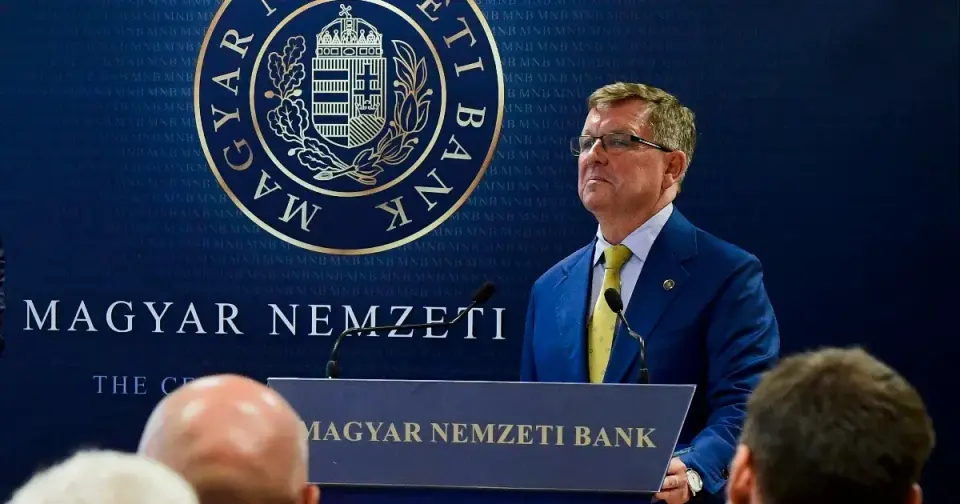
Complaint rejected: investigation into Matolcsy continues in Erste case
The Budapest V and XIII District Prosecutor's Office has rejected the complaint by Matolcsy György and his lawyer against the suspicion, as well as against searches and seizures, the Capital Chief Prosecutor's Office announced to MTI on Monday. According to Telex, the investigation into the Erste case will therefore continue.
The former central bank governor was questioned as a suspect on 22 September. According to the prosecutor's position, certain persons directing main departments belonging to the Hungarian National Bank's Banking Supervision Centre abused their official authority in 2023 – at the direction of a superior – by exerting pressure on an Austrian parent-owned Hungarian bank, Erste Bank.
Telex learned from multiple sources that Matolcsy was able to leave freely after his questioning. Investigators from the National Investigation Office questioned six other people as suspects in addition to him, and according to information, all those involved are able to defend themselves at liberty. A statement from the National Police Headquarters also mentioned only the questioning of suspects; no one was taken into custody – the suspects came to the NNI by summons.
Matolcsy and the six other individuals were suspected after András Simor, the former central bank governor, spoke on ATV after this year's elections about how the MNB's deputy president responsible for financial supervision exerted pressure on Erste Bank in 2023 to remove him from the supervisory board of Erste Group in Vienna.
According to Simor's assertion, in December 2023 the chief executive of Erste Bank Hungary, Rados Jelasity, was summoned to the MNB headquarters, where one of the deputy presidents told him in a windowless, cramped room that as long as Simor remained a member of the supervisory board in Vienna, the banking supervision would act "extraordinarily strictly and very unpleasantly" towards Erste Bank Hungary.
Simor resigned from his position a few weeks later. He said he did not file a report because he would not have been able to prove the matter. The current leadership of the MNB, however, initiated an investigation following the interview published in April and then filed a report.
In response to Simor's assertions, Matolcsy published a video in which he called the described account a "false story", adding that they "do not hold up factually". He claimed that even if such a meeting had taken place, he had no knowledge of it and therefore could not have issued instructions for intimidation. His argument was that on the basis of the institution's operational procedures, it would be unimaginable for the deputy president responsible for financial supervision to have put anyone under pressure. "This is indicated by the fact that the Erste management themselves did not file a report in this matter," said Matolcsy, who also added that they had always responded to their critics publicly, in the form of signed statements, professional articles or opinion pieces.
Source: Telex