Ferragosto marked by violence in Italian prisons: officers assaulted, overcrowding reaches 141%
Escapes, fires and assaults on officers have marked Ferragosto in Italian penitentiaries, where overcrowding has reached 141%. Trade unions are calling for urgent intervention from Minister Nordio.
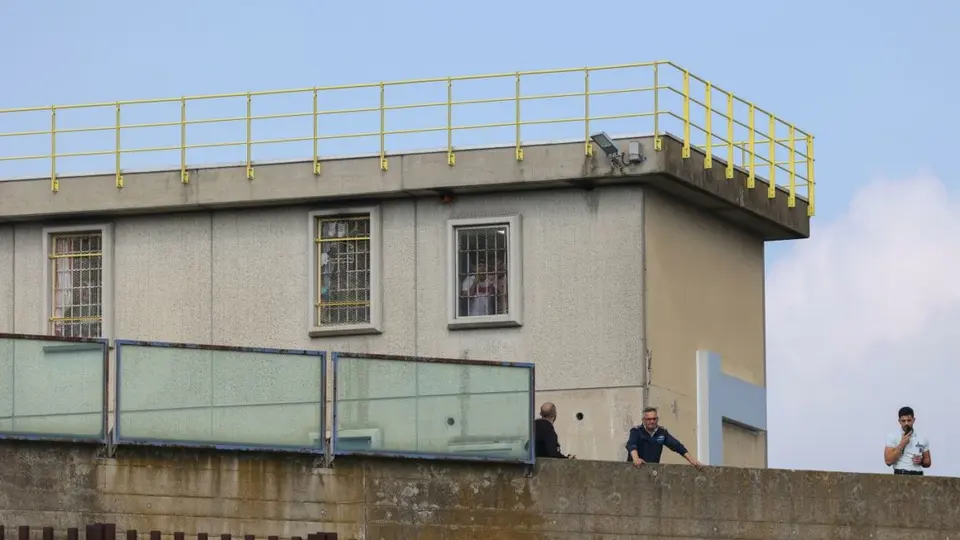
Assaults, escapes and fires: Italian prisons collapse during summer period
Il Fatto Quotidiano – Crime reports a series of serious incidents that occurred in Italian prisons during Ferragosto, worsened by overcrowding that reached 141% and unsustainable temperatures.
The first case occurred on Saturday at the Potenza prison, where two detainees of Tunisian nationality escaped by exploiting, according to the Sappe union, "a structural defect of the institute, climbing and reaching the roofs to then escape outside". Both were traced in the city within a few hours.
Also on Saturday, in Saluzzo, in the province of Cuneo, the vice-commander of the Penitentiary Police was physically assaulted by a fifty-year-old detainee classified under high security regime: Francesco Coffa, member of the Coffa clan of the Sacra corona unita from Brindisi, grabbed her before being stopped by staff. Leo Beneduci, secretary of the Osapp union, denounced the incident calling it unacceptable and urged Justice Minister Carlo Nordio to act "with urgency and without further delay". Beneduci demanded "immediate intervention, greater guarantees for staff and a management of the high security circuit truly adequate to the level of danger posed by detained individuals", adding: "We cannot wait for a tragedy to occur".
On 15 August, in the Dozza prison in Bologna, a detainee set fire in section Rh of the infirmary department. Because the fire hydrants were not functioning, staff had to extinguish the flames with buckets of water. Two junior officers, including the General Supervision inspector, were overcome by smoke inhalation. The Osapp defined the incident as the latest in a sequence of "very serious critical events" recorded in the preceding days.
On 14 August, in the same Bologna institute, a detainee from the penal block pointed a razor blade at an officer's throat, causing him a small cut, then kicked another staff member who intervened in the chest. A third detainee, also in the same block, "attempted to assault a junior officer and spat in his face", according to what the union reported.
On Thursday 13 August, four officers were assaulted in the Lorusso and Cutugno prison in Turin by a 35-year-old Italian detainee subject to special surveillance regime. All four were transported by ambulance to the emergency room. The incident prompted Osapp to call on Nordio to "shake off lethargy" and intervene promptly.
On the political front, the government has not adopted significant measures so far to address the prison crisis. The only recent measure is a rule that allows drug addicts to serve their sentences in therapeutic communities, though financed with resources sufficient for approximately five hundred people only.
Democratic Party senator Walter Verini, head of the Anti-Mafia Commission group, visited the institutions in Perugia and Terni during Ferragosto. "Among the many failures of this government, the situation in prisons is certainly among the most serious", he stated, describing "unbearable overcrowding, serious lack of staff, situations of 40/45 degrees to endure in spaces that are too small". Verini also reported lack of water, "water rationed in this scorching summer", poor hygiene and sanitation conditions and few available surveillance magistrates.
Democratic deputy Stefano Graziano instead visited the Santa Maria Capua Vetere prison, indicating the need to intervene "on two fronts: on one hand, immediately strengthen staffing levels and, on the other, reduce overcrowding through structural measures and an improvement in detention conditions". Graziano emphasised that it is necessary to "guarantee detainees standards compatible with the re-educational function of punishment".
Source: Il Fatto Quotidiano - Cronaca