Italy condemned nine times by Strasbourg for gender-based violence: the Ubeda case
The European Court of Human Rights has condemned Italy for inertia, sexist stereotypes and secondary victimisation in domestic violence cases. Audrey Ubeda, 42, has won her appeal after years of legal battles.
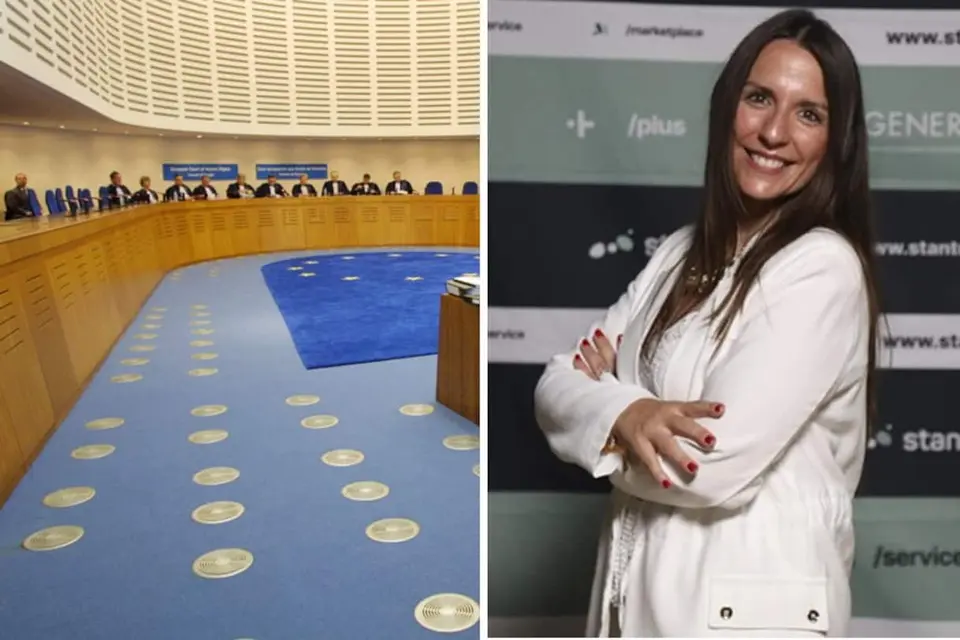
Strasbourg condemns Italy: sexist remarks by prosecutor and ineffective investigation into domestic violence
The European Court of Human Rights has condemned Italy for violating the protection of victims of gender-based violence at least nine times, according to tg24.sky.it. Among the sanctioned cases is that of a public prosecutor who had proposed dismissal of a domestic violence complaint with motivations that the Court defined as "sexist and stereotyped".
The prosecutor had dismissed the incident in which the woman's partner — identified as G.P. — had held a knife to her throat as a "tasteless joke". He had also stated that it was difficult to prove G.P.'s awareness regarding the woman's lack of consent to sexual intercourse, considering that "it was normal for men to overcome a minimum level of resistance that every woman tended to oppose when she was tired of everyday life and a man made sexual advances to her". The Court found that such motivations reflected a sexist and stereotyped culture, sharing the concerns of the Grevio — the Group of Experts on measures against violence against women — according to which similar attitudes risk exposing victims to further secondary victimisation in judicial proceedings.
The investigation deemed ineffective and procedural delays
The ECHR also condemned Italy for excessive timeframes in civil and criminal proceedings in the case involving a French national woman and her two children. The Court established that the proceedings had not satisfied the requirements of a prompt, thorough and effective investigation, as provided for by the European Convention. On the civil front, the juvenile tribunal took more than three years to revoke parental responsibility from the former partner, ignoring allegations of violence in the meantime.
Following the woman's objections, the prosecutor's request for dismissal had been rejected and continuation of the investigation ordered. The Italian authorities, according to the judgment, had not recognised the complex dynamics of domestic violence nor provided a response proportionate to the gravity of the reported facts. The Court established that the State must pay the woman and her children 15,000 euros each for moral damages, plus 15,000 euros in total for legal costs.
The voice of Audrey Ubeda: "A victory for all women"
Audrey Ubeda, 42 years old, born in France to a Spanish father and Campanian mother, is the woman who brought the appeal against Italian justice. The prosecutor in Benevento had requested dismissal of her complaint for the violence suffered from her then partner. With a degree in Economics, Ubeda describes herself as Italian in every sense and today works for a company in the Salerno area.
"For me it is a turning point, a new beginning, I feel like a Phoenix rising from the ashes — Ubeda said —. But the greatest satisfaction is having won a battle on behalf of all women, so that a case like the one that had turned my life upside down never happens again."
The criminal trial and the conviction of the former partner
The legal proceedings did not end at the European appeal. The request for dismissal, deemed sexist by the ECHR, had been rejected by the investigating judge in Benevento. The file was then passed to another prosecutor, Marina Colucci, who brought the case to first-instance trial: the woman's former partner was sentenced to four years and six months. The man is currently at liberty pending the outcome of the appeal, but the Naples Juvenile Tribunal has already revoked his parental authority over the two children.
After having spent some years with her minor children in a protected community out of fear of retaliation, Ubeda is today rebuilding her life with the boys aged 15 and 12. "Compared to the past we are free — she recounts —, but it is nonetheless serious that there were no removal measures against my ex partner, who in theory could approach us whenever he wants." As a precaution, the fifteen-year-old son avoids social networks. The woman pursues her commitment against violence against women "in silence and living as much as possible away from the spotlight".
Ubeda expressed gratitude towards those who worked with determination on her case: "I suffered discrimination and delays, but I also met people like prosecutor Marina Colucci, who in Benevento dealt with my case on a second occasion and worked with great tenacity and determination." As for the compensation ordered by the ECHR, Ubeda announced her intention to donate part of it to a local association that had supported her over the years.
Context: Italy and gender-based violence following the Cecchettin case
In Italy, attention on the issue of femicides remains high, also following the case of Giulia Cecchettin. According to a survey conducted by Quorum/YouTrend for Sky TG24, 58% of those surveyed consider femicides a more serious crime compared to other homicides. The measures considered most effective in combating the phenomenon are the teaching of gender equality and emotional education in schools, together with increased penalties. For 83% of those surveyed, when women report sexual abuse they must be believed.
Source: la Repubblica