Criminal network Ghost dismantled: 51 arrests across nine countries, one detained in Italy
The encrypted platform Ghost, used by thousands of criminals for drug trafficking and money laundering, has been dismantled. One person arrested in Italy is linked to the Sacra Corona Unita.
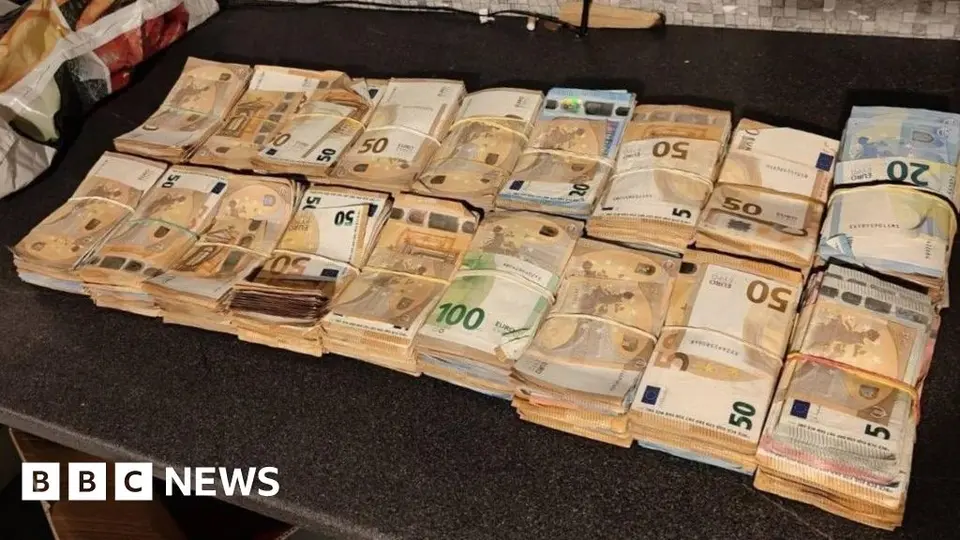
Operation Ghost: the encrypted network of clans destroyed by Europol
Fifty-one people have been arrested in the course of an international investigation that has led to the dismantling of Ghost, an encrypted communications platform used by criminal organisations worldwide. According to the BBC, among those detained is a subject in Italy linked to the Sacra Corona Unita.
How the platform worked
Ghost employed three encryption standards and allowed the sending of messages equipped with a special code capable of self-destructing the entire message history on the recipient's phone. Users could purchase the service without providing any personal data, making themselves effectively invisible to law enforcement.
Globally, approximately one thousand messages were exchanged each day through the platform, used by several thousands of people. The servers were located in France and Iceland, the company's owners operated from Australia, and financial assets were held in the United States.
Distribution of arrests
Of the 51 suspects arrested, 38 were in Australia, 11 in Ireland, one in Canada, and one in Italy. Europol also reported that several threats to the lives of certain individuals were averted and that a drug production laboratory in Australia was dismantled.
Globally, weapons, drugs, and over one million euros in cash were seized.
The Irish operation
In Ireland the operation took on particularly significant dimensions. The Gardaí — the Irish police — seized cocaine worth €15.2 million and 42 suspect encrypted devices in investigations concerning four organised criminal groups active between Dublin and the eastern region of the country.
On Monday, more than 300 officers searched 27 properties. During the same operations an articulated lorry was stopped in the south-east of the country: within its structure, in a hidden compartment, 100 kilogrammes of cocaine were found, estimated at approximately seven million euros and subjected to analysis by Forensic Science Ireland. Five men, aged between 30 and 50, were arrested in relation to this phase of the investigation.
Europol, the Australian Federal Police, and the American FBI were present in Ireland to support the ongoing operations.
Statements from senior officials
Catherine De Bolle, Executive Director of Europol, stated that the organisation has demonstrated that "no matter how hidden criminal networks believe themselves to be, they cannot escape our collective effort". De Bolle added that law enforcement in nine countries "have dismantled a tool that was a lifeline for serious organised crime".
At The Hague, at Europol's headquarters, Gardaí assistant commissioner Justin Kelly stressed that Irish involvement "demonstrates Ireland's continued commitment and capacity to operate internationally against transnational organised criminal groups, which cause so much damage and misery not only in Ireland, but in countries around the world".
"Transnational criminal networks know no borders and respect no international limit or rule of law", Kelly added. "It takes a network to defeat a network, and today's announcement clearly demonstrates the strength of law enforcement networks in degrading and dismantling the activities of these criminal organisations."
The risk for Northern Ireland
When questioned by BBC Radio Ulster's Evening Extra radio programme, Kelly clarified that investigations so far have identified only four criminal organisations, all operating between Dublin and the Irish east coast. "The fact that these devices have not emerged in the United Kingdom or Northern Ireland is cause for gratitude, because there is no doubt that they would have appeared there very soon", he said.
On the possible impact on Northern Ireland, Kelly left no room for ambiguity: "Drug trafficking occurs on an entirely island-wide basis. Drugs are imported through Northern Ireland for the southern market, just as they are imported through Ireland for the Northern Ireland market".
Further arrests beyond the 51 already made are expected as the international investigation continues.
Source: BBC