Providus: New Government May Significantly Change Migration Policy
Sanda Liepiņa, head of the think tank Providus, warns that transferring the Interior Ministry to the National Alliance could result in radical changes in migration policy.
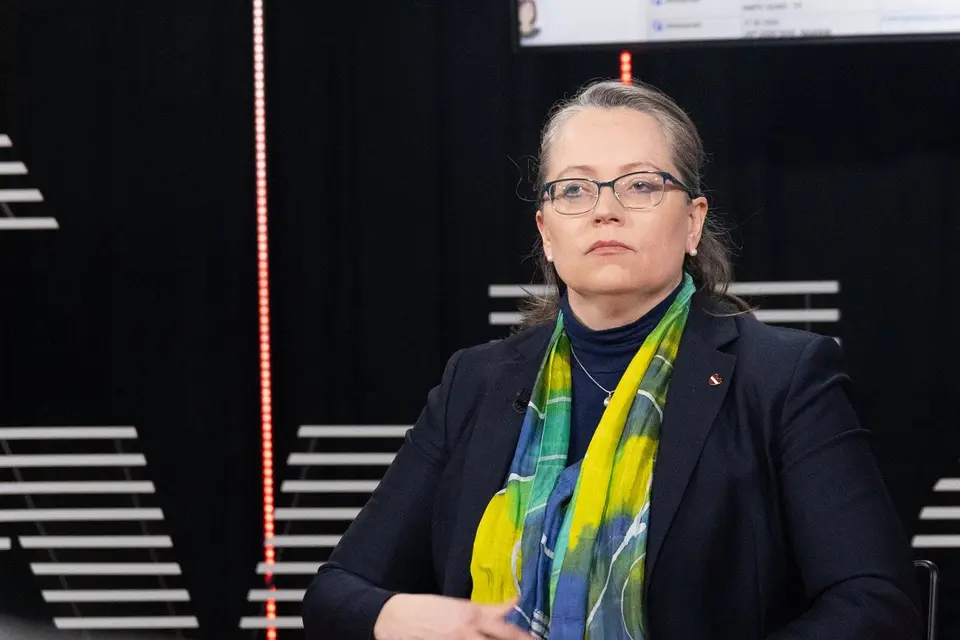
Providus: NA Control of Interior Ministry Poses Migration Policy Risks
Under the new government led by Andrej Kulberg, migration and integration policy may undergo significant changes — this was stated by Sanda Liepiņa, head of the think tank Providus, in the LSM programme "Afternoon", pointing to the possible transfer of the Interior Ministry to the National Alliance (NA).
"The National Alliance, and Jānis Dombrava in particular, has come forward with very radical proposals on immigration in recent weeks in Parliament. We hope that the four-party coalition has discussed these issues and there will be sensible solutions," Liepiņa emphasised.
An Immigration Bill is currently being reviewed in Parliament. Liepiņa expressed hope that the coalition partners have agreed not to implement the more radical proposals from the NA in the remaining four months before the next elections.
Overall, Liepiņa evaluated Kulberg's government's rapid formation positively. "The most important thing is that a government proposal has been reached in a short time period. This government will most likely be approved. That is a commendable achievement in this period," said the researcher.
However, Liepiņa criticised the assignment of the Agriculture Ministry to the Greens and Farmers Union (ZZS), pointing out that the party's previous agriculture minister Armands Krauze is a person against whom criminal proceedings have been initiated in the so-called timber traders case. "The party has placed its interests above the interests of society," Liepiņa stated.
Andris Bite, head of the Latvian Confederation of Employers (LLDK), told LSM that from potential Prime Minister Kulberg's government there is a sense of positive impetus to move forward, but he does not expect great miracles in the remaining period. "It should concentrate on fundamental matters, which first and foremost relate to security and public involvement in these issues," said Bite.
When asked about labour force risks related to the NA's immigration proposals, Bite acknowledged that risks exist, while emphasising that attracting labour for temporary workers should be separated from broader immigration policy.
"There are certainly risks, because the NA's position in that respect is very drastic, at least in its rhetoric at the moment. Until now we have not had an immigration policy and we have not had a defined labour force attraction policy," said Bite, adding that the LLDK has already been pushing during the previous government to agree on clear principles for labour force attraction.
"We are in favour of a strict but clearly discussed policy, in which the labour force we need can come and afterwards must return home," added Bite.
President Edgars Rinkēvičs on 16 May instructed Parliament deputy Andri Kulberg to form the new government, allocating just over a week for talks with parties. The president expected the potential government composition by 25 May. After the formation of the coalition and the Cabinet of Ministers, the government still needs to be approved in Parliament.
Source: LSM