Think Pink's landfill in Kagghamra remains – clean-up could cost 290 million
Despite prison sentences and concluded legal proceedings over the Think Pink scandal, thousands of tonnes of environmentally hazardous waste remain at nine locations across central Sweden.
Convicted but the waste stays – Think Pink's rubbish threatens land and water
Five people were sentenced to prison and damages of nearly 200 million kronor were awarded for a total of 19 environmental crimes, of which 18 were serious. This was the outcome when Svea Court of Appeal decided Sweden's largest environmental crime trial in history concerning the company Think Pink. The Supreme Court recently announced that it would not grant leave to appeal the case, which brought the legal process to a close. But as Svenska Dagbladet reports, the waste the company dumped has not disappeared – it remains at least nine locations across central Sweden, years after Think Pink went bankrupt.
By far the largest pile – almost 60,000 tonnes – is located in Kagghamra in Botkyrka Municipality. In December 2020, a major fire broke out there and continued until the end of February 2021. During those months, thick smoke hung over parts of southern Stockholm.
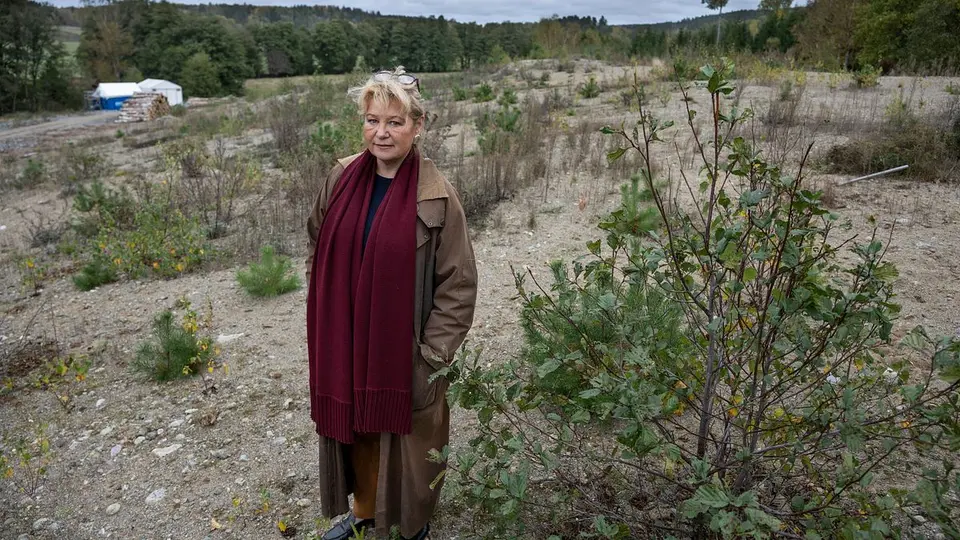
Eva and Willy Nowak live just a few hundred metres from the pile. They describe the period as painful.
– It was acrid smoke and it was almost impossible to breathe. There was so much you couldn't see the trees, says Eva Nowak.
– I had a headache every day, it was not good.
In order to shovel outside the house during winter, the couple had to use a protective mask with a carbon filter. Willy Nowak recounts that they took deep breaths of fresh air during shopping trips in order to cope.
A study from Stockholm University confirmed that the fire significantly affected air quality in the area. The levels of heavy metals – above all lead – and polycyclic aromatic hydrocarbons were significantly elevated on certain days.
Toxins leaching into protected waterway
In February 2021, the emergency services managed to cover the entire burning pile with sand. Not until last year had the temperature dropped enough for samples to be taken. The results showed the presence of toxic, carcinogenic and fertility-affecting substances. PFAS, metals and other hazardous substances are leaching from the pile, which is located directly adjacent to Kagghamraån – a waterway classified as being of national interest because of its unique sea trout population.
Botkyrka Municipality has installed a treatment plant at the site, financed with state grants. Director of Infrastructure Ilona Orgmetz states that it purifies approximately 75 per cent of the leachate water, but emphasises that this is a temporary measure.
– The pile must be removed. That is the only way, she says.
The transport and clean-up of Kagghamra is estimated to cost around 290 million kronor. The municipality hopes that the Swedish Environmental Protection Agency will grant subsidies within the framework of the ordinary process for state financing. For Think Pink's other dumping site in Botkyrka, at Kassmyra, a state emergency grant of approximately 40 million kronor was already granted in 2021 to transport away the waste and remediate the site – but that option does not apply to Kagghamra, which is not located in as densely built-up an area.
– The municipality's firm position is that the state should solve this task, because we cannot both be crime victims and pay the bill. It is completely unreasonable, says Orgmetz.
The problem is that the Swedish Environmental Protection Agency's funds for 2026 and 2027 were already exhausted when the municipality submitted its application. Any possible grant cannot come until 2028 at the earliest.
Eight other municipalities affected
Botkyrka is not alone. At least eight additional locations across central Sweden, where representatives of Think Pink were convicted of environmental crimes, waste remains. These include four locations in Norrtälje – where the municipality has ordered property owners to remove the contaminated material – as well as in the municipalities of Västerås, Norberg, Östhammar and Eskilstuna.
In Västerås, at Skultunatippen, the majority of the waste has already been dealt with at a cost of approximately 60 million kronor. Around 10,000 tonnes of rubbish remain, and complete remediation is estimated to cost a further approximately 40 million kronor. The bill falls on Västerås residents, notes Director of Infrastructure Martin Willén – the municipality has determined that the level of contamination does not meet the requirements for state grants.
– But it is not an option for us not to remediate, because it has a major impact for Skultuna residents and everyone who uses the area. We have to deal with it, he says.
The tip was owned by Think Pink, but Västerås Municipality plans to purchase the plot from the bankruptcy estate to gain full control over the remediation. The hope is that the work of transporting away the remaining waste in Skultuna can begin this year.
– It is of course bloody unfair that the cost should fall on Västerås residents. We should really be using this money for other things, says Willén.
Damages on paper – the bankruptcy estate empty
Svea Court of Appeal awarded substantial damages to both Botkyrka, 111 million kronor, and Västerås, 67 million kronor. The bankruptcy estate is, however, essentially empty, which means the municipalities will probably not receive any significant sums.
Private individuals were also awarded compensation, including the Nowak couple, who were awarded damages for the clean-up of the well on their property after it was contaminated by lead in connection with the fire at Kagghamra.
– But we're not likely to see a penny, says Willy Nowak.
The couple are also concerned about what is happening beneath the surface in the pile, where harmful substances have been reacting with each other for several years. They are also worried about what will happen in the surrounding area when the waste is finally removed. When the municipality dug into the waste last year to take samples, a strong stench spread across the area.
– It was like acid being released. It was impossible to breathe, says Willy Nowak.
Source: Svenska Dagbladet