Europol dismantles Balkan criminal network: nearly 50 arrested in Slovenia and Spain
An international police operation has led to the arrest of nearly 50 suspects linked to a network from the Western Balkans. During the investigation, drugs, weapons and money were seized.
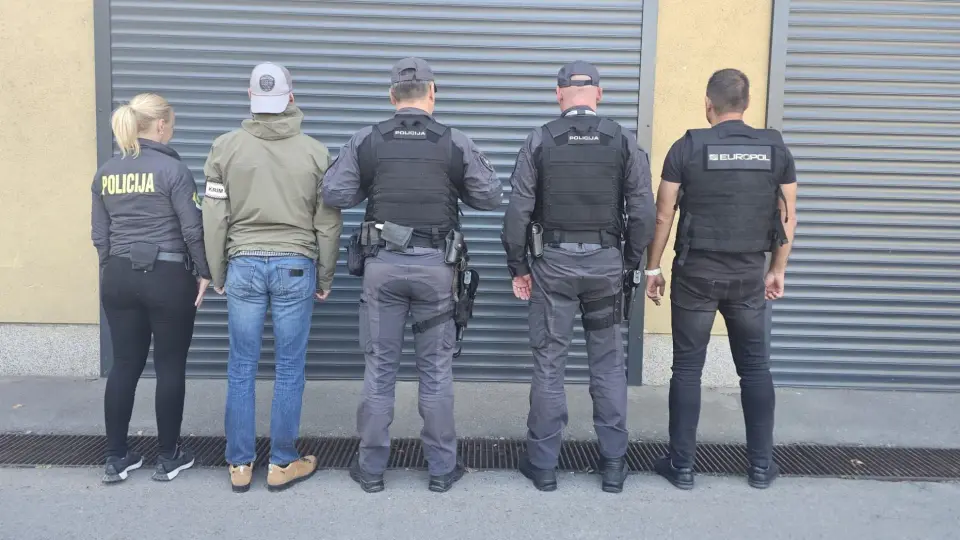
Europol breaks up Balkan criminal network: 34 arrested in Slovenia
An international police operation targeting a criminal network linked to the Western Balkans led to investigations at 42 locations in Slovenia and Spain on 6 October. According to Vreme, 34 people were arrested in Slovenia, with one arrest each in Spain and Croatia. Eleven suspects had already been detained previously, bringing the total number of arrests to nearly 50.
During the operation, 66 kilogrammes of drugs were seized – 51 kilogrammes of cannabis and 15 kilogrammes of amphetamine – along with firearms, jewellery and cash. The operation was supported by Europol together with Croatian authorities, with a Europol expert and a Croatian investigator present in the coordination centre in Ljubljana.
Encrypted communication and legal shipments as cover
Members of the network used encrypted communication platforms SKY ECC and CryptCom to organise transports, communicate with each other and conceal criminal activities from police. To transport drugs, they hired drivers, mostly from Slovenia, Bosnia and Herzegovina, and Bulgaria, who transported narcotics in lorries, vans and private cars alongside legitimate goods.
Cocaine, cannabis, amphetamine, MDMA and methamphetamine were transported from Belgium, the Netherlands and Spain to other European countries. The network exploited established commercial transport routes to conceal illegal shipments, with legal shipments providing revenue and reducing transport costs.
Murders, kidnappings and hand grenade attacks
The investigation linked the network to multiple shootings, murders and attempted murders, as well as the kidnapping of one of its members. Explosive devices, including hand grenades, were used in the attacks. When shipments were seized or disputes arose within the criminal group, violent reprisal measures followed against network members and their families.
According to investigators' assessment, network members used violence to recover losses, punish those responsible and maintain control over criminal activities. The investigation also covered an attempted murder in Spain.
The network included nationals from Bosnia and Herzegovina and Serbia, as well as Slovenia, Bulgaria, Turkey and the Netherlands.
Scope of seized goods exceeds physically seized quantities
In related investigations from February 2022 to September 2026, 253 kilogrammes of cocaine, 404 kilogrammes of cannabis, 18.8 kilogrammes of methamphetamine and 825 grammes of MDMA were seized. Additionally, 550 litres of acetic anhydride, a chemical precursor used in drug manufacturing, were seized.
The physically seized quantities represent only part of the actual scope of criminal activity discovered during the investigation. Analysis of communications from the SKY ECC platform and other evidence enabled investigators to reconstruct additional transports and transactions.
According to investigators' assessment, suspects could potentially be prosecuted for additional quantities: approximately 2.5 tonnes of cannabis, 474 kilogrammes of cocaine, 104 kilogrammes of heroin, 30 kilogrammes of amphetamine, 11.6 kilogrammes of MDMA, one kilogramme of ketamine and one kilogramme of hashish. A total of 18,000 ecstasy tablets, 1,000 units of psychotropic mushrooms and 45 litres of oil intended for amphetamine manufacturing were also recorded.
Coordination among 22 countries
Representatives from 22 countries participated in the investigation, with Europol providing analytical support and assisting in coordinating national police forces. The operation was carried out on the day of arrests by the Slovenian National Police, Spanish Civil Guard or its judicial police unit in Barcelona, and the Croatian police.
Source: Vreme