Murder of teacher in Gelnica: expert criticises failure of victim protection system
Expert Barbora Burajová claims that the state could have acted more effectively in the case of Zuzana's murder in Gelnica. The system for protecting victims of domestic violence, according to her, exhibits several fundamental shortcomings.
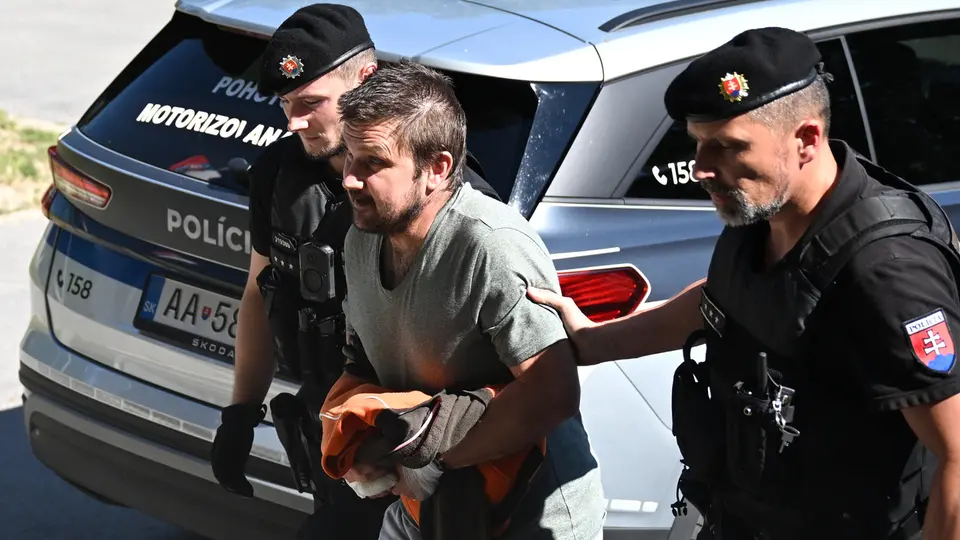
Protection system failed, says expert after murder of teacher in Gelnica
The recent murder of teacher Zuzana in Gelnica, who according to ta3.com was killed by her husband shortly after his release from custody, has once again raised the question of whether Slovakia has sufficient tools to protect victims of domestic violence. Barbora Burajová, head of the Coordination and Methodology Centre for the Prevention of Violence Against Women, speaks of failures that could have been prevented.
"This was a case that came to the attention of law enforcement authorities. In Slovakia, the reporting rate for partner and domestic violence is only at the level of 15 per cent of what actually happens," said Burajová. Every case should, according to her, be viewed as a unique opportunity to show both the perpetrator and society that violence is unacceptable.
Data from a Eurostat survey from 2023 confirm an alarming situation: 48 per cent of women in Slovakia face psychological violence from their partner and a third face physical violence or threats.
Why victims do not leave
Burajová explains that leaving a relationship is extraordinarily difficult for victims. They are prevented from doing so by justified fears of ineffective state protection, as well as by the psychological burden of the entire situation. "Women are afraid that they will lose their children, or that contact with them will become more difficult, or possibly that they will have to hand over the child to the perpetrator without the possibility of controlling his safety," she explained.
According to the expert, identifying violence in a partner relationship, which people enter with the expectation of shared happiness, is a very difficult process for the victim herself.
Unified methodology is lacking
Burajová criticises the absence of a unified procedure for assessing domestic violence risk. Police officers, prosecutors and judges, according to her, often work without a common methodology. "Victims' experiences with public institutions are very mixed and depend on who you encounter in a particular institution," she said. She described the topic of domestic violence as "marginal" within professional education for legal professions.
In the Gelnica case, the court rejected a restraining order on the grounds that the perpetrator was in custody. According to Burajová, this was a systemic error. "Since it is intended to be a preventive tool, the court should have issued it. Moreover, the civil court has no control over when the perpetrator will be released," she added. The problem also remains inadequate communication between authorities — victims learn about the perpetrator's release late or not at all.
Sentences are too lenient
Analysis of court decisions, according to the expert, shows that in half of abuse cases, the sentence is extraordinarily reduced, with courts arguing an undue impact on the perpetrator's family. "In the case of abuse of a close person, this is paradoxical. It is a signal to society about whether we consider such conduct unacceptable," Burajová emphasised.
Special programmes for perpetrators aimed at changing attitudes are, according to her, available only very rarely. "Violence is not an illness that needs to be cured, it is a matter of attitudes," she added.
Dispute with justice minister
Justice Minister Boris Susko, following a government meeting, described the Gelnica case as an individual failure of a single person, not a systemic failure, and signalled possible oversight of the court's procedural process.
Burajová disagreed with this assessment. "The way the minister framed this case, the fact that it was a perpetrator of domestic violence was completely lost. Domestic violence has its own dynamics and it is repeated conduct. If we look at the context of the relationship, we will not draw such truncated conclusions," she responded.
As a long-term solution, Burajová advocates for primary prevention starting in childhood. "We should work on ensuring that children know what behaviour is unacceptable, where their boundaries are and how to resolve conflicts constructively. We must reject violence in public discourse, because the simplest answer to why men commit violence is: because they can," she concluded.
Source: Google News SK — Crime (sk)