80-Year Pre-Parole Term Upheld for Campbell in 2015 Hanover Family Massacre
Mikhail Campbell's 80-year pre-parole sentence is affirmed after a failed appeal, while co-convict Errol Clarke is granted a retrial for six murders.
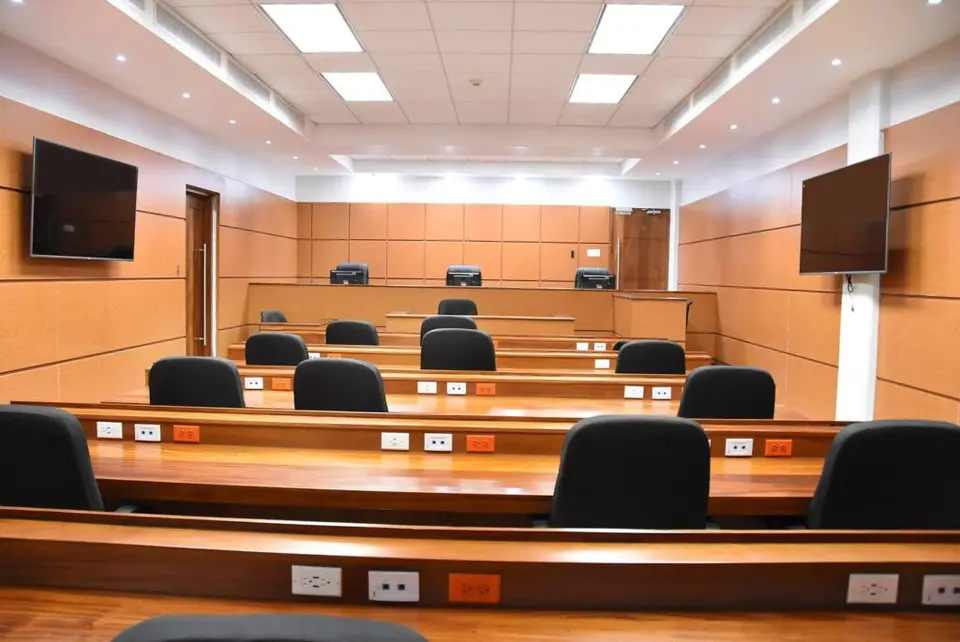
Campbell's appeal fails; Clarke wins retrial in 2015 Hanover family killings
The Jamaica Observer reports that two men convicted for the murder of six members of a single family in Hanover on the night of October 8, 2015 have received divergent outcomes from the Court of Appeal — one walking away with his 80-year pre-parole period intact, the other heading back to court for a retrial on the six murder counts.
Mikhail Campbell and Errol Clarke were jointly charged, tried, and convicted in the Hanover Circuit Court in November 2018 before Supreme Court Judge Justice Martin Gayle and a jury. The indictment carried 11 counts: arson (count one), six counts of murder (counts two to seven), and four counts of causing grievous bodily harm with intent (counts eight to eleven). The jury convicted Campbell unanimously and Clarke by a majority of five to two.
Both men received 20 years' imprisonment for arson and 20 years for each count of causing grievous bodily harm with intent, alongside life sentences for each of the six murders. Justice Gayle structured the sentencing so that certain counts ran concurrently while others ran consecutively, producing a total minimum pre-parole period of 80 years for each man.
The night of the attack
The court described the events of October 8, 2015 as "an unimaginable act of cruelty and brutality." The family home had been the site of a homecoming celebration just hours earlier, welcoming a mother and daughter back from an overseas trip. That same night, perpetrators forced their way into the property and, despite desperate pleas from those inside, shot and killed six people: a 62-year-old matriarch, a pregnant 36-year-old woman, two men aged 40 and 29, a young woman who had just turned 18, and a 15-year-old minor.
The killers then set the house ablaze. The six victims were burned beyond recognition. Four survivors escaped the flames but sustained thermal injuries covering between 13 and 25 per cent of their bodies.
Prosecution witnesses testified that the attack was premeditated and driven by revenge. Campbell, described as a "close, trusted family friend of the deceased" who had attended the homecoming celebrations earlier in the day, reportedly led men to the house to exact vengeance on one family member who had allegedly "disrespected" him. When the family refused to reveal that person's whereabouts, all six were executed. In an ironic turn, the man being sought had hidden under a bed in one of the rooms and survived — and later appeared as one of six Crown witnesses at trial.
Campbell's appeal: voice identification and sentence
Campbell challenged both his convictions and his sentences. On the convictions, he argued that the prosecution's case rested entirely on voice identification evidence that he characterised as "inconsistent, insufficient, and unreliable" — and that the case against him should have been dismissed on that basis. He did not challenge the sentences for arson or grievous bodily harm, but contended that the murder sentences were "manifestly excessive."
The Court of Appeal rejected Campbell's challenge to his convictions and affirmed his 80-year minimum pre-parole period. In addressing the sentence, the Appeal Court acknowledged that "this matter could be regarded as an exceptional case and represented…'the worst of the worst' for this type of offending." The court also noted that "the prosecution could have, at the very least, sought the death penalty with respect to the second and subsequent murders."
Despite upholding the 80-year term, the Appeal Court acknowledged procedural shortcomings in how the original sentence was constructed, observing that Justice Gayle "did not employ the structured methodology that has since become well established for determining appropriate minimum pre-parole periods, nor did he otherwise demonstrate how he arrived at those periods." The appellate judges nonetheless concluded that embarking on their own sentencing exercise produced the same outcome.
Clarke's appeal: jury deliberation and retrial
Clarke's appeal centred on a different ground entirely. He argued that the jury had been deprived of the minimum time for deliberation required by statute, rendering the murder convictions "unsafe" and the trial a nullity.
Court records showed that on November 30, 2018, the seven jurors retired to deliberate at 12:16 pm. They returned 58 minutes later without a unanimous verdict. The trial judge directed them to continue. They retired again at 1:18 pm and came back 40 minutes later with a majority verdict. Total deliberation time: one hour and 38 minutes. Section 44 of the Jury (Amendment) Act, 2016, however, stipulates that a jury must deliberate for at least two hours before returning a majority verdict.
The Court of Appeal found this argument sufficient to grant Clarke a retrial on the six counts of murder. His convictions and sentences on the five remaining counts — arson and the four counts of causing grievous bodily harm with intent — were affirmed.
The case now moves forward with Campbell's murder convictions standing and Clarke's murder convictions set to be re-examined before a new jury.
Source: Jamaica Observer