London paedophile jailed for AI "nudifying" children's photos amid bail criticism
Zafer Dogan, 32, of Enfield was sentenced to over two years for taking thousands of images of children. Officials and police criticised repeated bail decisions that returned him to the scene.
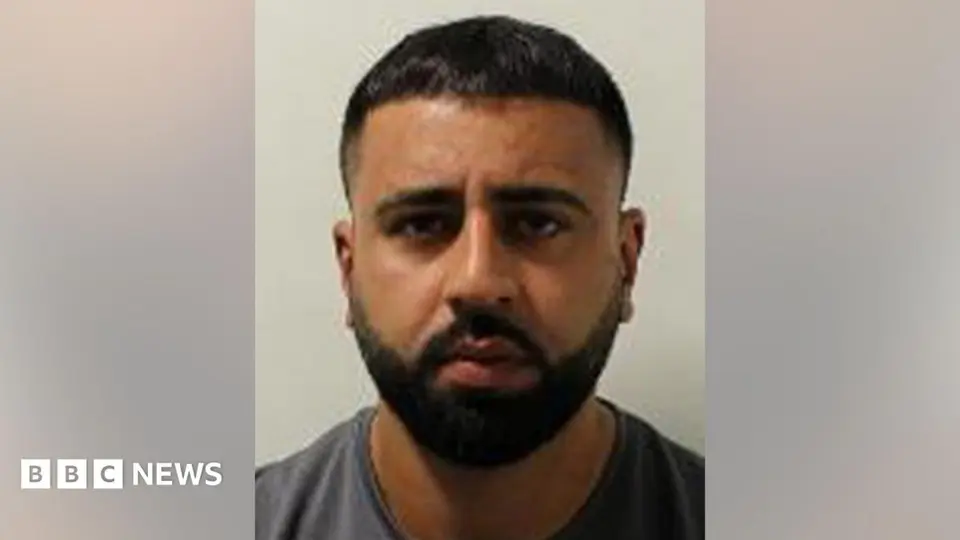
London man jailed after using AI to create indecent images of children from bedroom window
A north London man who photographed children from his bedroom window and used artificial intelligence software to "nudify" them has been jailed for two years and four months, bbc.co.uk reports. Zafer Dogan, 32, of Enfield, was sentenced at Wood Green Crown Court after pleading guilty to multiple offences involving indecent images of children.
Dogan admitted three counts of making indecent images of a child — including 900 category C images, 294 category B and 653 category A images, the most serious classification. He also admitted possessing extreme pornography, possessing a prohibited image of a child, creating purported intimate images of an adult, obstructing a constable in the execution of their duty, and two further counts of making indecent photographs of a child. Police say he had taken more than 5,000 pictures in total, many from his bedroom window overlooking a playground.
Repeated bail decisions draw sharp criticism
Despite opposition from both police and prosecutors, Dogan was granted conditional bail on multiple occasions throughout the proceedings, forcing at least one victim's family to move into temporary accommodation after they felt unsafe remaining near his flat.
Prime Minister Andy Burnham described the case as "disturbing" and called on those across the criminal justice system to review it and "make any necessary changes as a result." Speaking to BBC London's political editor Karl Mercer, Burnham said Metropolitan Police Commissioner Sir Mark Rowley "certainly has a point and it needs to be heard," after Rowley publicly condemned what he called the "unfathomable decisions" of the justice system.
The Ministry of Justice said bail decisions were "made by the independent judiciary," though it acknowledged the Crown Prosecution Service held the right to challenge them. The ministry added that the protection of victims, witnesses and the public "must always be considered when deciding whether or not an offender should be released on bail."
Timeline of bail and sentencing proceedings
Dogan's arrest and subsequent court appearances unfolded over a period of several months:
- 16 July 2026: Dogan arrested on suspicion of offences involving indecent images of children.
- 4 August: Re-arrested; charged the following day and remanded by police.
- 6 August: First appearance at Highbury Corner Magistrates' Court; pleaded guilty to all offences and was granted conditional bail.
- 7 August: Bail hearing at Wood Green Crown Court; conditions retained with an additional requirement to attend probation appointments.
- 7 September: Further bail hearing at Wood Green Crown Court, requested by police and the Crown Prosecution Service; sentencing brought forward by the judge in an attempt to mitigate risk.
- 11 September: Sentencing at Snaresbrook Crown Court adjourned; case returned to Wood Green Crown Court for 23 September.
- 23 September: Sentencing adjourned again at Wood Green Crown Court.
- 24 September: Sentenced at Wood Green Crown Court.
Victims' commissioner and former officials speak out
London's victims' commissioner Andrea Simon said victims and their families had been "grossly failed" by the court system. Speaking on BBC Radio 4's Today programme, Simon said: "To know that the police and prosecutors opposed bail multiple times, but nevertheless, he was returned to the community, is an indication that the capacity pressures on prisons are not being balanced with the impacts that that's having on victims' lives."
Simon called for a multi-agency review and drew parallels with the case of serial sex offender and murderer Simon Levy, who killed two women and raped a third in 2025 while on bail for other offences.
Sir Mark Rowley echoed the criticism, stating that "bail decisions were ultimately made that prioritised the offender's interests over the safety and the peace of mind of the victims." Prosecutors had, he said, rightly opposed bail "on multiple occasions, building on officers' clear assessments of the great risk he posed."
Former Conservative justice secretary Sir Robert Buckland told BBC's The World At One that "dangerous men should not be released on bail when they are clearly going to go on and commit further offences," and warned the problem would recur "until justice is given the same priority that we give to health and education."
Sir Tom Winsor, former Her Majesty's Chief Inspector of Constabulary, told the same programme that judges appeared to be "taking prison capacity into account," resulting in prolific offenders being bailed. "Releasing dangerous people into the community is an extremely serious thing," he said, adding that judges also held an obligation to explain their decisions.
Prison capacity cited as systemic pressure
Burnham acknowledged broader structural failings, saying the plan to release some offenders before the end of their custodial sentences to free up prison space was "not an ideal situation." He attributed the problem to a sustained failure to build sufficient prison capacity: "The failure to build prison spaces over a number of years has led to this unacceptable situation."
Dogan was arrested in July after Met Police officers observed him from body-worn camera footage. His case has prompted calls at the highest levels of the criminal justice system for a reassessment of how bail decisions are weighed against victim safety.
Source: Kaieteur News