Kenyans charged in $130m ghost student fraud targeting US federal aid
A US investigation called Operation Ghostbusters has uncovered a $130m scheme using stolen identities to enrol fake students and claim federal aid. Five indictments have been issued, with Kenyan nationals at the centre of the alleged fraud.
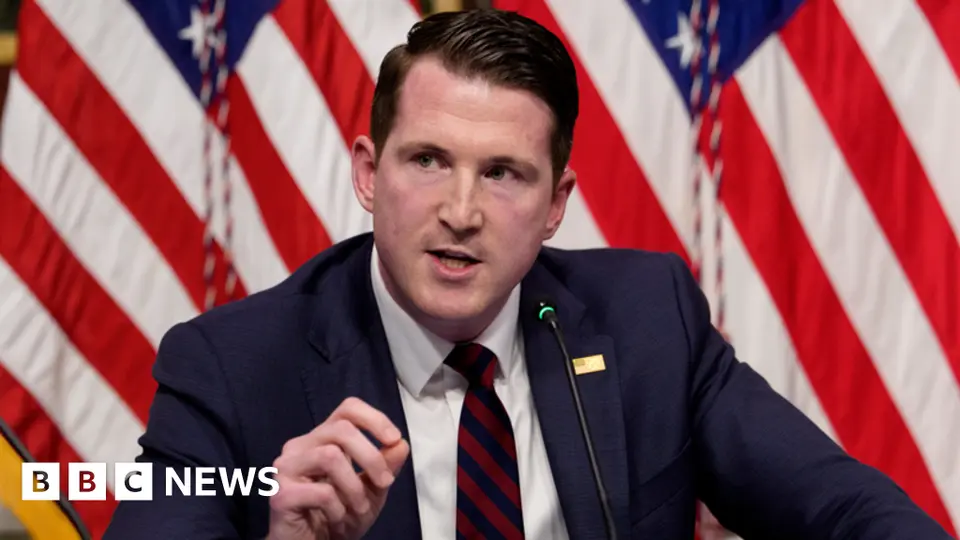
Operation Ghostbusters: Kenyan nationals indicted in $130m US ghost student scheme
A federal grand jury in Nebraska indicted Francis Mogambi, a Kenyan national, on 19 October 2026 on five counts of theft of government money and five counts of aggravated identity theft, bbc.com reports. Mogambi had arrived in the United States in May 2024 after winning the Diversity Visa lottery, a programme granting permanent residency to applicants from around the world.
Prosecutors allege that between November 2025 and May 2026, Mogambi worked with associates in Kenya to steal the identities of US citizens and use them to enrol fictitious students at American colleges. Once the fake students were registered, financial aid payments were allegedly diverted to Mogambi, who kept 30% and transferred the remainder to his Kenya-based associates. The intended loss in his case was $20,000 (£15,000).
Court documents indicate Mogambi received $2,000 per week and attempted to recruit at least one additional person into the scheme. He allegedly told that individual he needed a business capable of cashing larger cheques without paying taxes. Mogambi was arrested shortly after the indictment and remains in custody pending trial.
Hundreds of victims, 40 open investigations
His case is one strand of a broader inquiry, dubbed Operation Ghostbusters, targeting the alleged use of stolen identities to place fictitious students in colleges and claim federal financial aid. US authorities say the investigation has produced five indictments to date, while 40 further investigations remain open. Hundreds of people have had their personally identifiable information stolen and used to access student aid funds.
The stolen personal data was sometimes sold online for between $4 and $8, with fraudsters reportedly targeting low-income Americans who had never attended college.
At a news conference on 29 October announcing the first charges, Assistant Attorney General Colin M. McDonald, head of the Justice Department's National Fraud Enforcement Division, issued a direct warning to those involved. "If you steal taxpayers' dollars, if you exploit a programme meant to help students, we are resolved to find you and prosecute you," he said.
Ghost students kept enrolled "semester after semester"
The Justice Department says those behind the fraud employed what it described as "super intelligence" to place fake students in classrooms and complete coursework, sustaining the illusion of attendance and allowing aid payments to continue uninterrupted.
"The goal is to keep the ghost student in school as long as possible. Semester after semester after semester stealing money from the taxpayers," McDonald said.
The consequences are not limited to government finances. Individuals whose identities were stolen have found themselves facing unexpected student loan debts, despite never having enrolled in any programme. "His identity was stolen, his credit is now at risk, and his name is on the bill," McDonald said, describing the situation of one victim.
McDonald also noted that nearly a third of community college applicants in California in 2024 had been identified as fraudulent.
Scale of suspected fraud: 830,000 flagged accounts
Investigators identified 830,840 potentially fraudulent Federal Student Aid identification numbers linked to nearly $130m (£97m) in September and October 2026 and recommended that the Department of Education disable them. The figure represents financial aid associated with potentially fraudulent accounts, not confirmed losses.
"In a flash, the money vanishes, often overseas in places like Kenya," McDonald said.
US-Kenya cooperation, first international crypto seizure
The investigation has also uncovered alleged financial links stretching between the US and Kenya. In September, US officials travelled to Kenya to work alongside local law enforcement on extraditions, prosecutions and asset recovery. With Kenyan investigators' assistance, US authorities seized more than $750,000 from a cryptocurrency account belonging to a Kenyan national connected to the wider scheme — described by the Justice Department as the first international seizure of its kind conducted in Kenya. That seizure is not linked to Mogambi's individual case.
In a separate case in Virginia, prosecutors allege a Kenyan national received more than 700 fraudulent student-aid refunds totalling approximately $1.44m (£1.07m). At least $1.3m of those funds was subsequently moved through thousands of transactions to accounts in both the US and Kenya.
In New Jersey, three individuals have been charged with allegedly acting as money mules in a scheme to obtain more than $1m (£746,445) in federal student aid. Prosecutors say they received funds via US bank accounts, retained a portion for themselves and transferred the balance to alleged co-conspirators in Kenya connected to a purported safari company.
Mandatory minimum of 10 years
If convicted, Mogambi faces a mandatory prison sentence of at least 10 years, according to the Justice Department. Authorities say those found guilty will also face forfeiture of assets and restitution orders to victims, in addition to any custodial terms imposed.
Source: Google News MT — Crime (en)