Mangione's lawyers argue double jeopardy should bar New York murder trial
Luigi Mangione's defence team is pushing to dismiss state murder charges, claiming his federal guilty plea two months ago prevents a second prosecution.
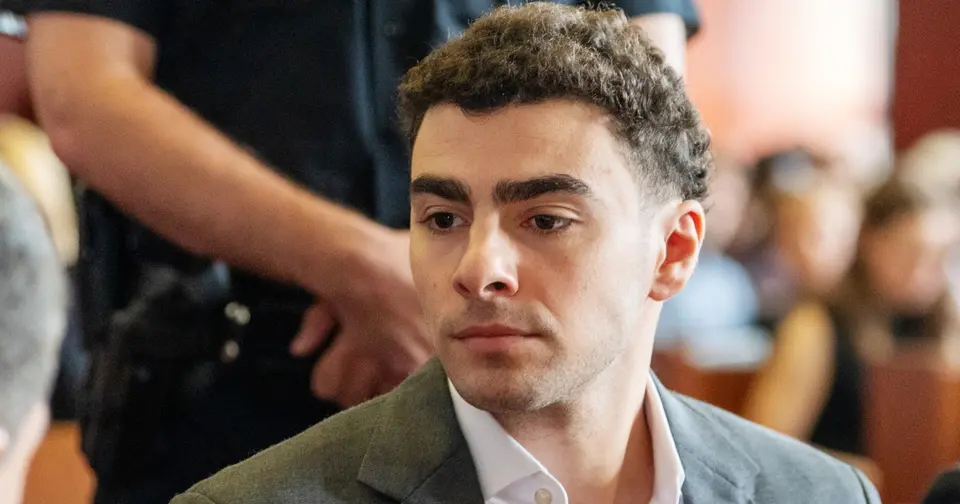
Defence invokes double jeopardy to block Mangione's state murder trial
Lawyers for Luigi Mangione on Friday pressed a New York court to dismiss the state murder and weapons case against their client, arguing that his guilty plea to federal stalking charges in August renders a separate state prosecution unconstitutional, NBC News reports.
Mangione, who admitted to fatally shooting UnitedHealthcare CEO Brian Thompson outside a Midtown Manhattan hotel in December 2024, entered his federal guilty plea in Manhattan federal district court. That plea triggered an ongoing legal dispute over whether the state prosecution can proceed at all.
The state trial, originally scheduled for 18 September, was postponed indefinitely while New York Supreme Court Justice Gregory Carro considers the double jeopardy question. A ruling on the dismissal motion is expected on 10 December.
Prosecution insists the cases are distinct
Manhattan District Attorney Alvin Bragg's office argues the state charges are legally separate from the federal ones. The federal case centred on interstate stalking and cyberstalking through the use of interstate facilities, each resulting in death — offences defined under federal statute. The state indictment, prosecutors contend, is a straightforward murder case, and murder is not generally defined by federal law.
Mangione's defence team rejected that distinction. Attorneys Karen Friedman Agnifilo, Marc Agnifilo and Jacob Kaplan told the court in a written submission that the federal charges to which Mangione pleaded guilty involve overlapping legal elements with the state charges.
"Here, Mangione was charged by the federal grand jury with possession of the same firearm at the same time and at the same location as the People are charging here," the attorneys wrote. "There is and was no other gun."
Sentencing timelines and potential penalties
Mangione faces a potential life sentence when he returns to federal court on 18 December. Should the state case proceed, the maximum penalty would be 25 years to life in prison.
Legal experts told NBC News that state prosecutors must satisfy New York's double jeopardy law, which requires that the two cases address distinct legal "evils" before the state matter can proceed. Mangione's lawyers maintain the harms targeted by each prosecution are identical.
"There is no basis to find such a difference, much less a sufficiently great difference as to fit within the narrow statutory exception," they wrote in their most recent filing.
A potential exception for the state
Earlier this month, Bragg's office pointed to a double jeopardy exception that could provide a legal path forward if Justice Carro determines the state charges contain unique "elements" not present in the federal case. Lead prosecutor Joel Seidemann cited earlier litigation in the federal proceeding to support that argument.
U.S. District Judge Margaret Garnett had previously ruled that the stalking could not be classified as violent under the law — a decision that led to the dismissal of two counts that would have made Mangione eligible for the death penalty. The Justice Department had announced its intention to seek capital punishment before Garnett's ruling.
The killing and the arrest
Mangione admitted to using a 3D-printed firearm to shoot Thompson outside the Midtown Hilton in the early hours of 4 December 2024, as the executive was walking from his hotel to his company's investor conference. Thompson, a Minnesota father of two, was ambushed and shot several times before the gunman fled on foot, triggering an interstate manhunt.
Mangione was arrested five days later in Altoona, Pennsylvania, after patrons at a McDonald's recognised him from photographs circulated by the NYPD.
The Maryland native, Ivy League-educated and from a prominent family, told the federal court he was motivated by a personal grievance with the health insurance industry. Investigators said he had never been a UnitedHealthcare policyholder.
His attorneys have argued that the high-profile nature of the case led to what they describe as overprosecution, with both state and federal authorities pursuing separate cases for the same event.
Source: Google News MT — Crime (en)