Miguel Salguero Olivares convicted of murdering UNC student Faith Hedgepeth in 2012
A jury in Durham, NC convicted Miguel Salguero Olivares of first-degree murder and rape in the 2012 killing of 19-year-old UNC student Faith Hedgepeth.
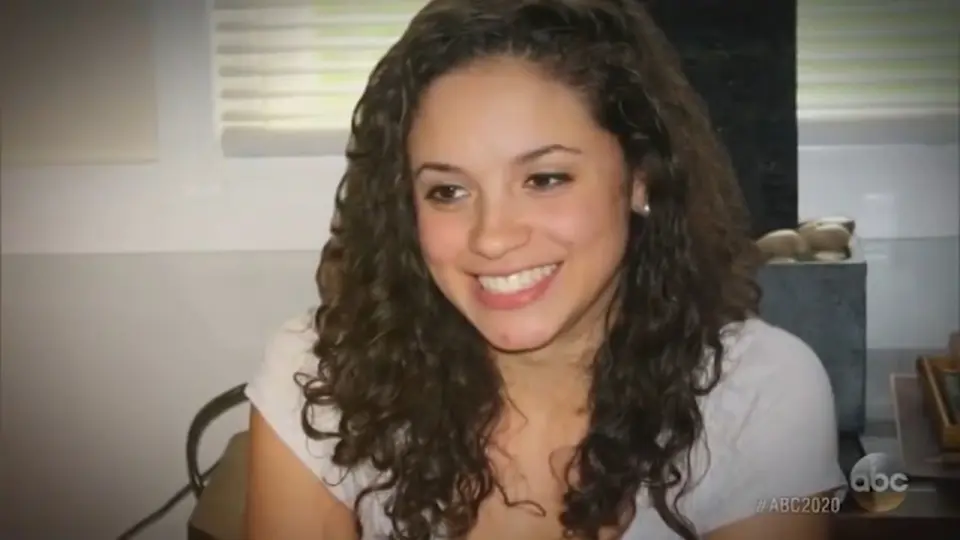
Durham man found guilty of 2012 murder of UNC student Faith Hedgepeth
A North Carolina jury convicted Miguel Salguero Olivares, 33, of first-degree murder, rape, sexual offense and burglary on Friday in connection with the killing of Faith Hedgepeth, a 19-year-old University of North Carolina at Chapel Hill sophomore who was beaten to death in her off-campus apartment in September 2012, abc11.com reports.
Jurors deliberated for six hours across two days before returning the verdict. Salguero Olivares did not testify during the trial, and his defence attorneys rested their case without calling any witnesses.
DNA evidence described as "screaming his name"
Prosecutors told jurors that forensic evidence directly tied Salguero Olivares to the crime. His fingerprints and palm print were recovered from a wine bottle at the scene. His DNA was found on Hedgepeth's body, on a note written on a fast-food bag and on a blood-covered rum bottle that investigators identified as the murder weapon.
Forensic scientist Erin Ermish, of the state crime laboratory, testified that DNA taken from Hedgepeth's body was 170 septillion times more likely to be a mixture of her DNA and Salguero Olivares's than a mixture with an unknown individual. She also testified that DNA from the top of the rum bottle was 48.6 tredecillion times more likely to belong to the two of them than to two unrelated, unknown people.
Prosecutor Angela Garcia-Lamarca addressed the jury directly in closing arguments. "We know who did it. The forensic evidence is screaming his name," she said, describing the "uncurable agony" Hedgepeth's family has endured since her death. "He sentenced her to death. He sentenced everybody else who loved her to life."
Special prosecutor Lisa Coltrane told jurors in her portion of the closing: "They still got the guy because he left his DNA like confetti all over that room."
Arrest came nine years after the killing
Hedgepeth's roommate, Karena Rosario, testified that she had been drunk and unwell when Hedgepeth drove them home from a club at around 2 a.m. on 7 September 2012. Rosario said she subsequently called a friend to collect her, leaving Hedgepeth alone in the apartment. She returned hours later to find her roommate's body. An autopsy revealed extensive skull fractures and cuts to Hedgepeth's face, head, arms and legs.
Salguero Olivares was not arrested until nine years later, after being pulled over on suspicion of driving while intoxicated and providing a DNA sample that prosecutors say matched evidence recovered from the crime scene.
Nearly two dozen witnesses testified for the prosecution, including crime scene technicians, state and local law enforcement officers, a DNA expert and friends of Hedgepeth.
Prosecutors suggested Salguero Olivares may have attended a barbecue at a neighbouring apartment that night, made unwanted advances on Hedgepeth and Rosario in the car park, and then returned after Rosario left. Garcia-Lamarca acknowledged that no witnesses corroborated that theory, telling jurors: "You don't have to believe that to know he's guilty."
Defence challenged evidence handling
Defence attorneys argued that investigators had adopted "tunnel vision" in treating their client as a suspect, and questioned Rosario's account of the night, the processing of the crime scene and the reliability of certain DNA samples. They noted that police had failed to search some areas of the apartment, that some possible blood evidence was subsequently lost, and that DNA from consensual sexual contact can persist for days.
"Maybe he was living the same life as other 19- and 20-year-old children that we've heard about in this case," defence attorney Jason Murphy said. "Maybe he had too much to drink, maybe he forgot about an encounter."
Coltrane rejected that line of argument. "No matter what kind of mistakes were made or things that were missed, it doesn't erase the palm print; it doesn't somehow lift the DNA out of Faith," she said.
Source: Google News MT — Crime (en)