Nathaniel White, the RoboCop Killer: how a mother's determination stopped a serial killer
Nathaniel White murdered six women in New York, claiming he was inspired by the film RoboCop. A grieving mother's own investigation led police to him.
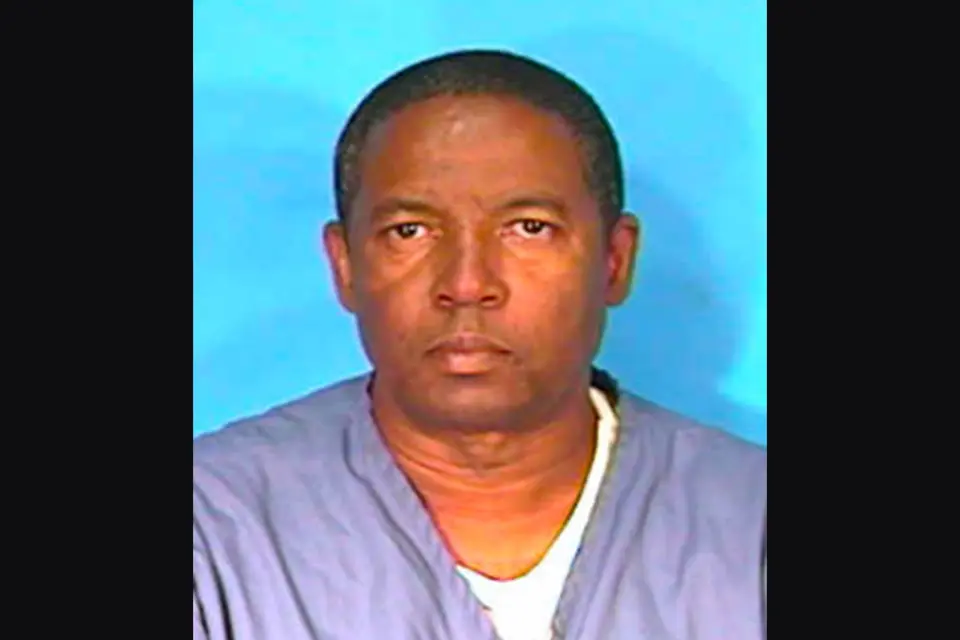
The mother who hunted a serial killer
Nathaniel White told investigators he was inspired by the 1987 film RoboCop when he killed six women across New York state in the early 1990s. As oxygen.com reports, it was not police work alone that brought him down — it was the relentless determination of a victim's mother.
When 23-year-old Angelina Hopkins and her cousin Brenda Whiteside disappeared after a night out in the Poughkeepsie area on 20 July 1992, Hopkins' mother refused to wait for answers. She took photographs of both women to the Blue Note bar — where they had last been seen — and handed them to anyone willing to look, leaving her phone number with the bartender.
When the man who had been spotted with the two women returned to the bar, the bartender called Mrs Hopkins. She came down and confronted him herself, unaware she was standing in front of a serial killer.
"While police are trying to run down leads," retired Orange County District Attorney Frank Phillips explained on Oxygen's Unknown Serial Killers of America, "the mother of Angelina Hopkins…was so tenacious in trying to find out what happened to her daughter that she engaged in an investigation on her own."
Mrs Hopkins had the presence of mind to note down the man's licence plate number. That detail proved decisive.
---
A trail of bodies beginning in 1991
The murders investigators would eventually link to White had begun more than a year earlier. On 26 March 1991, two people walking along an old railway bed in Middletown, New York, discovered the body of 29-year-old Juliana Frank.
"She was totally nude," Phillips said. "She was stabbed beyond recognition. The body was found posed in a very unusual position."
Frank had been stabbed 47 times — the majority of wounds concentrated on her head, leaving her face, in the words of retired Middletown Police Detective Barry Bernstein, "totally destroyed." An autopsy later revealed she had been four months pregnant at the time of her death. There were no signs of sexual assault.
"It looked like somebody went berserk," Bernstein recalled. "[And] just kept stabbing her and stabbing her."
Bernstein had known Frank personally. "She would hang out downtown and if I parked my car, she would come over and say hello to my partner and I," he said. "She was a good person." Frank was also the mother of two sons. "Julie was my best friend," her sister-in-law Toni Tyrian remembered. "Very pretty and she did have such blue eyes. Never saw her in a bad mood."
Despite inquiries into those close to her, investigators could not link anyone to the murder.
---
Second and third victims
More than a year passed before the next confirmed killing. On 10 July 1992, a concerned neighbour discovered the body of Laurette Huggins in the living room of her apartment. Like Frank, Huggins was found naked and lying face up, with approximately 40 stab wounds — many to the face — and posed in a similar manner. Again, there were no signs of forced entry and no evidence of sexual assault.
Huggins was a single mother of three originally from the island of Saint Vincent. Her daughter Adenna Huggins described her as independent and hardworking. "She always seemed to make it work. We never had a sense of lack in our life," she said, calling her mother "an angel on earth."
At the scene, detectives recovered what would become a critical piece of evidence: a bloody fingerprint on the paper insert of a coat hanger. At the time, however, there was no one to match it against.
Later that same month, on 31 July 1992, a dog walker discovered the body of 27-year-old Adraine Hunter in a wooded area in Goshen, New York. She too had been found naked, posed, and bearing multiple stab wounds.
"The M.O. was pretty much the same in all three cases," Bernstein said. "They were all single women."
---
The licence plate that unravelled everything
As detectives investigated Hunter's murder, they also learned of the disappearance of Hopkins and Whiteside. One of the victims' sisters had been with the cousins at the Blue Note bar on the night they vanished. She recalled that a group of men had invited them back to their house; she had declined, but Hopkins and Whiteside had agreed to go. They were never seen again.
It was this information that drove Hopkins' mother to conduct her own inquiries. After confronting White outside the bar — he claimed he had dropped the two women off in Middletown — she remained suspicious and handed his plate number to the New York State Police.
The licence plate turned out to have been stolen. Police conducted a traffic stop and identified the driver as White, an Army veteran with a criminal record. He was taken into custody on a parole violation.
The bloody fingerprint recovered from Huggins' apartment was subsequently matched to White. He was ultimately convicted of killing six women, including his own girlfriend's niece — a case that earned him the nickname the RoboCop Killer, after his own stated claim about his motivation.
"At that point, I said, 'I believe we have a monster on our hands,'" Bernstein recalled of the Frank crime scene. "It was unconscionable to think that somebody would be able to do that, even in a fit of rage."
Source: The Sun