Symbionese Liberation Army: Rise and Fall of a Radical Terror Cell
The SLA kidnapped heiress Patricia Hearst in 1974, thrusting a small Berkeley-based extremist group into national headlines. pbs.org revisits the group's violent history.
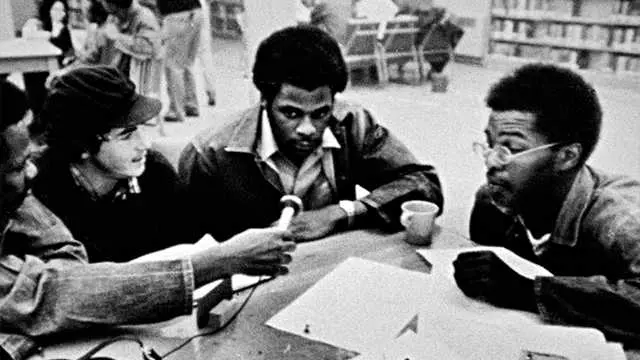
From Prison Tutoring Sessions to Armed Revolution
Following the death of Bill Harris, pbs.org has revisited the history of the Symbionese Liberation Army — a small, self-styled urban guerrilla group whose slogan read: "Death to the fascist insect that preys upon the life of the people."
The group's most notorious act came on February 4, 1974, when three of its members forced their way into a Berkeley apartment and abducted 19-year-old Patricia Campbell Hearst, an undergraduate at the University of California and heiress to the Hearst media fortune. Her fiancé, Steven Weed, was present when she was taken.
The kidnapping transformed a little-known radical cell into a national story. Reporters camped outside the Hearst family mansion. Local police and the FBI launched a search. Two days later, on February 6, a letter arrived at Berkeley radio station KPFA — a "communiqué" signed by the S.L.A., framing the abduction as a political act.
Radicalization Behind Prison Walls
The S.L.A. did not emerge fully formed. Its roots lay in the Black Cultural Association, an inmate organization active at California's Vacaville prison in the late 1960s and early 1970s. A University of California–Berkeley professor coordinated visits by white students — among them Russell Little and William Wolfe — who came to tutor prisoners in political science, black sociology, and African heritage.
Over time the B.C.A. shifted from a self-help model toward black nationalism. One Vacaville prisoner, Donald DeFreeze, serving time for armed robbery, broke away to form a splinter group called Unisight. That group became the organizational basis for the S.L.A. Future members Angela Atwood and Nancy Ling Perry also visited the prison to make contact with radical inmates. In the eyes of these young radicals, the prisoners — regardless of the crimes they had committed — took on the status of political prisoners, oppressed by a racist and corrupt society.
Berkeley as Breeding Ground
By the early 1970s, Berkeley had long functioned as the center of radical militarism in the United States. After years of protest, some fringes of the left were growing impatient with non-violence. The idea of armed action was gaining ground in certain circles.
In March 1973, DeFreeze escaped from prison and made his way to Berkeley. With help from Little and Wolfe, he found shelter with Nancy Ling Perry and Patricia Soltysik. Around the same time, Bill and Emily Harris arrived in Berkeley from Bloomington, Indiana, along with Gary and Angela Atwood. The Harrises and Atwood connected with DeFreeze and the others through radical networks.
By the end of that summer, the group had coalesced into the Symbionese Liberation Army. Their platform — loosely Marxist in orientation — called for ending racism, monogamy, the prison system, and "all other institutions that have made and sustained capitalism." DeFreeze adopted the name "General Field Marshal Cinque" and led the group. Their black nationalist program envisioned the creation of "homelands" within the United States for minority groups. Armed with stolen weapons and financed through robberies, the group conducted paramilitary training in the Berkeley hills.
The Safe House in Concord
In August 1973, the S.L.A. moved to a group safe house in Concord, California. The membership at that point included DeFreeze, Perry, Soltysik, Bill and Emily Harris, Angela Atwood, Russell Little, Joe Remiro, William Wolfe, and Camilla Hall — a small group of mostly white, upper-middle-class, well-educated individuals led by an escaped Black convict. The safe house was reportedly characterized by intense political discussion, quasi-military discipline, weapons throughout, and communal living arrangements.
Murder of Marcus Foster
On November 6, 1973, the S.L.A. made its first public act: the assassination of Marcus Foster, the Black superintendent of Oakland's public schools. The group had targeted Foster over his reported support for a student identification system — though by the time of his murder, Foster had already withdrawn that support.
The killing announced the S.L.A. as an organization willing to commit political violence. It also drew immediate condemnation from Berkeley's broader left, most of whom found the murder of a Black civic leader politically incomprehensible.
Arrests and Destruction of Evidence
Following the Foster killing, S.L.A. members went underground. Two months later, local police stopped Little and Remiro for a traffic violation. The vehicle was found to contain S.L.A. weapons and propaganda. Both men were arrested and charged with Foster's murder.
That same day, Nancy Ling Perry set fire to the Concord safe house, apparently in an attempt to destroy evidence ahead of a police search. Officers arrived to find the building scorched but not destroyed — leaving a substantial amount of evidence intact.
The Hearst Abduction and Its Aftermath
The kidnapping of Patricia Hearst in February 1974 became the group's defining moment — and ultimately its undoing. Over the months that followed, Hearst participated in S.L.A. crimes, declared her allegiance to the group, and publicly defended her captors. Whether this represented genuine radicalization, coercion, or the psychological phenomenon experts called Stockholm Syndrome — a victim mistakenly identifying with captors as a survival mechanism — remained a matter of dispute long after the events.
Her parents maintained she had been brainwashed. Experts offered competing interpretations. Hearst herself, in her own account years later, presented yet another version of events. No consensus emerged.
The Symbionese Liberation Army had set out to topple what it called the ruling class. Instead, its campaign brought criminal prosecution, violent death, and the imprisonment of its most prominent surviving members. Bill Harris, one of the last living founders, died recently — prompting pbs.org's retrospective on a group that briefly, and violently, disrupted American public life in the 1970s.
Source: NYT US News