Murder of General Prats in Buenos Aires: Chilean spies and bomb in the early hours of 1974
Former Chilean Army commander Carlos Prats and his wife died in a bombing attack in Palermo. Agents from DINA and the CIA were identified years later as those responsible.
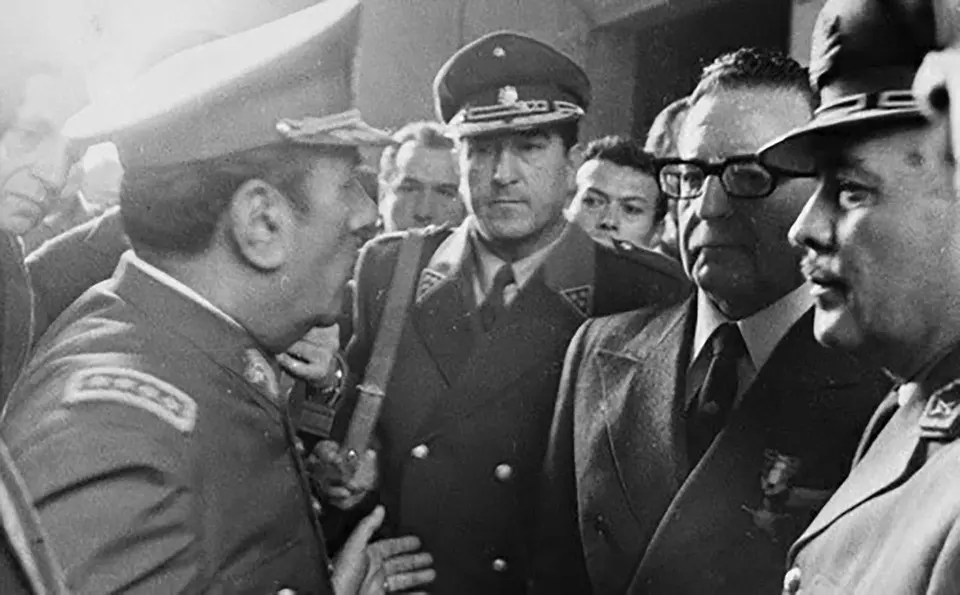
Palermo, 30 September 1974: the night General Prats was murdered
According to lafolkargentina.com.ar, the lights on Malabia Street at number 3300 were switched off and there were no patrol cars in sight when General Carlos Prats stopped his Fiat 125 in front of the building at number 3351. It was 00:30 on Monday, 30 September 1974. His wife, Sofía Cuthbert, waited in the passenger seat whilst he got out to open the garage gate. Prats had taken barely two or three steps when a bomb that had been previously placed in the vehicle exploded.
Cuthbert, aged 57, died inside the car without being able to react. The general, aged 59, fell dead on the pavement from the blast wave. The remains of the Fiat were scattered in a radius of fifty metres. The police report stated that Sofía Cuthbert's body "was missing both legs and the left arm, and had several open wounds and burns in various parts of the body". The garage gate, the same report noted, "was driven inwards".
A liberated zone in the heart of Palermo
The signs that something strange was occurring that night were evident: the lights along a section of Avenida del Libertador were also switched off and there was no police presence in one of the most heavily patrolled neighbourhoods of Buenos Aires. The explosion was so violent that it broke the windows of several buildings on the block and was heard across many streets in the surrounding area. Despite this, the first patrol car took almost half an hour to arrive at the scene. According to the police report, only at 00:50 did an anonymous call alert the police station. By 03:00, the car was still on fire.
The case was handed to Judge Alfredo Nocetti Fasolino, who promptly issued a provisional closure order, unable to identify those responsible. At that moment, Peronism in government was shifting to the right and paramilitary groups were beginning to operate with greater freedom against dissidents.
The exile of an uncomfortable military figure in Buenos Aires
Prats had arrived in Buenos Aires following the coup d'état of 11 September 1973, led by Augusto Pinochet, his former subordinate and later declared enemy, who overthrew and caused the death of constitutional president Salvador Allende. The former Chilean Army commander settled in Argentina, governed by María Estela Martínez de Perón, to escape certain death in his own country, although his life was not without danger in exile: he had been receiving threats for some time.
He had been unable to travel to Madrid because his passport had expired and the Chilean embassy was delaying its renewal, as if seeking to buy time. In Buenos Aires, Prats worked as Public Relations manager at the Cincotta company, a position he had obtained shortly after arriving from Chile.
The perpetrators: DINA, the CIA and Enrique Arancibia Clavel
Many years passed before the courts were able to identify the members of the commando that carried out the attack. According to subsequent investigations, agents of Chile's National Intelligence Directorate (DINA) participated: Raúl Eduardo Iturriaga Neumann, alias "Diego Castro Castañeda"; Guillermo Humberto Salinas Torres, alias "Freddy Yáñez"; Pablo Belmar Labbé, alias "Sergio Molina Correa"; Armando Fernández Larios, alias "Armando Faundez Lyon"; and Juan Alberto Delmás Ramírez. CIA agent Michael Townley was responsible for placing the explosive in the general's vehicle. The Chilean spy Enrique Arancibia Clavel was also identified, who would become known over time for other episodes linked to Operation Condor and the Beagle conflict, before being killed by a casual lover.
Who was Carlos Prats
Born in Talcahuano, Chile, in 1915, Carlos José Santiago Prats González was one of the few Latin American military officers of that era with a genuine democratic and institutional vocation. President Salvador Allende appointed him commander in chief of the Army following the assassination of his predecessor, General René Schneider, perpetrated by an ultra-right-wing group in October 1970.
Initially, Prats remained distant but respectful towards Allende, a leader who sought to guide Chile towards socialism by peaceful means. Over time, that relationship became closer. Prats himself wrote: "I learned to appreciate him as a human being, with great self-confidence, even proud if you will, sensitive to the directness of the person speaking with him, sardonic towards those who merely agreed with him and without any accumulation of hatred, not even towards his most bitter political enemies... his work vitality was extraordinary".
His murder in Buenos Aires was part of Operation Condor, the repressive coordination between the dictatorships of the Southern Cone that operated during much of the 1970s, with the objective of eliminating political opponents beyond the borders of each country.
Source: Google News AR — Crime