Hospitals, schools, aviation: cyberattacks threaten critical sectors in Belgium
Cyberattacks are multiplying in Belgium, with 588 incidents recorded by the end of September, already exceeding the total for 2025. Artificial intelligence is amplifying the threat to essential sectors.
Rising cyber threats: hospitals, aviation and schools in the crosshairs
Belgian and European supermarkets paralysed in their refrigeration systems, Pluxee, the Federal Public Service for Finances, hospitals: cyberattacks are affecting an increasingly varied range of sectors in Belgium and Europe. According to DHnet, two pro-Russian collectives, NoName057(16) and Z-Pentest, have claimed responsibility for these recent intrusions on Telegram, but their actual involvement remains to be established.
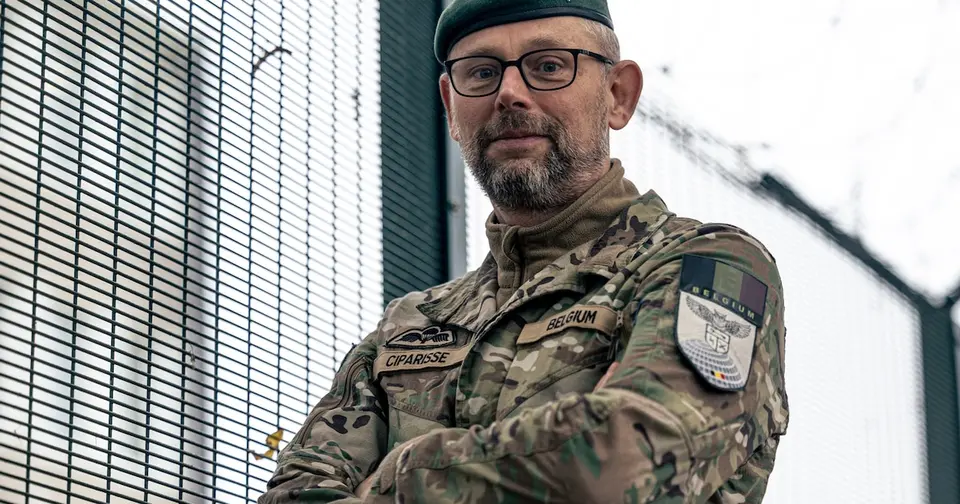
"The question is whether this is opportunism or if these groups are really behind the incidents," says Major-General Pierre Ciparisse, head of Defence Cyber Operations. If their responsibility is confirmed, these would be pro-Russian activists rather than a state actor. "Attacks carried out by an isolated individual can also be claimed afterwards," he recalls.
Belgium's Cybersecurity Centre mobilised
Facing the scale of the incident, the Belgian Cybersecurity Centre (CCB) is coordinating the response and keeping security services informed, including the State Security Service, military intelligence, OCAM and Cyber Operations. "Since Monday, we are discovering new victims every day," says Major-General Ciparisse. The attacks are still ongoing as the investigation continues.
The assessment is concerning: by the end of September, Belgium had already recorded 588 cyberincidents, more than for the entire year of 2025 — and this figure does not necessarily account for the full extent of attacks.
Tracing attacks back to their perpetrators remains a considerable challenge. "It takes a great deal of time and it is not always possible. The earlier an attack is detected, the fewer traces the attacker has left in the system. It is these traces that allow us to trace the attack back to them," explains Pierre Ciparisse. Responding quickly protects victims, but simultaneously complicates the identification of those responsible. Defence knows this first-hand: following the major cyberattack it suffered in 2021, investigations are still ongoing today.
Artificial intelligence: a multiplier of both attacks and defence
Artificial intelligence now plays a central role in the evolution of the cyber threat landscape. "It is a multiplier: it makes it possible to find vulnerabilities and construct attacks more easily. Less experienced actors can now achieve much more significant results," the Major-General elaborates. However, artificial intelligence also accelerates defence, by facilitating the detection of vulnerabilities and their correction.
The challenge now is to respond almost instantaneously. "Previously, patches were installed monthly, then weekly. Soon it will need to be done daily, or even automatically," Ciparisse argues.
Cyberspace is moreover not limited to computers alone: it also encompasses electronic warfare. GPS jamming, cited by the Major-General as a concrete example, can affect civil aviation, naval and ground forces.
Aviation, healthcare, schools: sectors particularly at risk
For Axel Legay, a cybersecurity expert, several sectors warrant increased vigilance. Civil aviation ranks at the top, with potentially "catastrophic" consequences in the event of an attack. "I worked on this ten years ago, and I can tell you that on operational theatres, GPS jamming is already a reality," he notes. The expert also highlights the challenges posed by decentralised autonomous aviation — an air traffic system where aircraft would themselves coordinate their trajectories without central control. "We are not there yet, but there are significant developments thanks to drones." The more a system becomes automated and connected, the more it multiplies potential entry points for hackers.
The healthcare sector is also vulnerable, following an attack targeting a blood supply in France. "Hospitals are increasingly connecting in order to enter into the medicine of the future, with everything then passing through a network, first that of the hospital, then the internet. Remote intervention or a patient file that can be consulted at any time presupposes that this network functions constantly and is not hacked," warns Legay.
The school sector is an increasingly pressing concern: pirates are attacking "children through phishing to recover their data," the expert reports. Submarine cables represent another threat, whose compromise could paralyse telecommunications and a large part of the internet.
Transport, energy, telecommunications: sectors critical to Defence
Major-General Ciparisse recalls that Defence intervenes in a secondary role, behind the CCB. Three sectors are considered particularly critical: transport, energy and telecommunications. In the event of conflict, they would be essential for moving allied troops eastwards and ensuring the functioning of rear bases.
"We work closely with them to assess their resilience to cyberattacks, but it is primarily these sectors that must implement the necessary protective measures," concludes Pierre Ciparisse.
Source: DHnet