Arrest of Bolivia's Attorney General: drug-trafficking, corruption and US pressure
Roger Mariaca, former Attorney General of Bolivia, was detained along with 13 people, including three prosecutors. The US cancelled his visa and accuses him of receiving bribes to facilitate drug trafficking.
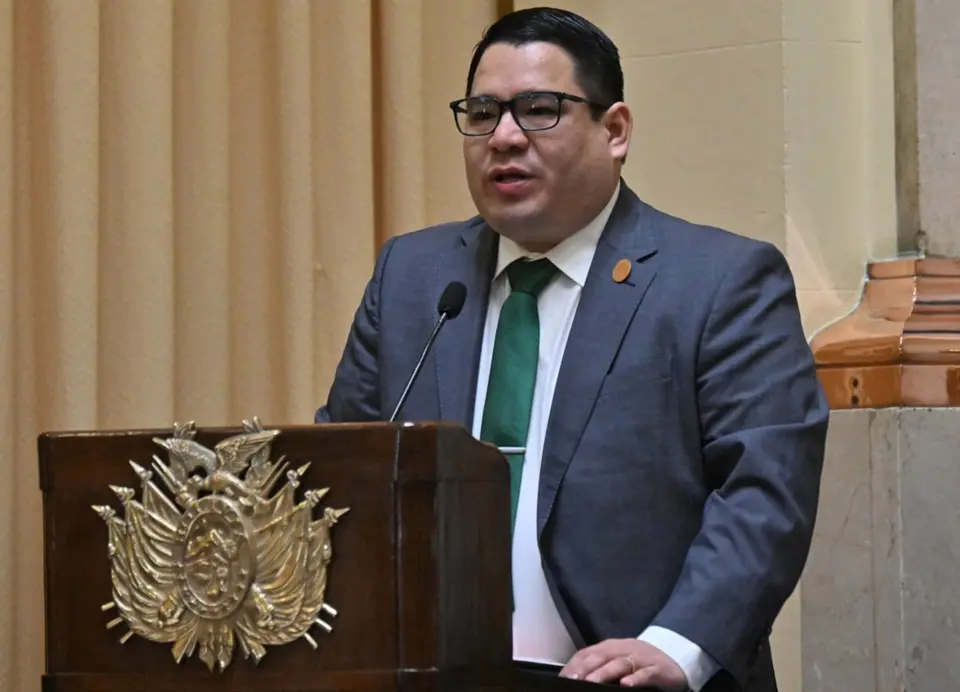
Bolivia in judicial crisis: the fall of Attorney General Roger Mariaca
An ambulance with $300,000 hidden inside, prosecutors detained and formal accusations of drug-trafficking from Washington: this is how nacion.com describes the scenario shaking Bolivia's justice system following the capture of Attorney General Roger Mariaca.
Mariaca, aged 38, is being held in preventive detention for six months in a prison in Potosí, in the south of the country. Bolivian justice is investigating him for money laundering, drug trafficking and organised crime. He was arrested last week in Santa Cruz during a police operation in which 13 other people were also detained, among them three prosecutors.
Days before the operation, the United States had cancelled Mariaca's visa along with those of other high-ranking officials and businesspeople from Bolivia, Colombia, Ecuador and Peru, identified by Washington as corrupt or linked to drug-trafficking.
A controversial appointment
Mariaca was appointed to head the Public Ministry in 2024 by Congress, then controlled by the Movement Towards Socialism—the party that brought Evo Morales to power (2006–2019) and former president Luis Arce (2020–2025). Morales is today the main opponent of centre-right president Rodrigo Paz.
Before taking office as Attorney General, Mariaca headed the Santa Cruz prosecution office, the department most affected by drug-trafficking in Bolivia. "His profile has always been controversial" due to "controversial cases" under his supervision, Bolivian sociologist Luciana Jáuregui told AFP.
Among these cases is the investigation into Uruguayan drug-trafficker Sebastián Marset, one of the most wanted in the Southern Cone. When the case was under Mariaca's charge in 2023, Marset managed to evade a major capture operation. The current Government Minister, Marco Antonio Oviedo, accused the prosecutorial authorities at that time of "letting him go" and "returning his seized assets". Marset was eventually detained in Bolivia in March and transferred to the United States. Local media broadcast a video of his detention—which AFP could not verify—in which he allegedly tells police: "Mariaca is my friend".
The cancelled visa and the Cerimedo case
From August 2025, Mariaca's performance as Attorney General took on a "political character", according to Jáuregui. The sociologist mentions the case of Argentine consultant Fernando Cerimedo, personal adviser to president Paz, detained for attempted feminicide and alleged corruption that implicates the government and the presidential family.
Mariaca publicly argued that the cancellation of his US visa was "pressure" due to the investigation he was conducting against Cerimedo. Washington, on the other hand, maintains that as a prosecutor he received "bribes to facilitate drug-trafficking and help violent criminals evade justice", an accusation he denies. The Bolivian government, for its part, claims that under his term the Public Ministry became a "criminal organisation".
External backing for Paz's government
The Bolivian government assures that the operation against Mariaca had US intelligence cooperation. Secretary of State Marco Rubio stated that his country "firmly supports" president Paz. The 15 countries that are members of the Shield of the Americas—the alliance of right-wing governments against transnational crime, led by the Trump administration—also expressed their support.
"In a way, external pressure is serving as a point" of support for Paz "facing his internal weakness", Jáuregui analysed. The president won elections with a coalition that subsequently fragmented, and strong street protests have strained his government. Political scientist Adriana Rodríguez told AFP that Paz is suffering from "wear and tear" caused by his recent unpopular economic measures.
Dispute over leadership of the Public Ministry
Following Mariaca's detention, the Public Ministry appointed Luis Montaño as its new head. Paz's government rejected him, accusing him of obstructing the case. In the early hours of Saturday, following a lengthy parliamentary session, Congress appointed José Armando Urioste as interim Attorney General, after approving a reform to formally remove Mariaca and replace him.
An opposition senator questioned during the session the presence of officials from the embassies of the United States, Argentina and Peru, whom she recorded with her phone.
According to Rodríguez, the Public Ministry is a scene of "political power struggle" while it is defined who will assume the position permanently. For Jáuregui, Paz's government "is seeking to build new legitimacy through the fight against corruption and drug-trafficking".
Source: Google News BO — Crime