Four officials in preventive detention on suspicion of links to drug-trafficking network linked to Marset
A judge sent the former Attorney General Mariaca and three other officials to different prisons, investigated for protecting Uruguayan drug trafficker Sebastián Marset.
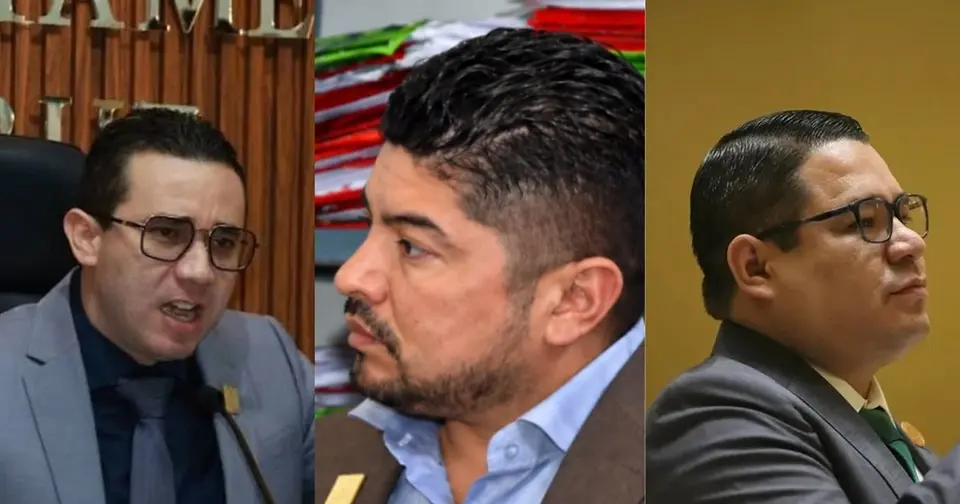
Former Attorney General and three officials sent to separate prisons for six months
Róger Mariaca, former Attorney General of the State, departmental prosecutor for Santa Cruz Alberto Zeballos, superior prosecutor Martín Irusta and police major Rubén Aparicio were sent to preventive detention on Saturday 3 October, following a bail hearing that lasted more than 14 hours. According to El Deber, the court ruling was announced shortly after 05:00 in the morning.
The judge ordered that each person under investigation be held in a different penitentiary facility: Mariaca will go to the Cantumarca prison in Potosí; Zeballos to El Abra in Cochabamba; Irusta to Patacamaya in La Paz; and Aparicio to Chonchocoro, also in La Paz. The four will remain in La Paz whilst the transfer to each detention centre is arranged.
The Public Prosecutor's Office had requested six months of preventive detention for the four accused and had asked that Mariaca, Zeballos and Irusta be held in San Pedro prison, and that Aparicio be sent to Patacamaya. The judge granted the protective measure, although it distributed the destinations differently from what was requested.
Judge rejects trial of liabilities for Mariaca
One of the central points of the hearing was Mariaca's defence argument that, having served as Attorney General, the special regime provided for in Law 044 on the Trial of High Authorities of the Judicial Body and the Public Ministry should apply.
The judge rejected that objection. Citing article 12 of that same law, he concluded that the alleged offences—trafficking in controlled substances and criminal organisation, amongst others—are of a common nature and that it was not established that these were offences committed in the exercise of public functions. Consequently, he determined that Mariaca should be prosecuted through the ordinary route. The defence announced that it would appeal the ruling.
The judge also declined territorial jurisdiction by considering that the investigated facts would have developed mainly in Santa Cruz, and ordered that the records be sent to the competent court in that department. However, he established that the bail phase could continue in La Paz so as not to affect the rights of the persons under investigation.
The prosecution's hypothesis: institutional protection for drug trafficking
The Public Prosecutor's Office maintains that the four accused would have formed part of a structure that provided institutional protection to organisations linked with drug trafficking, specifically in favour of Uruguayan national Sebastián Marset. According to the charges, that alleged protection would have facilitated the storage, entry and exit of controlled substances, in addition to providing advance information about police operations.
Among the elements presented by the Public Ministry are police reports, information attributed to the Financial Investigation Unit (UIF), records from the United States, audiovisual material, electronic devices and money seized during arrests.
One of the most notable aspects of the charges is the alleged existence of payments of up to 500,000 dollars per month that Marset would have made in exchange for protection and information. The prosecution document describes those disbursements as an alleged "protection rent" and indicates that the network would have involved different levels of the state apparatus, including the then Interior Ministry, the Departmental Prosecution Office of Santa Cruz and, subsequently, the Attorney General's Office.
The charges also incorporate an interview conducted with Marset on 13 March, before being handed over to the DEA, in which the Uruguayan makes reference to Mariaca and claims to have paid him to receive information about possible operations against him. The Public Prosecutor's Office uses those statements, together with other reports, videos and relationship diagrams, to support its hypothesis.
Roles attributed to each accused
According to the prosecution charges, each of the four persons under investigation would have performed a specific function within the alleged network. Mariaca is attributed a role of "protection and assistance" during his time as departmental prosecutor of Santa Cruz and later as Attorney General of the State. Zeballos is assigned a similar role from the Departmental Prosecution Office. Aparicio would have been responsible for alleged protection and assistance tasks from the Police, whilst Irusta is attributed an operational function within the Public Ministry.
The investigation also revisits the operation of 29 July 2023, when Marset managed to escape from a police deployment in Santa Cruz before he could be captured. The Public Prosecutor's Office maintains that a possible leak of information would have allowed the drug trafficker to anticipate the actions of the authorities, and links that episode with the alleged structure of institutional protection.
The charges do not constitute a sentence or establish criminal responsibility. All the elements presented must be subjected to investigation and judicial assessment within the framework of the proceedings that will continue in Santa Cruz.
Source: El Deber