USA declares Attorney General Mariaca ineligible over bribery and drug trafficking
Washington accuses Róger Mariaca Montenegro of accepting bribes to facilitate drug trafficking. The USA also revoked visas for 12 Bolivians and declared nine others ineligible.
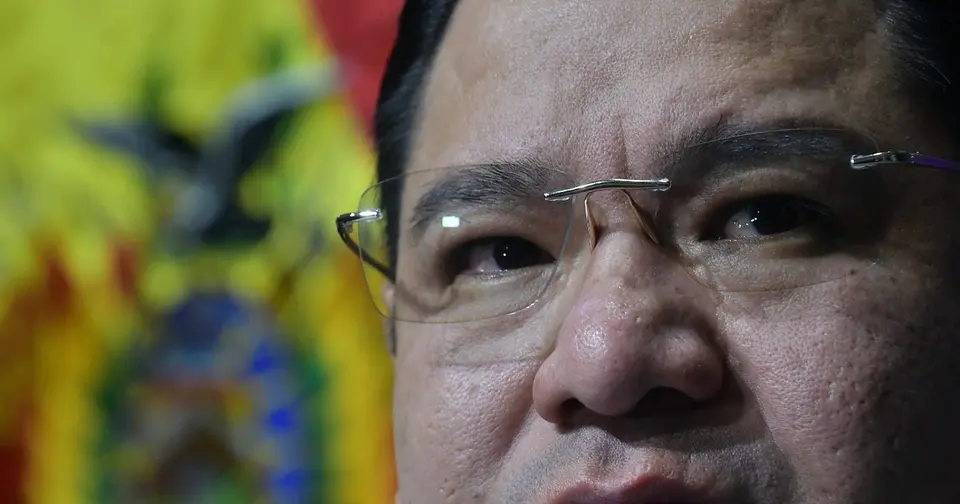
United States bars Bolivia's Attorney General over corruption and narco links
The United States Department of State declared Bolivia's Attorney General, Róger Mariaca Montenegro, ineligible to enter its territory, accusing him of having "solicited and accepted bribes to facilitate drug trafficking" and of helping violent criminals evade justice. According to El Deber, the news agency Associated Press confirmed the decision on Monday, 28 September.
The measure was explicitly linked by the Donald Trump administration to its regional anti-narcotics policy. "His actions endanger President Trump's efforts to combat narcoterrorism, whilst undermining the very democratic institutions that Bolivia, as a participant in the Shield, works to strengthen," Washington stated in the released rationale.
Mariaca was elected Attorney General in October 2024 for a six-year term, having previously served as departmental fiscal for Santa Cruz.
The designation was carried out under Section 7031(c) of United States legislation, which allows foreign officials to be declared ineligible when Washington has credible information about their involvement in significant corruption or serious human rights violations. The restriction also extends to their immediate family members.
Visas revoked and nine additional Bolivians declared ineligible
In parallel, the Department of State applied Section 212(a)(3)(C) of the Immigration and Nationality Act to revoke existing visas for 12 Bolivian citizens and their families. This provision allows entry to be prevented when Washington considers that a person's presence could generate serious adverse consequences for its foreign policy.
The released list includes fiscal Martín Daniel Irusta Flores; anti-corruption judge Albania Chané Caballero Saavedra; departmental fiscal for Santa Cruz, Alberto Zeballos Flores; judge Rosario Ximena Flores Paniagua; former Justice Minister Iván Lima Magne; fiscal Álvaro Mauricio Nava Morales Carrasco; constitutional magistrate Israel Ramiro Campero Méndez; former president of the National Customs Authority Alberto Samuel Soto de la Vía; former alternate magistrate Iván Ramiro Campero Villalba; judge of La Guardia Rodrigo Aldo Vedia Espinoza; police colonel Frans William Cabrera Quispe, and businessman José Luis Iriarte Cussi.
To these are added nine other Bolivians whose names were not released, currently without US visas, declared generally ineligible together with their families. In total, the measures affect 22 Bolivians, counting the specific designation against Mariaca. AP also reported that the regional package includes citizens of Colombia, Ecuador and Peru.
The context of the Shield of the Americas
The decisions became known six days after Bolivia participated in New York in a meeting of the Shield of the Americas, an initiative promoted by Trump to coordinate regional actions against transnational criminal organisations.
Bolivia, the United States and 13 other countries signed a declaration on 22 September establishing three pillars of cooperation—economic, security and multilateral coordination—and including the commitment to coordinate sanctions, designations, financial measures and migration restrictions against actors linked to organisations considered narcoterrorist.
President Rodrigo Paz participated personally in that meeting. As a first joint action, Shield countries agreed on measures against 24 criminal organisations, amongst them the Primeiro Comando da Capital (PCC) and Comando Vermelho (CV), groups whose presence has been identified by Bolivian authorities in matters linked to drug trafficking and border violence.
Washington maintained that the restrictions seek to fulfil commitments to "defend democratic governance" against corruption and drug trafficking, and stated that undermining a democratically elected government constitutes a threat to security and the rule of law on the continent.
In Mariaca's case, the Department of State went beyond a generic migration restriction: it publicly designated him for "significant corruption" and directly attributed to him conduct aimed at favouring drug trafficking and protecting criminals. The statements correspond to the United States Government; the information released on Monday did not detail the specific evidence on which Washington bases those accusations.
Source: El Deber