Clashes in Bolivia leave at least nine dead in Sacaba following Morales's resignation
Clashes between coca growers and security forces in Sacaba left at least nine dead and more than a hundred injured. The IACHR condemned the disproportionate use of force.
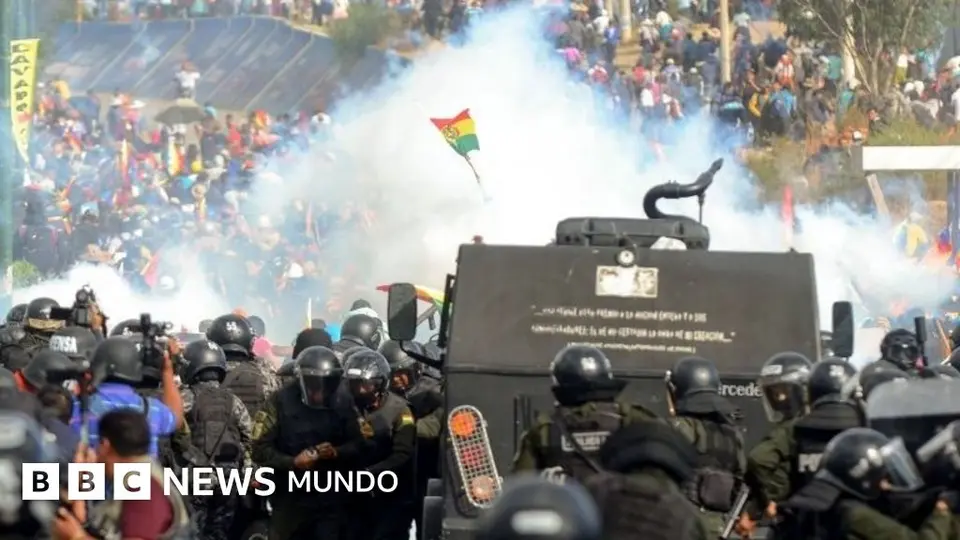
Bolivia: nine dead in Sacaba as clashes persist
According to bbc.com, clashes recorded in Sacaba, in Chapare Province, left at least nine dead and more than a hundred injured, according to data from the Inter-American Commission on Human Rights (IACHR). Images from La Paz and Cochabamba showed another day of repression and violence on Friday, which continued on Saturday under similar conditions.
The disturbances were triggered by the advance of coca leaf producers who have been staging protests since President Evo Morales's resignation on 10 November. The Human Rights Ombudsman's Office put the total confirmed death toll at at least eighteen in a crisis approaching four weeks in duration.
The IACHR condemns use of force
The IACHR expressed its condemnation of the "disproportionate use of military and police force" and stated that "firearms should be excluded from devices used to control social protests". The body also warned that "the indiscriminate use of tear gas by police and military forces in Bolivia seriously violates international legal standards".
The United Nations High Commissioner for Human Rights, Michelle Bachelet, warned that "repression could worsen the situation" and urged the authorities to ensure that security forces comply with international standards on use of force, as well as the right to life and physical integrity of the protesters.
The IACHR also expressed concern about the role of the Armed Forces in operations carried out since the beginning of the week, and disseminated numerous videos and photographs through its social media channels illustrating the severity of the crackdowns.
Coca growers reject Áñez government
The clashes in Sacaba began when police attempted to disperse a protest by coca growers from Chapare, the rainforest region where Morales built his trajectory as a trade union leader. The peasant mobilisation sought to reject the transitional government of Jeanine Áñez, who assumed the presidency following Evo Morales's resignation.
Coca leaf producers, together with indigenous and peasant groups in various cities across the country, reject Áñez's mandate and demand the return of the former president, who is currently in Mexico in the status of political asylee.
Bolivian media reported, citing police sources, that explosive objects were found in the possession of protesters and that the violence is believed to have been initiated by the explosion of dynamite carried by the mobilised groups.
Barricades and looting in La Paz
In La Paz, there were also episodes of violence involving protesters supporting Morales and police and military forces. Trenches, bonfires and barricades multiplied on streets and avenues at various points in the city that houses the state powers. Tear gas was the main resource employed by law enforcement forces in attempting to disperse the mobilised groups, although several of them remained on the streets well into the evening.
Some of these collectives were described by residents as gangs or criminal organisations taking advantage of the political crisis to carry out looting and destruction.
Polarisation and misinformation
BBC Mundo journalist Boris Miranda, special correspondent in Bolivia, noted that polarisation had reached such an extreme that each day is spent discussing who is responsible for the violence: Morales's followers or his detractors. "The Sacaba episode produced a reaction similar to that of previous days. Each side blames the other for Friday's deaths when there is still no evidence that could lead to those responsible," Miranda stated.
The journalist also pointed out that another common factor in the crisis is the circulation of distorted information by the opposing sectors. "I feel that many people only give credence to what they want to believe," he concluded.
HRW questions transitional government
Human Rights Watch (HRW), based in Washington, backed the request from Bolivian civil organisations for the IACHR to send a monitoring commission to Bolivia. José Miguel Vivanco, HRW Director for the Americas, questioned the actions of some authorities in Áñez's government regarding their threats of persecution against opposition politicians and judicial proceedings against journalists.
"Áñez must not forget that she assumed office without a single vote. Her mission is to call for fair elections at the earliest possible opportunity," Vivanco stated.
Government calls for dialogue
The transitional government, through the Minister of the Presidency, Jerjes Justiniano, reiterated on Friday evening a call for pacification and dialogue with the mobilised sectors. "We convoke absolutely all sectors, social movements, to the pacification of the country, so that together we can sit at a dialogue table. We convoke all sectors, including the sector of upheaval," Justiniano stated, in direct reference to the coca leaf producers.
President Áñez also reported on the identification of groups described as subversive, made up of "Bolivian and foreign citizens", and denounced that their aim is to block basic services in the country's main cities.
Source: Google News BO — Crime