Drug trafficker Sebastián Marset, sought by the DEA, detained in Santa Cruz, Bolivia
Uruguayan Sebastián Marset, nicknamed "the Hidrovia manager" and with a reward of US$2 million, was captured on Friday in Bolivia. He was being pursued by Paraguay, Bolivia, Uruguay and the United States for drug trafficking and money laundering.
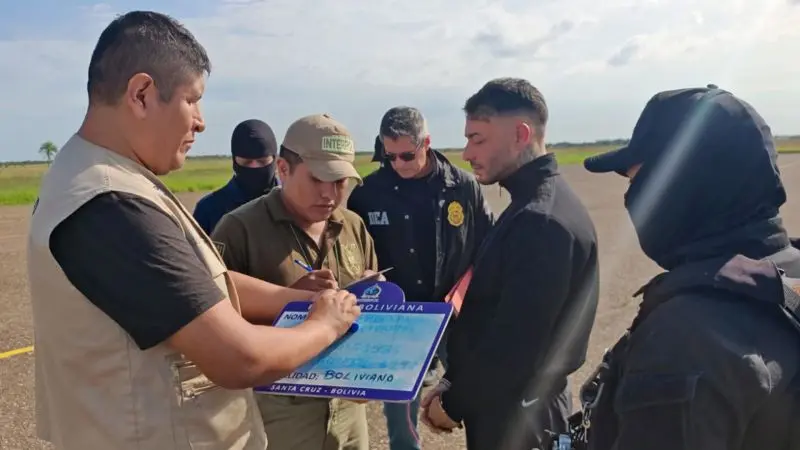
Marset captured in Bolivia after years as one of the most wanted by the DEA
Sebastián Marset, a 34-year-old Uruguayan citizen nicknamed "the Hidrovia manager", was detained on Friday in an operation in Santa Cruz, Bolivia, according to confirmation from cnnespanol.cnn.com citing Paraguayan authorities who also participated in the operation. The United States Drug Enforcement Administration (DEA) was offering up to US$2 million for information leading to his capture.
"Sebastián Marset had the capacity to be in any country, and he was being sought in all countries," said Jalil Rachid, minister of Paraguay's National Anti-Drug Secretariat. Rachid described Marset as "a primary target not only of Paraguay but of Uruguay, Bolivia, and the United States". The detained man's lawyer reported that he will not make any statements at this time.
From street-level drug dealing in Uruguay to international coordinator
According to the investigation file "A Ultranza PY", Marset's criminal career began in Uruguay in 2013, when he was imprisoned for small-scale drug trafficking. He served five years in the Libertad prison, in the Uruguayan department of San José, where—according to Uruguayan police—he established contacts with experienced drug traffickers and developed international links.
After his release from prison in 2018, Marset moved to Paraguay and became linked to the Insfrán clan, according to the files from the "A Ultranza PY" operation. In parallel, he also engaged in legal activities related to concert promotion, music production and football. From then on, his illegal network expanded towards Brazil, Bolivia and Italy.
The judicial file points to his links with the Insfrán clan of Paraguay, the First Capital Command (PCC) of Brazil, and the 'Ndrangheta of Italy, organisations which, according to the same source, "handle the final links in the cocaine trafficking chain from South America to Europe". The files describe Marset as a logistics coordinator between groups, rather than as a leader of direct criminal organisation.
The Hidrovia as a cocaine export route
The nickname "Hidrovia manager" first appeared in the files of the "A Ultranza PY" operation, which in early 2022 dismantled much of the network led by Miguel Ángel Insfrán, alias "Tío Rico". The Hidrovia is the river route formed by the Paraguay and Paraná rivers and which flows into the River Plate, used to export cocaine from Bolivia and Paraguay towards European markets.
The investigation linked Marset's network to more than 16 tonnes of cocaine seized in Europe, including 11 tonnes at the port of Antwerp in April 2021 and another 4.7 tonnes in Paraguay, according to data from the United States State Department.
Suspect in the murder of prosecutor Pecci
Paraguayan and Colombian courts are also investigating him as the alleged mastermind behind the killing of Paraguayan anti-drugs prosecutor Marcelo Pecci, who was murdered during his honeymoon in Colombia in May 2022. The investigations are based on witness statements placing him in that role.
The Dubai passport and the Uruguayan diplomatic crisis
Marset had been a fugitive from Paraguayan justice since early 2022, after having been detained in Dubai for nearly three months for carrying a false passport. Emirati authorities released him following diplomatic negotiations by the Uruguayan government of Luis Lacalle Pou, which sent him a valid passport despite warnings from the local ambassador. The Foreign Ministry and the Ministry of the Interior claimed to be unaware of Marset's background at that time. The episode led to a government crisis that culminated in the resignation of several ministers and opened judicial investigations in Uruguay.
Despite this, Uruguayan courts did not formally issue a capture warrant against Marset—although Interior Minister Carlos Negro acknowledged the existence of open investigations linking him to "criminal acts"—. Interpol did issue international red notices against him.
His own words: "They will never capture me"
In messages sent to Uruguayan, Bolivian and Paraguayan journalists whilst he remained a fugitive, Marset asserted that they would never catch him. In June 2025, after years of evading capture, he sent a letter to several media outlets. "I left Uruguay in 2018 and never returned," he wrote at the beginning. Regarding Bolivia, he stated that "drug trafficking is the country's growth (...) the country is sustained by that, so between ghosts we are not going to step on each other's sheets". In reference to Paraguayan authorities, he claimed that "they also live off drug trafficking" and questioned the detention and extradition from Spain of his wife, Gianina García Troche. "Respect drug trafficking, stop interfering with my family," he concluded.
Washington celebrates the capture
CNN consulted the United States State Department about a possible extradition of Marset to that country, without obtaining a direct response. Nevertheless, the Office of International Narcotics and Law Enforcement Affairs published a message on X in which it celebrated the detention: "CAPTURED. Sebastián Marset's reign of terror and chaos has come to an end. Thanks to the leadership of (Bolivia's) president Rodrigo Paz and the rapid strengthening of police cooperation between the United States and Bolivia, the notorious drug trafficker Marset will face justice."
Marset was also known by the aliases Gabriel de Souza Beumer and Luis Paulo Amorim Santos. Paraguayan courts had been pursuing him since February 2022 for drug trafficking and money laundering, charges to which were later added requests from Bolivia and the United States.
Source: Google News PY — Crime