Twenty bodies abandoned in São Paulo point to PCC courts
In less than two months, 20 bodies bound and wrapped were found on streets and streams in Greater São Paulo. Investigators point to PCC executions.
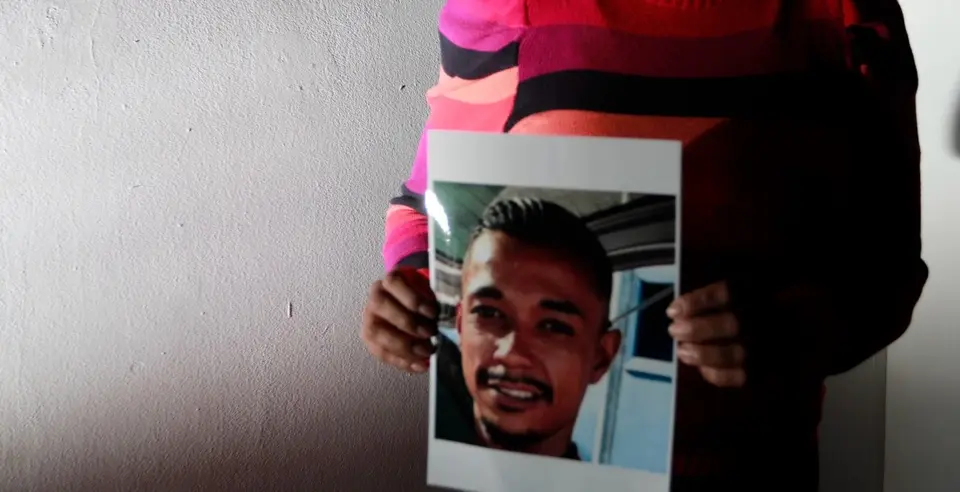
Profile of victims and mode of operation indicate faction trials
According to reporting from oglobo.globo.com, in just over a month and a half, 20 bodies bound and wrapped in bags or blankets were abandoned on streets, streams, plots of land and on a bicycle path in the Metropolitan Region of São Paulo. The vehicle mapped and identified 14 victims based on interviews with investigators and family members, as well as court records.
Three stories illustrate the pattern. Filipe de Carvalho Cabral, aged 34, returned to his mother's house in the early hours of the morning — disoriented, barefoot and with scratches on his face — days before he disappeared. Rafael Zimbarg Francez, aged 25, accepted a ride-hailing request with a destination to Paraisópolis, São Paulo's largest favela, and was never heard from again: his mobile phone signal was cut off within the community. Lucas Reali de Paula, aged 31, missed work for three days; when an acquaintance went to his house, he found the door forced open, the light on and a pot of pasta on the stove. All three were found dead somewhere in the São Paulo capital.
The picture that emerges is of people on the margins: at least eight of the identified victims had criminal records for theft, domestic violence, illegal weapon possession, robbery, trafficking or homicide. Two had recently been released from prison.
Serial killer and extermination group: hypotheses ruled out
As bodies were discovered, the theory of a serial killer took hold on social media — a hypothesis already ruled out by the Civil Police, which also denies any connection between the deaths. Subsequently, a video circulated attributing the crimes to an extermination group formed by police officers. To date, three people have been arrested and ten identified in connection with 4 of the 20 homicides, according to the São Paulo Public Security Department.
The explanation most accepted among investigators is that these are victims of the crime courts of the First Command of the Capital (PCC).
How the PCC court operates
Enemies or members who violate the group's code of conduct are tried in a kind of parallel justice system created by the faction itself. The session simulates a conventional trial, with prosecution and defence. The more serious the crime, the harsher the sentence — potentially extending to death. Bodies are usually buried in clandestine cemeteries, in remote locations, to throw the police off the scent. Abandoning corpses in public places is less common.
For public prosecutor Lincoln Gakiya, of the Special Operations Group for Combating Organised Crime in São Paulo (Gaeco) of the São Paulo Public Prosecutor's Office, the characteristics of the recent deaths are consistent with PCC execution. According to him, some of the cases may be related to members who betrayed the faction or who were negotiating with rivals.
— In these cases, they dump the bodies in a public place to send a message. It's not a message for the police or the public, but for the criminal underworld — Gakiya stated.
The prosecutor cited the case of drug trafficker Cláudio Marcos de Almeida, known as Django, aged 50, who until 2022 was one of the largest shareholders of a bus company in São Paulo and a prominent figure in the faction. After betraying the group, he was hanged by the crime court and his body was dumped under the Vila Matilde viaduct, in the East Zone of São Paulo.
"Why didn't the person come to speak with me?"
Housewife Selma Silva de Carvalho, aged 60, recounts that her son Filipe grew up in the Ermelino Matarazzo neighbourhood in the East Zone of São Paulo and became involved in minor crimes as a teenager. At 18 years old, after serving time in the Fundação Casa youth institution, he was arrested for stealing R$ 30 from a petrol station, but ended up convicted of a series of robberies to a sentence of over 20 years imprisonment. He served 15 years in closed regime and had been free for only a year. According to his mother, he had resumed his studies, work and church attendance, until his behaviour changed a month before he disappeared, when he resumed drinking alcohol and using drugs.
Selma states that a rumour circulated in the neighbourhood that her son had sexually abused a young woman on the night he arrived barefoot at home. She says she does not understand why her son was killed, since "everything that happened here we would discuss and resolve", referring to the community's conflict resolution mechanisms.
— What did they kill my son for? Why didn't the person come to speak with me? If he owed something, they could have come to speak with me... I want to know what Filipe's guilt was — she lamented.
Accusation of rape and telephone threat
Community health worker Andrea Xavier de Paula, aged 46, sister of Lucas and resident of Recanto Campo Belo in the South Zone of the capital, says that Lucas had been a drug addict since adolescence and had already been imprisoned twice for domestic violence — the last time in June this year, after being accused of assaulting his girlfriend. While he was in prison, the family received a telephone call stating that Lucas had raped the young woman and would "pay in a coffin". Andrea states that the faction did not approach the family to account for their actions before acting.
— If it were someone from around here, they would have called my brother or my mother. We are well known in the neighbourhood. The civil police officer said it was from the crime court. We just want to know who ordered it — she said.
Ride-hailing driver found in his own car boot
The same doubt weighs on Liliane Maria Zimbarg, aged 60, mother of Rafael. The young man, aged 25, was found in the boot of his own car, an HB20S, with bruising and gunshot wounds to his body. A drug addict, Liliane lost custody of her twin children when they were still small. Rafael and his brother grew up under the guardianship of their paternal grandmother, described as a woman of considerable means. According to his mother, the wealthier environment and his grandmother's overprotection would have shaped the young man's trajectory — whose final fate has led investigators and family members to the same unanswered questions that unite the cases: who ordered it, and why.
Source: Google News BR — São Paulo