Police investigate convicted fraudster Horáček from Bulovka over potential breach of court ban
Police are interviewing witnesses in the case of Tomáš Horáček, convicted of corruption in Prague hospitals. They are investigating whether he is breaching a seven-year ban on running companies.
Convicted businessman back under police scrutiny
Police have refocused their investigation into Tomáš Horáček's business activities after several years – a man convicted in a large-scale corruption case involving Prague hospitals. Investigators are now summoning witnesses who were business partners of Horáček and are examining whether the businessman is breaching a court ban on holding positions in company management. According to findings by Seznam News, this is a key question whose answer could result in a harsher sentence for Horáček than the one he received five years ago.
Six-month suspended sentence for corruption worth 200 million
Horáček was convicted in 2021 of corruption and irregularities in healthcare tenders worth nearly 200 million crowns in total. He received a six-month suspended sentence and a fine of five million crowns. The court justified the relatively lenient penalty by saying that Horáček had confessed to everything, helped convict others, and concluded a guilty plea agreement.
The judgment also included a seven-year ban on being a member of the statutory bodies of companies – effectively a ban on running companies and making decisions about their operations. This ban is in effect until the end of 2028.
Witnesses claim: Horáček still runs companies
If police were to prove that Horáček is breaching the court ban, it could constitute the crime of obstructing an official decision, and the entire matter would end up in a new trial. Unlike the previous case, this time he would not necessarily receive a suspended sentence.
People who worked with Horáček are now turning to investigators, claiming they were defrauded. They cite losses of millions caused by his aggressive business style. In documents submitted to police, they demonstrate that Horáček – whilst formally in the background – continues to run his companies.
Ivan Zak, who managed real estate for Horáček's companies, told Seznam News: "Mr Horáček always presented himself as the one who controlled and ran the companies. The others listened to him. He was the one who made decisions." He backs up his words with emails and WhatsApp messages in which Horáček gives him instructions regarding invoicing.
Similarly, Jaroslav Pajda, who has done business with Horáček in recent years and also claims to have suffered losses, expressed himself in the same way. "I met Mr Horáček at many meetings. And every time he presented himself as the one who ran those companies and decided what they would do. Not as some employee or adviser. He presented himself simply as the top boss and owner," Pajda said.
A third witness, who is engaged in long-standing business disputes with Horáček, refused to be named. He too describes Horáček as having had the final say in the companies: "When he decided, he gave an order to the persons in positions of directors to sign everything. They are completely dependent on him. Without his orders they cannot do anything themselves."
Emails from after the judgment as key evidence
Specific documents come from the period directly after the judgment was handed down. In an email from August 2022 – less than a year after the court ban came into legal effect – Horáček settled the form of rental agreements in one of his properties, determined the amount of rent and energy deposits. In November of that year, his lawyer sent him contracts relating to property purchases for approval.
In other emails, Horáček responds to suggestions from lawyers regarding an out-of-court settlement in a business dispute: "On my behalf try 700 thousand and we'll drop down to a minimum of 600 thousand."
Last June, an accountant from Horáček's group of companies testified in court in another case. She confirmed that Horáček performed only an advisory function, but at the same time admitted that he made decisions. "Certainly [he has] his say in whether the company will take this path, in which competition and so on. He has his decision-making authority in that," she stated.
The police investigation was confirmed by Aleš Cimbala, spokesman for the Municipal State Prosecutor's Office in Prague. The fact that the report was not immediately dismissed as groundless suggests that investigators are taking the matter seriously.
Castle in Ústí nad Labem: grants not returned
Lista Seznam News described a previous case of Horáček's business dealings two years ago. Horáček's company received a grant for laundry services and employing workers with difficulty in finding employment. Inspections in 2014 found that the project was never launched. The company was supposed to return grants worth nine million crowns and its registered office – a castle on the outskirts of Ústí nad Labem – went to auction.
Horáček managed to acquire the castle at auction essentially for free. The state, through the tax office, demanded the return of the grants but received nothing. Publicly, Horáček was represented by his then-collaborator Michal Štroner. "Horáček really wanted the property. He needed to buy it in order to rid himself of the tax office," Štroner said at the time.
Emails in which Štroner informed Horáček about the circumstances of the auction date from autumn 2022 – a time when the ban on holding positions in company management was already in effect.
Horáček declines meeting, denies breach of court ban
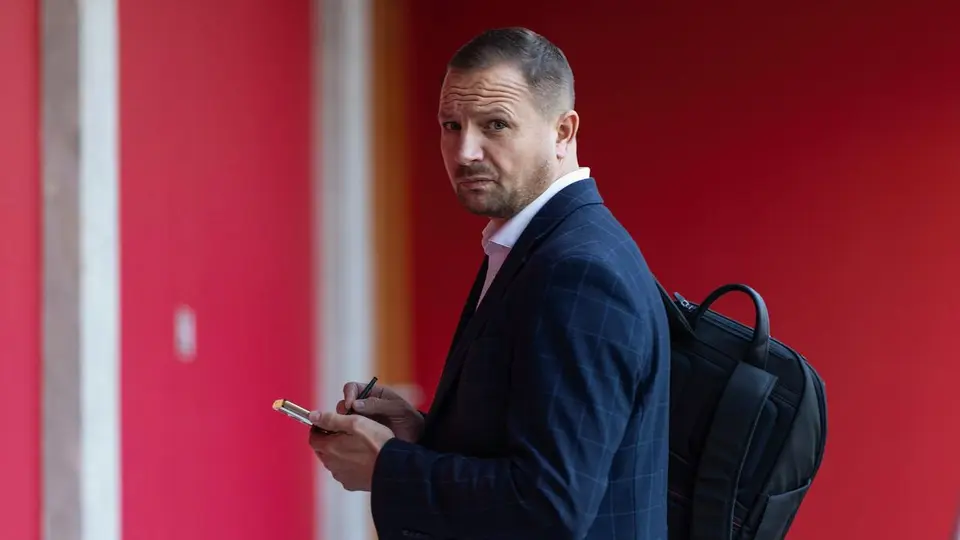
The forty-two-year-old businessman initially agreed to be interviewed in person by Seznam News, then cancelled the meeting and did not respond to proposed dates. When a reporter caught up with him outside his favourite café, Horáček explained: "My lawyers advised me not to."
In a written statement, Horáček denied breaching the ban. "I am fully authorised to own property including shares, business interests, and to carry out all activities related to the exercise of ownership rights and property participation. This is my constitutional right, just as it is to perform work tasks and orders from corporations that employ me," he wrote. He dismissed the testimony of business partners as "intentional and false claims".
Source: Google News CZ — Crime (cs)