Police collect DNA from women in Rovensko pod Troskami following discovery of dead newborn
Detectives are investigating the discovery of a newborn's body on 13 September in Rovensko pod Troskami. Police are conducting a mass DNA screening of women of childbearing age, with participation voluntary.
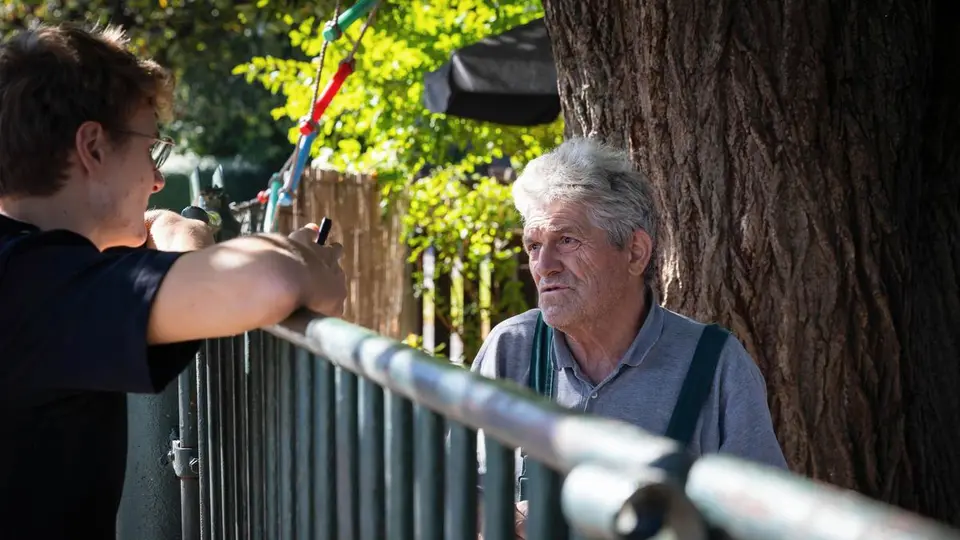
Mass DNA collection following discovery of newborn in waste bin in Rovensko pod Troskami
According to Seznam Zprávy, police continue to investigate the case of a dead newborn whose body was found on 13 September in the village of Rovensko pod Troskami. The child was placed in a bin for sorted waste on a street near the football pitch. Detectives have not yet established the identity of the person who abandoned the child.
In order for investigators to identify the perpetrator, they have initiated a mass collection of DNA samples. Martin Müller, senior commissioner of the Regional Police Directorate of Liberec Region, stated that collections are currently focused on women within a certain age range. "Generally speaking, we are looking for a woman of childbearing age, who could still be a mother," Müller said in an interview with Seznam Zprávy. He did not rule out that the screening could later be expanded to men.
Participation voluntary, consent can be withdrawn at any time
Mass screening differs fundamentally from investigations directed at a specific individual in terms of obligation. As Müller explained, participation in a mass DNA collection is entirely voluntary for all those approached. Moreover, any consent given can be withdrawn at any time. "There is no need to say why; nobody will want to hear the reasons," the investigator added.
Rovensko's mayor, Jiřina Bláhová (ODS), stated that she has not encountered any resistance to the method in the village. "People here are helpful; everyone wants to assist with the investigation," she said. The willingness to cooperate was confirmed to reporters by some residents at the scene. "Personally, I have no problem with it. They should use every possible means to catch whoever did this," said one local woman, who wished to remain anonymous.
How screening works
Müller explained that mass screening is typically deployed in cases where investigative measures cannot be directed at a specific individual and a wider group of people needs to be examined. According to him, the method is not a standard part of every investigation. "It is not very frequent, but I am only speaking for our region. I myself have encountered it repeatedly," he clarified.
Müller did not disclose the number of individuals included in the collection in Rovensko, citing the ongoing investigation. In general terms, taking into account past cases, the collection involves tens, hundreds, or even higher hundreds of people, he said. The effectiveness of the method depends on the specific circumstances. "It can range from one extreme to the other," Müller stated — from a situation where the DNA of the sought person cannot be obtained at all, to a case where screening directly leads to criminal prosecution.
Müller did not specify precisely the age range of the women being checked, but referred to the logic of the investigation: the narrower the segment, the faster and easier the work for experts. "However, each group of investigators sets its own conditions depending on what case they are dealing with," he explained.
Legal framework and handling of samples
The law permits mass screening and ties it to the consent of the affected person, who must also agree to the processing of personal data. Consent can be withdrawn at any time without providing a reason. A different situation arises if the investigation is directed at a specific individual — in such a case, section 114 of the Criminal Code applies, according to which everyone is obliged to undergo the collection of biological material. Even here, the individual has the right to refuse the collection, but police then need the consent of the state prosecutor for forced collection.
Samples from people whose DNA does not match the traces from the investigated case are immediately destroyed, according to Müller. A sample can only be compared with traces within the specific file to which the person gave consent. "If it is negative, the samples are destroyed and the individuals are again removed from the files," the investigator clarified. Whether anyone in Rovensko refused the DNA collection, Müller declined to comment, citing the ongoing investigation.
Source: Google News CZ — Crime (cs)