Plzeň court begins trial of men accused of brutal murder of homeless person from the Berounka River
The regional court in Plzeň is hearing the case of two repeat offenders charged with the murder of a Slovak homeless man. Both deny guilt; the prosecutor is seeking 13.5 years in prison.
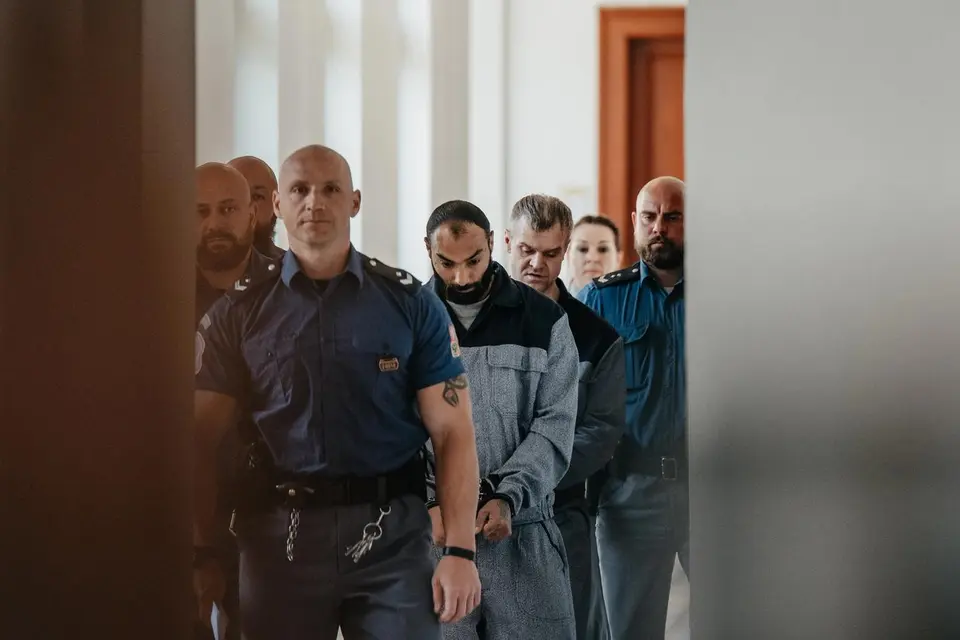
Plzeň regional court begins trial: two men deny guilt in brutal killing
On Wednesday, the Plzeň regional court began the main hearing in the case of the murder of a Slovak homeless man whose mutilated torso was pulled from the Berounka River in January 2023. According to plzensky.denik.cz, two repeat offenders appeared before the court – forty-four-year-old Tomáš H. and thirty-one-year-old David G. Prosecutor Jiří Richtr is seeking thirteen and a half years in prison for both, on charges of particularly grave murder.
Torso without a head in the Berounka
The case began with the discovery of a torso in the Berounka beneath a footbridge near St. George in the Pecihrádek area in January 2023. Documents found with the body revealed it belonged to a thirty-two-year-old Slovak, L. L., known in the homeless community by the nickname "Čobol".
According to the indictment, the murder took place between November 2022 and January 2023, probably near the Berounka in Plzeň. The perpetrators are alleged to have killed the victim by attacking the head and neck. "They removed the heart, part of the right lung, part of the liver, most of the small and large intestines, the scrotum with its contents and testicles, part of the buttocks, and subsequently threw the body into the Berounka," prosecutor Richtr quoted from the indictment text at the opening of the hearing.
In May 2024, a tourist found a human skull in the Radbuze River in central Plzeň. DNA tests confirmed it belonged to Čobol.
Defendants deny any connection to the crime
Both men denied guilt at the outset of the hearing. "I did not commit what I am accused of. I did not know this person; from the beginning I cooperated with police," declared Tomáš H., who refused to testify further. In earlier interrogations, he claimed that three other men were hired to kill L. L., and the matter was deliberately "pinned on him": "They dressed me in my clothes so they could pin it on me. Apparently they even filmed it and sent the video to the prison in Plzeň." David G. only stated "I am not guilty" and also refused to testify.
The path to the start of proceedings was complicated. Tomáš H. was detained on 29 February 2024, approximately a year and a quarter after the body was found. "After more than a year of intensive work by officers from a specially established investigative team, we managed to solve this murder case," said police spokeswoman Pavla Burešová at the time. David G. was only charged afterwards. The indictment was submitted to the regional court on 10 October 2025, but the panel initially returned it to the prosecutor for further investigation. The case was ultimately reviewed by the Supreme Court in Prague, which ruled that the case should be heard.
Šalamoun association warns of miscarriage of justice
The Šalamoun Association is preparing to monitor the course of the entire trial. On the day before the main hearing began, it published a critical statement warning of gaps in the evidence so far.
"The state has a mutilated body. The state has a horrifying discovery. The state has suspicion. The state has a theory. But the question that must be answered first in a murder case remains open: What exactly caused L. L.'s death?" wrote Václav Peričevič from the Šalamoun Association.
The association criticises that one of the key pieces of evidence in the indictment is a scent trace. Peričevič described it as evidence that "in Czech criminal records repeatedly appears where one would expect something more solid" and which "according to the Šalamoun Association's experience far too often carries the risk of miscarriage of justice". He also pointed out that the indictment itself uses the words "probably" and "in all probability" on the most crucial point.
"The Šalamoun Association does not presume the guilt or innocence of the defendants. That is for the court. But we will monitor very carefully whether in this case certainty is being manufactured from a horrifying discovery where the evidence has not yet provided it," Peričevič concluded his statement addressed to the panel of the Plzeň court led by judge Jan Hostaš.
Source: Google News CZ — Crime (cs)