Halting of billionaire Pelc's prosecution over health concerns sparks justice debate
A decision to halt criminal prosecution of businessman Zdeněk Pelc, who caused a fatal accident while under the influence of alcohol, has prompted discussion about how health status affects criminal proceedings in the Czech Republic.
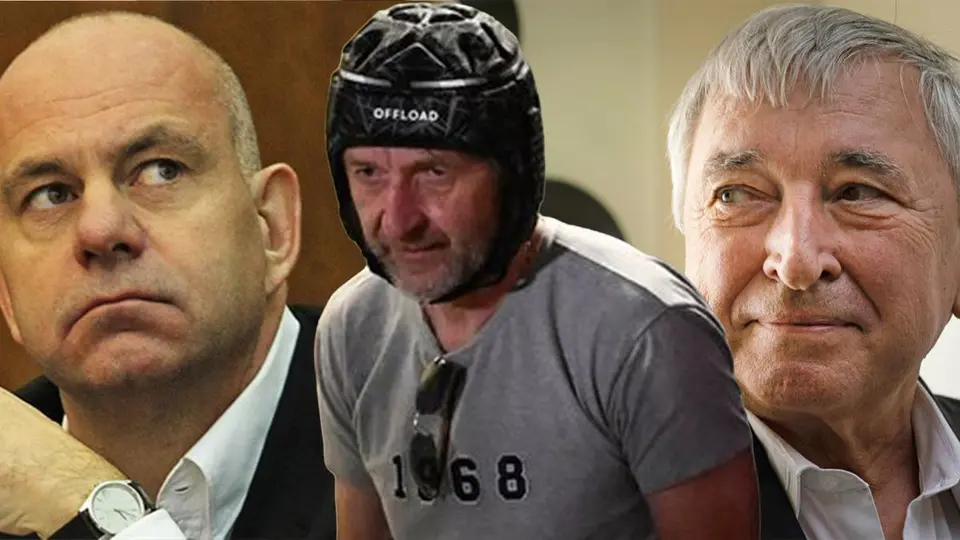
Halting of billionaire Pelc's prosecution over health concerns sparks justice debate
Businessman Zdeněk Pelc, who caused a fatal traffic accident while under the influence of alcohol, will not face trial. The state prosecutor ended the prosecution citing the defendant's poor health condition. This step has sparked a broader debate about how Czech justice handles medical assessments in criminal cases.
Similar scenarios have occurred previously involving several well-known figures. Lobbyist Roman Janoušek began serving a four-and-a-half-year sentence in November 2014 for hitting a woman with a car while under the influence of alcohol. Less than two years later, a court suspended his sentence—expert assessments warned of possible skull bone shifts with potentially fatal consequences. Nevertheless, cameras soon captured him engaged in sports activities. He returned to prison only in the summer of 2021, leaving the facility conditionally a year and a half later.
In the case of fugitive businessman Radovan Krejčíř, psychiatrist Jan Cimický repeatedly prepared expert assessments on the defendant's mental state, including a diagnosis of endogenous depression.
A presidential pardon in September 2021 concerned Olomouc businessman Pavel Podroužek, who was prosecuted for tax evasion totalling nearly ten million crowns. President Zeman justified the decision by stating that Podroužek suffered from organ failure and was waiting for a transplant. Journalists, however, discovered that he was never placed on the waiting list. After receiving the pardon, he continued to do business actively, ran several companies and travelled for commercial purposes. Police investigated suspicions of manipulation of medical documents, but concluded that no breach of law had occurred. Podroužek died this year.
Milan Kubek, who heads the Czech Medical Association, explained in an interview how expert assessments function. According to him, an expert can establish that imprisonment would endanger the person's health and recommend certain restrictions. However, compliance with these recommendations is entirely up to the patient. "An assessment does not guarantee an outcome, it merely describes risks," Kubek noted. At the same time, he openly criticised the system for overseeing court-appointed medical experts within the healthcare sector, which falls under the Ministry of Justice. He pointed out that the current implementing regulation circumvents the statutory requirement for a licence from the professional association, which he said the Ministry of Health was allegedly preventing.
Libor Vávra, chairman of the Judges' Association, defends the courts' approach. According to him, a judge cannot assess medical matters independently and must rely on expert opinions. In contentious disputes, conflicts of opinion often arise between expert teams. "In such situations, the court can also use extraordinary measures, for example police supervision," Vávra said. He added that cases with extreme duration are few and typically involve exceptionally complex cases where defendants put up vigorous resistance.
Source: Novinky.cz
Source: Novinky.cz