Drug dealers advertise with free samples and business cards – police warn
Drug dealers in Berlin, Hamburg and Baden-Württemberg are distributing leaflets, business cards and free samples. Nearly half of the analysed samples contained dangerous additives.
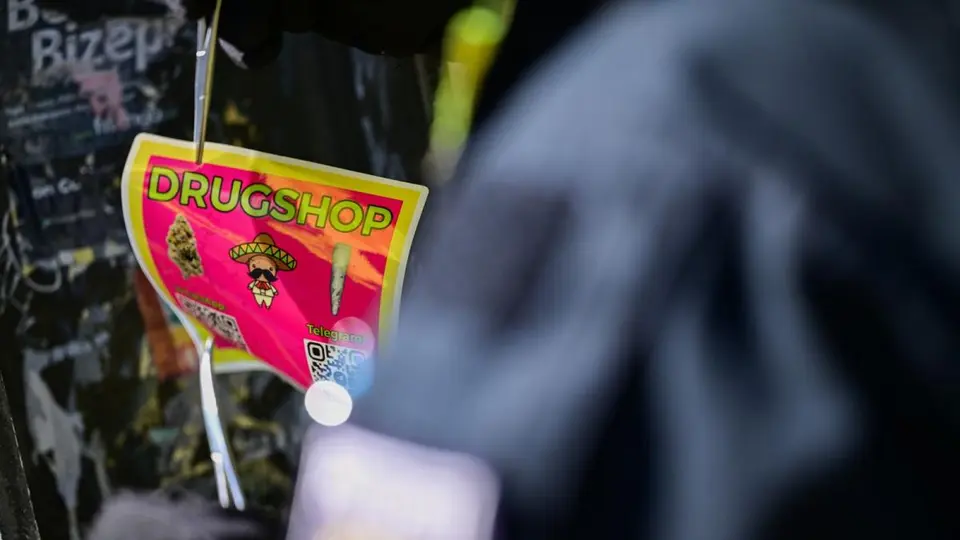
Cocaine via QR code: how dealers court customers with business cards and free samples
As reported by Google News DE — Crime, drug dealers in German cities are employing increasingly brazen advertising methods – from colourful business cards in Berlin pubs to packets of free samples in letterboxes.
A young man moves quickly through the occupied tables in a pub in Berlin-Neukölln. Within two minutes he places two or three colourful cards in business-card format on each table – and disappears back into the summer evening. The card shows a drawing: two women and a man wearing sunglasses and holding bundles of money, with tablets, pills and packets in front. The list runs along the edge: "Cocaine, Weed, Hash, Speed, Ketamine, XTC, MDMA." On the reverse: "Discrete and fast" – along with a QR code and a WhatsApp number.
Such sales offers have been circulating in Berlin and other cities for some time. They are distributed in pubs and clubs, at street festivals and at music festivals. Contact takes place via messaging services such as WhatsApp and Telegram. Whoever gets in touch receives a prompt response: "Hi, how can I help you :)". Delivery is by car to street corners – the so-called coke taxis.
Free samples in letterboxes, leaflets in lamp posts
In July, Berlin police expressly warned of advertising packets containing drug samples found in letterboxes. "Drugs in the letterbox! This is happening right now in Berlin," was stated in an official statement accompanied by a photo of a colourful plastic packet.
"The packets contain cocaine, ecstasy, ketamine, hashish, marijuana or 3-MMC. Unfortunately, the colourful packets appeal particularly to children. This is why parents especially should be particularly careful at the moment," the police wrote. And further: "Do not open under any circumstances." They also emphasised: "It is forbidden to advertise drugs. It is forbidden to respond to advertisements of this kind."
The phenomenon is not limited to the capital. In the region between Darmstadt and the Rhine-Neckar area towards Stuttgart, leaflets were also distributed. The State Criminal Police Office (LKA) Baden-Württemberg confirms: "The phenomenon is also known in Baden-Württemberg." In one case, a QR code on a lamp post led to a drug trading "shop" in a messenger service. In another case, leaflets in Polish were placed in the letterboxes of a workers' accommodation.
On Telegram channels, powders and tablets are presented aesthetically. Business cards state concrete prices: "Coco Drugs Delivery. Minimum Order 60 Euro." Weed costs 5 grammes for 50 euros according to the cards, high-quality cocaine with 88.2 per cent purity 0.5 grammes for 50 euros.
Police target organisers, not delivery drivers
"Illegal drug trafficking is substantially oriented towards existing demand," Berlin police state. "In doing so, the perpetrators make use of communication channels used by the respective target group." The internet has largely replaced the pub and the street as the primary point of contact.
Why doesn't the police simply order drugs and arrest the delivery driver? Under certain legal conditions, a test purchase would be possible, according to the authorities. The police do not provide concrete details for "investigative tactical reasons". However, it is established that test purchases must not involve higher quantities or new types of drugs. The primary target of investigators is not, in any case, the drivers of the coke taxis, but the organisers behind the drug rings.
In fact, Berlin police arrest a number of dealers every week who are driving through the city with marijuana, cocaine and ecstasy. These are equally quickly replaced by new individuals. The Association of German Criminal Investigators (BDK) in Hamburg criticises that organised drug crime apparently no longer perceives prosecution by police and prosecutors.
Nearly half of drug samples flagged as problematic
Berlin's state drug commissioner Heide Mutter describes the development as "extremely concerning" because the low threshold for access contributes to a normalisation of consumption – particularly for children and young people.
The Berlin drug-checking project, which was introduced three years ago, shows just how dangerous the substances being traded actually are. Consumers can have samples analysed anonymously and free of charge there. Of 5,310 drug samples examined – predominantly party drugs such as amphetamines, ecstasy, cocaine and LSD – nearly half, 49 per cent, were flagged as problematic. They contained dangerous additives, excessive dosages, contamination with unknown substances or incorrect labelling.
In a recently submitted cocaine sample, the warning stated explicitly: "Contamination, life-threatening." The project's experts conclude: "Consumption of psychoactive substances is always associated with health risks." In addition to consistent law enforcement, authorities therefore also rely on prevention to keep young people away from drugs.
Source: Google News DE — Crime (de)