Nord Stream trial in Hamburg: Ukrainian charged over pipeline explosions
A trial began in Hamburg against Ukrainian ex-officer Serhij K. over the 2022 Nord Stream pipeline explosions. The masterminds – possibly up to Zelenskyj – remain unclear.
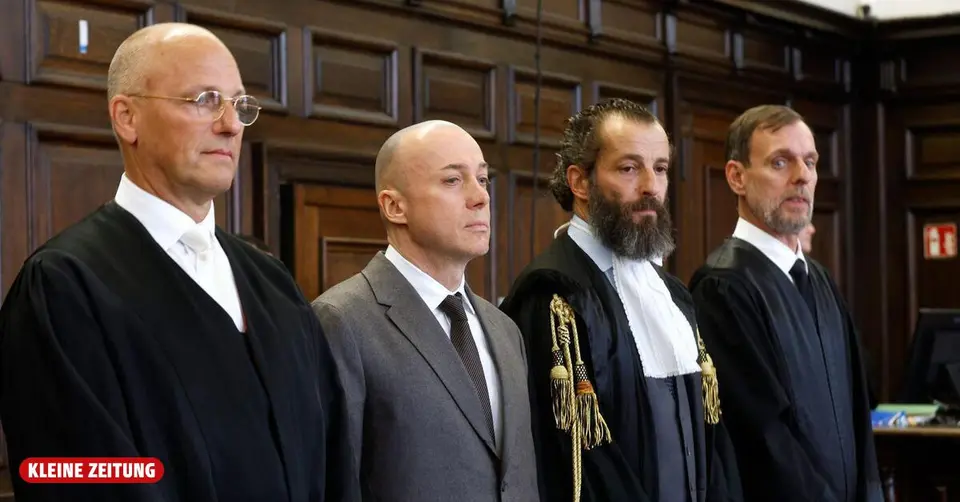
Nord Stream case: Who is behind the attack on the Baltic Sea pipelines?
A trial began on Wednesday before the Hamburg Regional Court of Appeal against Ukrainian national Serhij K. The 50-year-old former officer of a Ukrainian special forces unit is accused of participating in the explosion of the Nord Stream 1 and 2 gas pipelines in the Baltic Sea on 26 September 2022. As reported by the Kleine Zeitung, the proceedings have not only a legal but also a considerable political dimension.
The Federal Public Prosecutor's Office, represented by Federal Prosecutor General Stefan Schmid, accuses Serhij K. of employing prohibited methods of warfare through an attack on civilian objects. His actions, they allege, impaired the supply of the population with "vital goods such as light, heating and power". He is additionally charged with sabotage of the constitutional order and the acquisition of forged official documents.
The court intends to clarify whether K. actually participated in the explosion of three of the four gas pipelines – possibly even as the leader of a sabotage team comprising six men and one woman in total. It also remains unclear whether the order came from the Ukrainian army, another state institution, or even President Volodymyr Zelenskyj, or whether he was at least informed of it.
In the courtroom, K., born in 1976 in Omsk (then Soviet Union), sits between three defence lawyers – two from Germany, one from Italy. Through his German lawyer Jes Meyer-Lohkamp, he stated that he would make no statement regarding the allegations. The only words from the defendant were those regarding his personal details, which presiding judge Anne Meier-Göring asked him. K. answered in German – the language he had acquired during his eleven months in pre-trial detention.
Meyer-Lohkamp referred to a statement from Roman Chervinsky, the former Ukrainian military chief, which barred K. from making any statement – and thus anything that could exonerate him. His Italian colleague Nicola Canestrini accused Germany of having fraudulently obtained the extradition of the man arrested in Italy: Italy had handed over K. on account of the sabotage allegation, "there was no mention of war crimes". Canestrini called out in the courtroom: "Yes, in this war war crimes are being committed. But from the Russian side!" Judge Meier-Göring thanked the defence lawyers for their "passionate presentation". The court rejected the motion to discontinue proceedings; 24 further trial dates are scheduled until the end of January.
Austrian international law expert Klemens Fischer, who teaches at the University of Cologne, pointed to the political significance of the trial on NDR radio in the morning. "Should it become apparent during this trial that there was involvement by the Ukrainian side, it will become very difficult," Fischer said, "to continue supporting Ukraine unconditionally."
While proceedings were taking place in Hamburg, the newly elected Saxony-Anhalt state parliament debated in Magdeburg in a special session a motion from the AfD and BSW titled "Peace talks instead of expansion of the war in Ukraine". In the course of the debate, the AfD and BSW accused Ukraine of being responsible for the massively increased gas prices in Germany through the attack. Ulrich Siegmund, the future minister-president in Magdeburg, summed up the core concern with the words: "Our money for our country."
The state parliament ultimately voted, against the votes of the CDU, SPD, Greens and Left Party: Financial aid to Ukraine should be stopped immediately beyond humanitarian aid, weapons deliveries should be suspended – although these resolutions are federal matters and the state parliament has no authority over them.
Source: Kleine Zeitung