Nord Stream court case in Hamburg: Ukrainian colonel fans the flames
The sole defendant in the Nord Stream case, Ukrainian citizen Serhij Kuznetsov, awaits a historic trial in Hamburg. A law professor assesses that Ukraine's possible role could emerge during the proceedings.
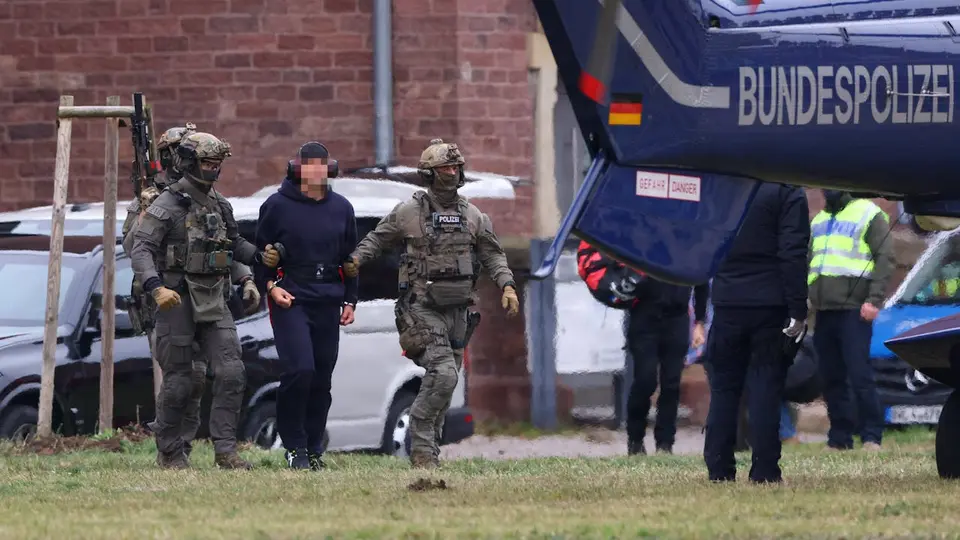
Forthcoming trial could reveal who ordered the Nord Stream pipeline explosions
Nearly four years after the Nord Stream pipelines were blown up in September 2022, the question of who was behind it remains unanswered. A forthcoming trial in Hamburg could bring the world closer to an answer, reports TV 2 Nyheder.
The sole defendant in the case is Ukrainian citizen Serhij Kuznetsov, believed to have led the team on board the vessel Andromeda during the sabotage operation. According to German prosecutors, the purpose was to "permanently interrupt gas supplies through the pipelines and prevent Russia from using revenues from natural gas trading to finance its war effort."
The indictment states that Kuznetsov and "other military personnel" devised the plan "following orders from Ukrainian state authorities."
Self-incriminating phone calls and claims of immunity
Kuznetsov is currently held in pre-trial detention in Hamburg. He was arrested in the summer of 2025 during a holiday in Italy. He is suspected of, among other things, "a war crime," "complicity in an attack on civilian objects" and "causing explosions."
According to German media, including Die Zeit and ARD, the evidence against him is believed to be overwhelming. During his stay in Italy, he reportedly told relatives and acquaintances about the attacks by telephone, thereby incriminating himself.
When Kuznetsov was detained, he invoked "functional immunity" as a soldier who was merely following orders. However, who issued the order in that case remains unclear.
Law professor Birgit Feldtmann points out that the accusation of war crime is central to the scope of the case.
"Here one assumes that this was essentially initiated by Ukraine. It is not just private individuals who come up with the idea of committing something criminal, but that it was essentially part of Ukraine's defensive war," she says.
Feldtmann assesses that if the Ukrainian government was in any way involved in the sabotage, it would likely emerge during the trial. If Kuznetsov maintains during the proceedings that he acted on orders, the court may be forced to address who the order came from.
Another Ukrainian arrested in Croatia
In addition to Kuznetsov, Ukrainian diver Volodymyr Zhuravlov was detained in Croatia in early August for allegedly participating in the sabotage. No charges have yet been filed against him.
Zhuravlov was first arrested in Poland, but a court in Warsaw blocked his extradition to Germany. The Warsaw court based its decision on the grounds that the attack on the pipelines must be understood as a military action in an ongoing war, and that no individuals can therefore be held criminally responsible. The judge also questioned whether Germany even had jurisdiction, as the explosions occurred in international waters.
Beyond the two named participants, up to five other individuals are believed to have participated in the operation on board Andromeda. According to German authorities, the action required a group consisting of "several professional divers, a skipper and a demolitions expert" under Kuznetsov's leadership. One of the incriminating pieces of evidence is a photograph taken from the island of Rügen before the leaks from Nord Stream 1 and 2, in which the investigation has since identified the entire crew.
Colonel neither confirms nor denies his role
Ukrainian Colonel Roman Tjervinskyj has been identified by several international media outlets — including The Washington Post, The Wall Street Journal and Der Spiegel — as one of the architects of the attack.
In an interview with TV 2's Rasmus Tantholdt, Tjervinskyj neither confirms nor denies his role.
"Germany makes allegations, but I cannot say whether it was Ukrainians or not. I simply say that it could have helped Ukraine to win the war," Roman Tjervinskyj told TV 2.
He does not believe that the sabotage operation should be regarded as a crime, but rather that the pipelines were a legitimate military target. On that basis, he believes that the case could turn out favourably for the detained Ukrainians if they are involved.
Zelenskyj denies official Ukrainian participation
Ukrainian President Volodymyr Zelenskyj denies that Ukraine "officially" had anything to do with the attack.
"Ukraine has never officially participated in any operation related to the blowing up of Nord Stream," he said at a press conference over the weekend.
"The case is running right now. We have an episode. We have an accusation. We have some witnesses, and we have a trial," he said.
Foreign Minister Lars Løkke Rasmussen (M) tells TV 2 that he has no insight into who was behind it, and that he trusts that the German courts are handling the case.
"One has seen sabotage in many wars throughout world history, but I cannot set myself up as a judge of that. Nord Stream 2 should never have been built. It is a great symbol of a dependence on Russia that we did not need," he says.
Hamburg court has not yet formally accepted the case
According to TV 2 Nyheder, the Hamburg court has not yet formally accepted the case. It is therefore also unclear when the trial will actually begin, just as witnesses have not yet been summoned.
Originally, Denmark, Sweden and Germany all initiated investigations in the wake of the explosions. Both Swedish and Danish authorities have since discontinued their investigations — on the Danish side, this occurred in February 2024.
Source: TV 2 Nyheder