Police fired on twelve-year-old in Bochum – criminologist explains patterns
A twelve-year-old deaf girl was shot by police officers in Bochum. Criminologist Singelnstein explains the practised routines to zdfheute.de.
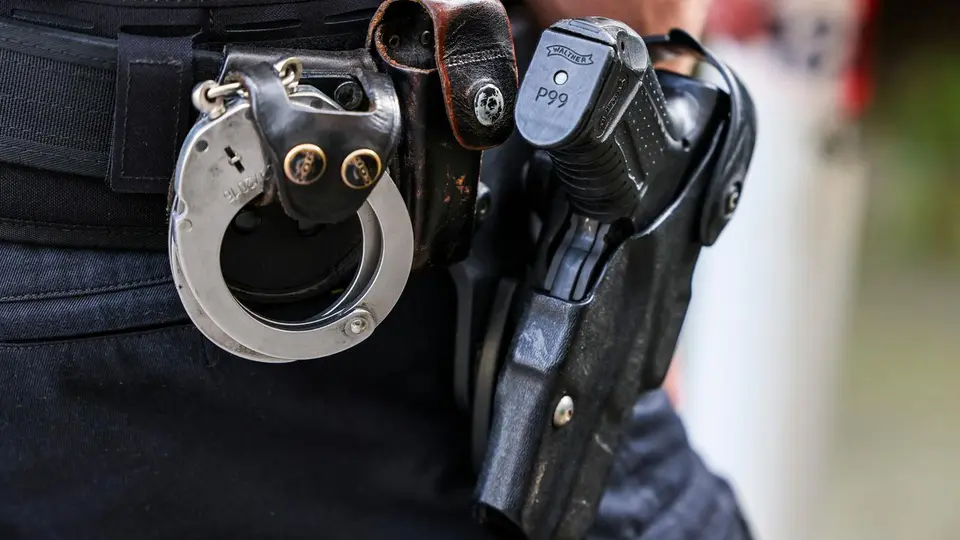
Shots fired at twelve-year-old: criminologist Singelnstein explains police decision-making patterns
Police officers in Bochum shot and seriously injured a twelve-year-old deaf girl with their service weapons after they felt threatened by her with two knives. According to zdfheute.de, investigations are still ongoing – many details are currently only known to the authorities.
The case has attracted nationwide attention. Criminologist Prof. Tobias Singelnstein put the incident into context in an interview with ZDFheute live and warned against making a final assessment of it: too few facts have been made public so far.
Practised patterns in knife threats
However, the basic pattern of the operation is familiar, says Singelnstein. Police training teaches officers that they should open fire at a distance of less than approximately ten metres to stop a knife attack. "This is taught in a very schematic and routine manner," Singelnstein says.
In concrete threat situations, these routines are quickly "executed". If it involves a child, there is indeed a need to weigh up the circumstances – but in practice there is often barely time for this. "If they perceive a threat, then they tend to execute practised patterns and routines," says the criminologist.
Comparable cases in Dortmund and Oldenburg
Singelnstein points to similar incidents: in Dortmund, sixteen-year-old Mouhamed Dramé died following a police operation; in Oldenburg, officers were charged following the death of Lorenz A. In both cases, police officers had incorrectly assumed a knife attack. The pattern: when a knife is suspected, firearms are quickly used – often with fatal consequences.
Training does not cover all operational situations
The three-year police training is insufficient to cope with all complex situations, Singelnstein finds. Particular operational situations – for example involving people in acute psychological crisis – are therefore taught rather superficially. "Adjustments will need to be made in police training when it comes to people in acute psychological crisis," he says.
In addition, there is the public debate about knife attacks, which also influences the threat perception within the police force. Although the data is unclear, knives are perceived more strongly as a danger in society and thus also among police officers. This debate does "not pass the police and individual officers by without a trace," according to Singelnstein.
Protection of officers versus structural questions
The criminologist emphasises that the need to protect officers is understandable. At the same time, there must be discussion about whether the routine use of firearms in knife situations is the right approach. Singelnstein considers structural adjustments in training to be necessary.
The interview was conducted by ZDFheute live moderator Philip Wortmann; it was summarised by Tim-Niklas Grimm.
Source: Google News DE — Crime (de)