Protest in Kurfürstenkiez: Residents demand regulated area against street prostitution
Residents of Kurfürstenstrasse demonstrate on 25 June against street prostitution and drug trafficking. CDU seeks city-wide ban, SPD and opposition disagree.
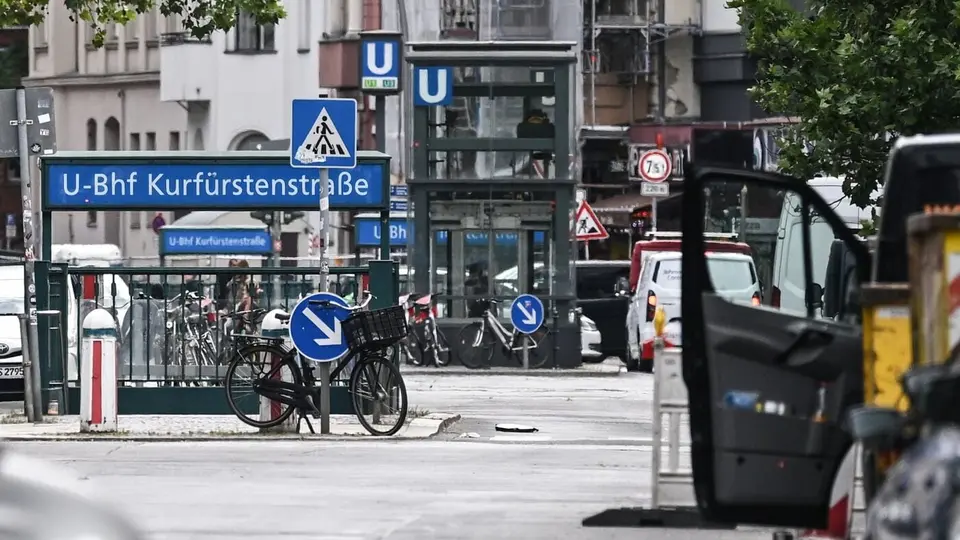
Demonstration planned: Kurfürstenkiez residents protest against conditions in district
Tagesspiegel.de reports that residents of Kurfürstenstrasse in Berlin-Mitte and Schöneberg plan to demonstrate on 25 June at Zwölf-Apostel-Kirchplatz under the motto "Our neighbourhood, our home". Street prostitution in broad daylight, open drug dealing, violence and urban decay have characterised parts of the street for years, according to residents.
Demonstrators are calling for a restricted area for street prostitution near kindergartens, schools and care homes for the elderly. They are also demanding measures against drug dealing and drug consumption in public spaces, as well as an end to pimping and the exploitation of women.
CDU seeks city-wide ban on street prostitution
The Berlin CDU goes further: it is pursuing a city-wide ban on street prostitution. In its election manifesto, which is to be adopted on Tuesday, it states that it wants "the end of street prostitution throughout Berlin" and will "as a first step ban it in Kurfürstenkiez and around Nollendorfplatz". The party rejects state financing of pay-per-use boxes or similar infrastructure for pimps.
CDU faction leader Dirk Stettner brought up the issue in public at the end of May. "The women are exploited under appalling hygienic conditions, children and young people are directly confronted with bought sex, drugs and violence," he told B.Z. According to Stettner, street prostitution should be banned throughout Berlin. He announced that Interior Senator Iris Spranger (SPD) could impose such a ban through legal order.
SPD, Left and Greens see ban as wrong approach
The SPD coalition partner does not share the demand. "The CDU is taking the easy way out with this demand. Anyone who believes street prostitution can be solved through a ban is confusing symbolic politics with effective violence prevention," said Mirjam Golm, women's policy spokesperson for the SPD faction. Many women are not engaged in prostitution voluntarily and are frequently affected by poverty, violence or human trafficking. A ban merely displaces the reality from public space, makes it harder for those affected to access support services and is therefore the wrong approach. What is needed instead are strong support services and genuine exit prospects.
Anne Helm, faction leader of the Left party, emphasised that social problems cannot be combated with police or criminal law. In addition to intensified repression against women, a ban only leads to displacement to neighbouring streets or green spaces. Helm called for support spaces where women could practice their trade.
Bahar Haghanipour, equality spokesperson for the Greens, stated in response to dpa enquiries: "Sex work is social reality. Therefore, a ban on sex work is not a solution." A restricted area would displace the problem to uncontrolled locations. The Senate must no longer leave the districts of Mitte and Tempelhof-Schöneberg to fend for themselves.
Senate interior administration: Coordination with multiple departments necessary
The Senate interior administration responded cautiously to Stettner's initiative: a ban would not eliminate street prostitution but would drive it underground – with corresponding risks for sex workers. Implementation would require coordination with the Senate administrations for health, education and social services.
A spokesperson for Social Senator Cansel Kiziltepe (SPD) added: "The point is not to ban sex work, but to shape it so that there is no exploitation, no discrimination and no violence involved." The situation in Kurfürstenkiez is characterised by homelessness, mental illness and drug consumption.
(dpa/Tagesspiegel)
Source: Google News DE — Crime (de)