Sabotage at Turnow-Preilack Substation: Explosive Devices Trigger Short Circuit
Unknown attackers targeted a substation in South Brandenburg with homemade rocket-like devices. Two attacks were successful – a power plant unit was shut down.
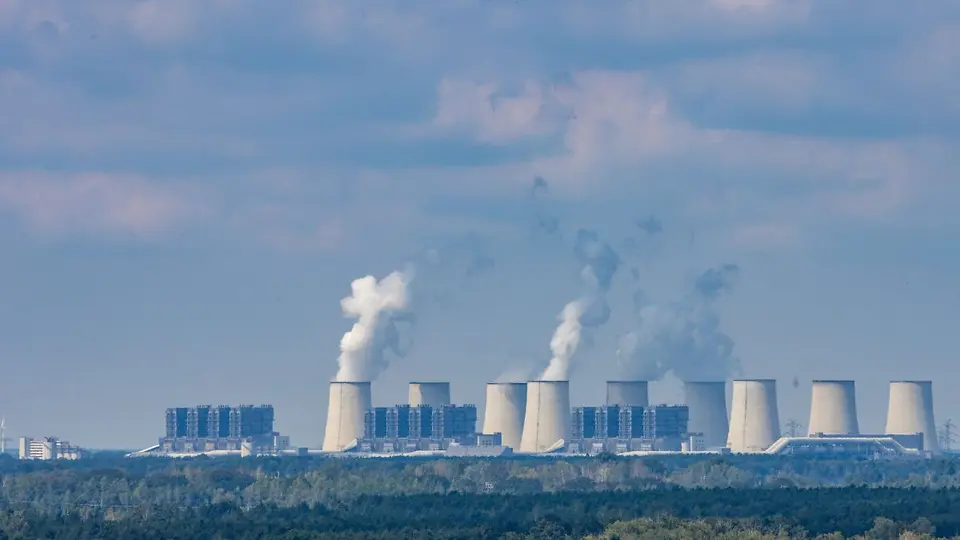
Attack on South Brandenburg Power Grid: Perpetrators Fire Conductive Material into High-Voltage Line
Homemade flying objects, similar to commercially available fireworks rockets, attacked the Turnow-Preilack substation in Spree-Neiße district in South Brandenburg on the morning of the incident. As n-tv reports, the previously unknown perpetrators succeeded in two cases in introducing conductive material into the ultra-high voltage line, thereby triggering a short circuit.
Brandenburg's Interior Minister Jan Redmann confirmed the sabotage acts: "In two cases, it was successful in introducing conductive material into the ultra-high voltage line. In several further cases, fortunately, it was not." No people were harmed. Minister-President Dietmar Woidke described the incident as an "attack attempt" and condemned the act.
Short Circuit and Power Plant Unit Taken Offline
The Turnow-Preilack substation serves the national and regional distribution of electricity from the neighbouring Jänschwalde coal-fired power plant, which feeds into the transmission network of 50Hertz. As a result of the attack, Block B of Jänschwalde power plant automatically shut down as a safety measure, according to energy company Leag. The block was expected to be reconnected to the grid by that evening.
Network operator 50Hertz stated that there had been no power cut for consumers. In part, the weather with sun and wind had also been responsible for this.
Two-Digit Number of Additional Devices Found
Around 07:30, a possible property damage to a line had been detected. Police secured evidence and the Brandenburg State Crime Office (LKA) took over the investigation. Authorities continued searching the extensive grounds for devices; bomb disposal experts were also on site.
Redmann spoke of a two-digit number of additional explosive devices that had been found. He explained that the perpetrators had used a propellant charge to fire conductive material into the high-voltage line. A fireball had been visible, which was presumably the short circuit that then spread into the ground. At the time of his statement, the minister could not confirm a detonated explosive device.
Network operator 50Hertz described the devices used as homemade flying objects similar to commercially available fireworks rockets. Redmann disagreed with this assessment: "Those were certainly not fireworks rockets, but rockets that were manufactured here for this purpose."
Investigation in All Directions – Motive Unclear
The motive of the perpetrators remains unclear. "Investigations are currently proceeding in all directions," said Redmann. He pointed to attacks from the left-wing extremist spectrum on the region's power grid in the past, but also ruled out that "foreign powers were behind this attack or third parties whom we do not yet know". It was clear that there had been systematic action. "The objective was certainly to bring about a short circuit through the conductive material."
Series of Sabotage Acts on Power Supply
The attack is part of a series of incidents affecting German electricity infrastructure. In January, alleged left-wing extremist perpetrators set fire to high-voltage lines near a power plant in the south-west of Berlin; around 45,000 households and more than 2,200 businesses, hospitals and care homes were without electricity for several days. For that arson attack, the so-called "Vulkan groups", which named fighting capitalism as their objective, claimed responsibility.
In March 2024, a group set fire to a power mast that also supplied the Tesla factory in Grünheide near Berlin. Production as a result of the sabotage was at a standstill for several days.
According to Leag, Jänschwalde power plant was constructed between 1976 and 1989 as the last new power plant built by the GDR. All power plant blocks are to be permanently shut down by the end of 2028.
Source: n-tv