Bisonó: UN did not determine how 50-year-old Dominican ammunition reached Haiti
Foreign Minister Víctor Bisonó said the UN report does not establish when or how .50 calibre rounds manufactured during the Trujillo era reached Haiti.
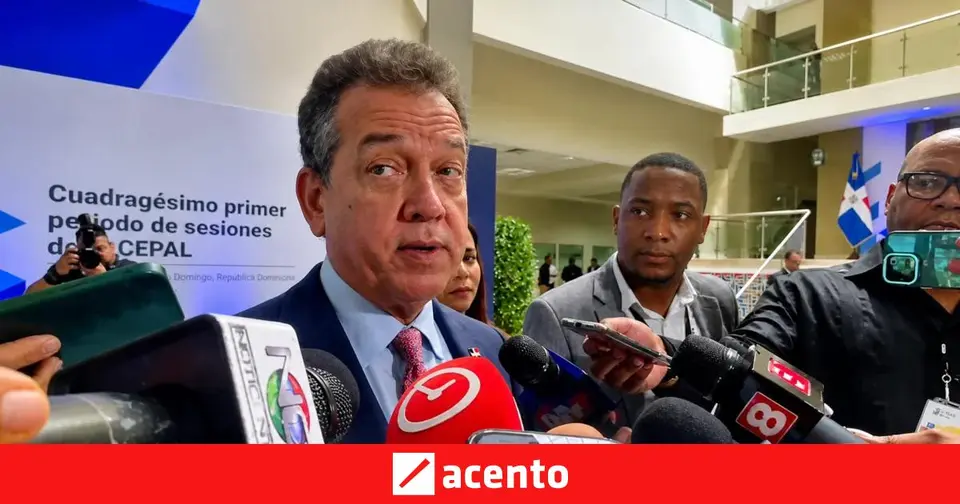
Dominican Foreign Minister Questions Scope of UN Report on Ammunition in Haiti
The Minister of Foreign Affairs, Víctor "Ito" Bisonó, stated that the United Nations report on ammunition of Dominican origin found in Haiti does not determine when or by what means the .50 calibre rounds in question reached that territory. According to acento.com.do, the official clarified that these are old munitions whose manufacture dates back to the era of Rafael Leónidas Trujillo's dictatorship, more than fifty years ago.
Bisonó maintained that there is no traceability that would allow establishing when that material was transferred to Haitian soil. The foreign minister also emphasised that the report itself recognises that the Dominican Republic alerted to the situation and cooperated with investigations by providing information to international organisations.
"The report recognises the effort and support in investigations provided by the Army, the Police and the Dominican State," Bisonó said.
The foreign minister's statements came following publication of the report by the Group of Experts of the UN Security Council, which documented ammunition of Dominican origin in the possession of the Haitian gang 400 Mawozo. The document also contains findings regarding cartridges of other calibres and manufacturing periods.
In a sample of 89 cartridges of 5.56 millimetre calibre linked to that criminal organisation, 25 bore the mark "ERD", corresponding to the Dominican Army, and another 16 presented marks compatible with ammunition diverted from the National Police's stockpiles. The report indicates that cartridges with the initials ERD were acquired in 2022 from a Colombian manufacturer.
The findings encompass ammunition from different periods and calibres, with antecedents and possible transfer routes that are not necessarily the same. The Ministry of Defence reported that it is keeping investigations open to determine how the .50 calibre ammunition reached Haiti and to identify possible responsibilities, although it warned that the time elapsed and administrative and institutional changes make it difficult to reconstruct its trajectory.
Bisonó insisted that the report should be read in its entirety and highlighted the explicit recognition of Dominican cooperation in the international investigations. The country's authorities have also investigated previous cases of irregular extraction of ammunition, including proceedings that involved members of the Army and the National Police.
Source: Google News DO — Crime