89 minors arrested in Barcelona facing judicial measures over October disturbances
Adolescents recruited via social media for looting in central Barcelona now face detention orders and supervised release. Their parents will have to pay for the damage caused.
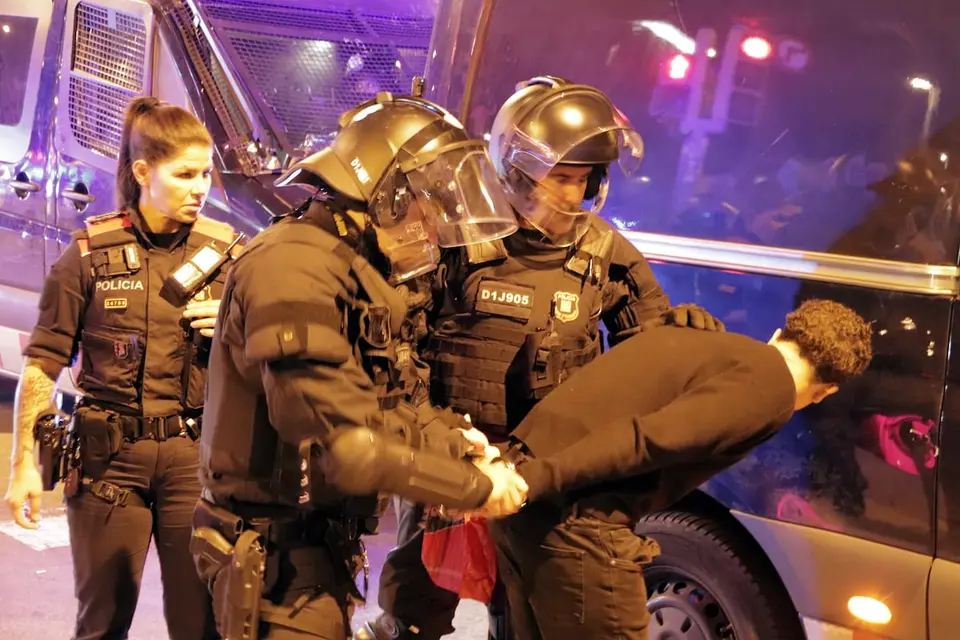
Minors arrested after Barcelona disturbances face severe judicial response
Francisco Tabuenca, prosecutor for juvenile cases, has been occupied for a week processing statements from 89 minors arrested for the disturbances and looting on 24 October in central Barcelona. According to El País, for the majority it constitutes their first encounter with the justice system. What began as a virtual adventure with apparently no consequences on social media has led to severe precautionary measures, imminent judicial proceedings and significant family tensions.
The minors account for 66 per cent of the 133 total arrests during the disturbances. It is the largest number of minors involved in acts of plunder or vandalism that Barcelona has recorded in this type of event. Youth participation has also occurred in serious incidents in France and Italy, sharing a central coincidence: recruitment through social media.
The digital recruitment network
Initial convocations circulated on TikTok profiles with generic allusions. Subsequently, the adolescents were directed to private WhatsApp and Telegram groups, where they received specific instructions to commit looting. Videos of the acts show very young people, some only 12 years old, who smile or flee from police as if participating in a video game, according to an attorney involved in the cases.
The profile of the arrested
The 89 minors arrested belong mostly to structured families, though with different degrees of economic vulnerability. According to the Mossos d'Esquadra, a third are foreign nationals and the rest Spanish, with a significant portion being descendants of immigrants. Except for seven, none had any previous criminal record. "It was the first time they had behaved that way," said this week in Parliament the Interior Councillor, Núria Parlon, emphasising the need to place families at the centre to prevent reprehensible conduct.
Heterogeneous motives
The crimes attributed vary according to each case: theft by force, assault on authority and public disorder. The motivations also differ. Judicial sources indicate that some came specifically to steal, others were dragged along by friends, and others simply wanted to see what would happen. One minor explained to his attorney: "I received a reel and went out of curiosity." Another, arrested outside the PC Componentes store, which was left destroyed, argued that everyone had their faces covered except him. A girl who was coming from catechism with her mother said that upon seeing people entering a shop and taking trainers, she also wanted to do it. She was arrested on the spot.
The shock of judicial reality
The dose of reality was harsh when they appeared before the judges. An attorney describes the case of a minor who was ordered to be held in a centre. "He went into shock, not reacting. He did not grasp what it was about because he did not seem aware of the gravity," he recounts.
The Prosecutor's Office for Minors has acted with "rigour", according to available data. Tabuenca and his team have requested precautionary measures in almost all cases: eight requests for detention in more serious cases and for minors with previous criminal history, and 70 supervised release measures that include a ban on approaching within one kilometre of any type of gathering or demonstration.
Strong and educational response
Some juvenile judges have sternly reprimanded the adolescents during hearings. "Do you know what you have done? Are you not ashamed, do you have nothing in your heads?", according to sources familiar with those sessions. The declared objective of the Prosecutor's Office and the Mossos is to send a clear message: "zero tolerance" for future convocations. In juvenile jurisdiction, the educational and preventive aspect predominates over the punitive, although the severity of the measures reflects the intention to curb any temptation to reoffend.
More than 30 shops were looted during the disturbances. The parents of the arrested minors will have to answer for the damage caused to shops and urban furniture, adding a material cost to the judicial consequences they already face.
Source: El País