Repentant ETA member testifies as protected witness and reveals organisation's leadership
A former ETA member with code TP-GC-003-DI-9/23 has given a statement to the Guardia Civil revealing the internal structure of ETA and its control over refugees abroad.
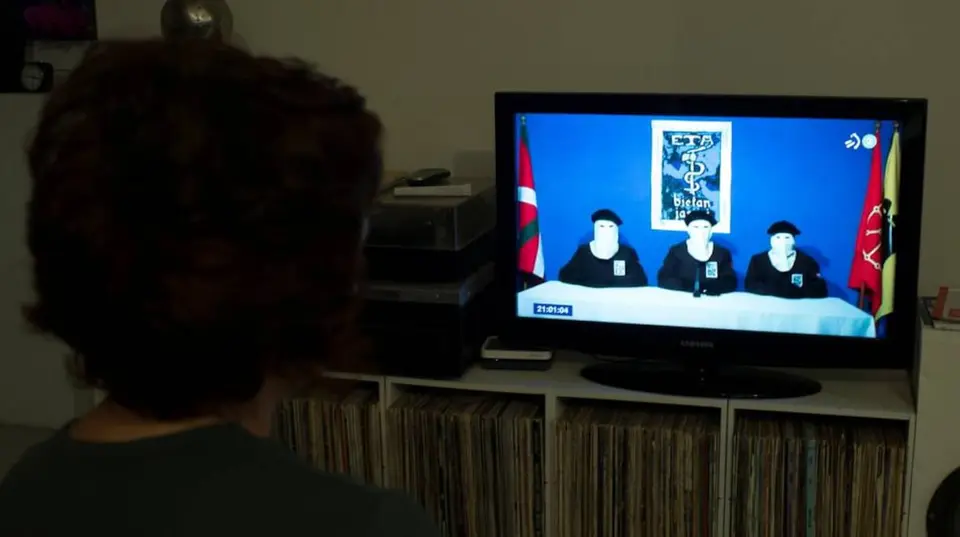
Protected witness reveals internal workings of ETA's leadership
A repentant ETA member has given a statement as a protected witness to the Guardia Civil, providing detailed information about the command structure of the terrorist organisation and the control it exercised over its militants who were refugees in third countries until its dissolution in 2018. According to judicial documents obtained by El País, the former ETA member appears in the armed institute's reports under the alphanumeric code TP-GC-003-DI-9/23 to preserve his anonymity.
In his statement, made in June 2023, the former terrorist told the two officers who took his testimony that he was taking this step because he wanted to "collaborate with justice". The Guardia Civil report highlights that his testimony reflects a "profound knowledge of the structure and functioning of the terrorist organisation".
Investigation at the National Audience into the Collective of Fugitives
The testimony was recently incorporated into the case being heard at the National Audience since 2024 concerning the self-styled Basque Political Fugitive Collective (EIPK in its Basque language acronym). This body, subordinate to the leadership of the defunct organisation, would have been used to keep ETA members settled abroad under "control". The case, driven forward by the Public Prosecution Service and the victims' association Dignity and Justice (DyJ) as popular accusation, already has seven defendants.
The investigation is looking into the possible presence in Venezuela of 14 members who fled the organisation, including Iñaki de Juana Chaos and former ETA leader José Luis Eciolaza Galán, alias Dienteputo.
The Guardia Civil prioritises the search for collaborators among former ETA members
The statement by this repentant member is part of a broader strategy by the Guardia Civil's Information Command, which is responsible for counter-terrorism efforts. According to a report from last September incorporated into this case, locating former members of ETA willing to "collaborate with justice on a voluntary and disinterested basis" has become "one of the main investigative tasks" in recent years, with the aim of clarifying attacks that still have no known perpetrator.
Investigators' interest is focused particularly on those who were part of "armed commandos" or who maintained direct or indirect contact with ETA leaders, whether as members of its executive structures or of its apparatus. The case of former members expelled from the organisation is also being studied, as well as those who, after serving their sentences, decided to break with the organisation.
Precedents: two other former ETA members already collaborated in 2023
This is not the first time former ETA members have become protected witnesses. In March 2023, two other former ETA members took the same step. One had belonged to a legal commando—made up of members not on file who carried out attacks whilst appearing to continue with their everyday lives—between 1993 and his detention in 2001. The second was in the organisation in the 1980s.
Their testimonies were incorporated into at least nine cases, including the reopened investigations into the attack on Miguel Ángel Blanco, the People's Party councillor from Ermua (Bizkaia) who was kidnapped and murdered in July 1997, and into the killing of Gregorio Ordóñez, a People's Party councillor from San Sebastián whom an ETA commando shot in the back of the head in 1995.
However, none of those witnesses had been as close to the organisation's leadership as the current repentant member. According to what he himself told the Guardia Civil, he joined ETA "in the late 1970s" to join a commando, and in the mid-1980s he went on to take on "other types of different functions" for a decade, until finally seeking refuge abroad.
A leadership of 12 people and five on the Executive Committee
In his statement, the protected witness describes an ETA "leadership" made up of 12 people during the years when he was part of the organisation. Of these, five made up the band's "Executive Committee", known as Zuzendaritza Batzordea (Zuba). It was these latter who made decisions on "actions of significance, such as terrorist actions, kidnappings, attacks, et cetera", according to his own words.
The former ETA member also describes several internal apparatus: the "political", the "military", the "international" and the "logistical", with departments dependent on each one. Among these were a section for courses—"which taught us how to make bombs and handle devices"—another for safe houses, the border department (mugas) and the one called manguis, "which was in charge of stealing vehicles".
Josu Ternera heading the international apparatus
The protected witness attaches special importance to the international apparatus, which was responsible for acquiring weapons, explosives and other material, as well as forging documentation and managing visas for refugees leaving for abroad. "The person running this apparatus in my time was Josu Ternera", he stated, in reference to José Antonio Urrutikoetxea, leader of the defunct ETA who is currently in France under judicial supervision, awaiting a decision on his legal situation and whether he will be extradited to Spain.
Within that international apparatus, according to the repentant member, there existed a "Committee of Deportees" tasked with supervising ETA members hidden in third countries. "They dictated our behaviour and our everyday activities. They emphasised to us that we should maintain a certain cohesion", he stated, according to the judicial documents reported by El País.
Source: El País