Fourteen drug traffickers from the Port of Valencia receive sentences of up to 16 years after case reopened with Sky messages
A Valencia court imposes prison sentences of between 7 and 16 years on 14 members of a gang that smuggled cocaine through the port. The ruling is based on messages from the encrypted Sky ECC network that had previously been annulled.
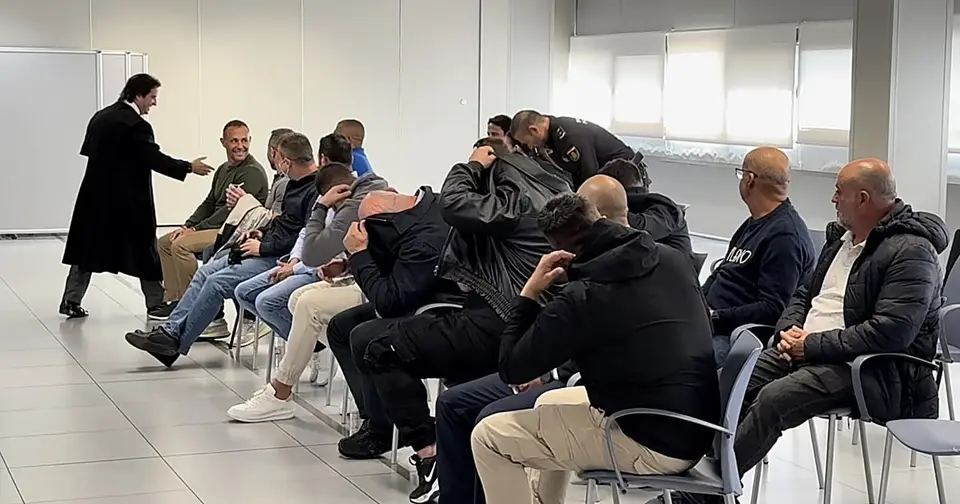
Fourteen drug traffickers from the Port of Valencia receive sentences of up to 16 years after case reopened with Sky messages
A court in the Valencian capital has sentenced fourteen people linked to a criminal organisation that trafficked in drugs through the Port of Valencia. The sentences range from seven to sixteen years of imprisonment.
The ruling came after the TSJCV (Valencian High Court of Justice) ordered the Audiencia to review its previous acquittal. In the first ruling, the court had dismissed conversations extracted from the encrypted Sky ECC application as valid evidence. The Valencian high court, however, considered that such data should be assessed as a whole together with the other evidence.
The judges imposed the harshest sentence—sixteen years of imprisonment and sixty million euros—on the alleged leader of the cell. His second-in-command was given thirteen and a half years in prison plus a fifty-five million euro fine. The remaining sentences are distributed as follows: six individuals receive ten and a half years; four, ten years and three months; and two, seven years. All of them share an additional financial penalty of 52.8 million euros.
The operation dates back to August 2020, when a routine inspection at the port terminal discovered 117.443 kilos of cocaine with a purity of approximately 71 per cent inside a container. Subsequently, investigators determined that the shipment was part of a much larger consignment—approximately 1,650 kilos—distributed across two containers using the system known as ripp-off, which allows drugs to be concealed among legal merchandise for recovery before it reaches its intended recipient.
From that total cargo, the organisation managed to extract 1,528 kilos. The whereabouts of approximately five additional kilos, which the defendants themselves reported missing during the count, remain unexplained.
The investigation attributes to the main leader contact with Colombian suppliers, negotiation of the price, and logistical coordination, which included the rental of an industrial warehouse to store the substance. During the recovery phase, several of those involved—including three port workers—maintained intensive messaging activity that was key to the reconstruction of events.
Information from ABC.
Source: ABC