Cerdán publishes prison memoirs without addressing corruption allegations
The former PSOE Secretary of Organisation releases a book about his time in Soto del Real prison in which he presents himself as a victim of a political "narrative".
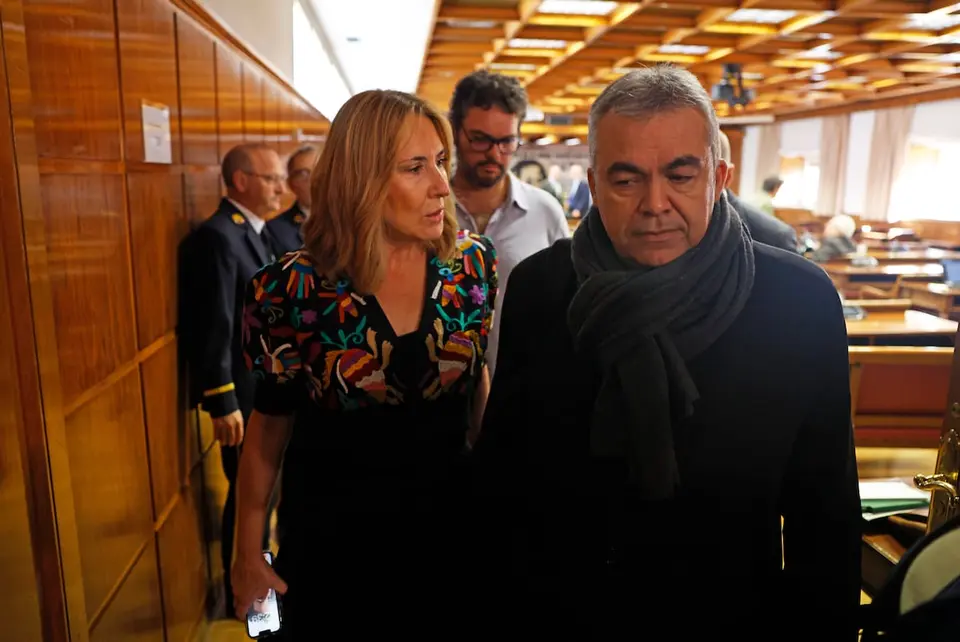
Cerdán's book: preventive detention, pacts with Junts and silence on corruption
Santos Cerdán spent his first week in Soto del Real prison without television. He did not want to hear what was being said about him on the other side of the nine square metres of his cell. According to El País, the former PSOE Secretary of Organisation publishes this Tuesday La Caída: poder, relato y destrucción en la era del juicio político, a 94-page book in which he speaks for the first time about the months he spent in preventive detention—from June to November 2025—and in which he presents himself as a victim of a narrative constructed against him. The serious corruption allegations weighing on him do not appear in the text.
"I did not go from being innocent to guilty. I went from being a person to being a version," writes Cerdán, who was President Pedro Sánchez's trusted aide for the most delicate negotiations with the PNV and Junts. The work goes on sale exactly one year after Supreme Court judge Leopoldo Puente ordered his imprisonment on grounds of risk of evidence destruction. Cerdán maintains that he still does not understand what evidence he could have destroyed when, as he points out, his devices were not immediately downloaded nor was the Madrid home he shared with his wife and daughter searched.
From Milagro to the centre of power
The Navarrese politician traces in the book a trajectory that begins in 1999, when he started in municipal politics in Milagro, a municipality of some 3,700 residents. He describes how he took on greater responsibilities until 2017, when he moved to Madrid at Sánchez's behest. "For years I lived at the centre of power. My routine took place between high-level meetings," he details. He recalls being the only regional Secretary of Organisation to back Sánchez's candidacy when "very few believed" in it.
When Sánchez brought him into the Federal Executive Commission, Cerdán took on, in his own words, "key responsibilities" in negotiations with the PNV and EH Bildu. He was in charge of managing the motion of no-confidence with Aitor Esteban's party following the Gürtel case ruling. "With the PNV only Santi talks, and Santi only reports to me," Sánchez told him, according to the book.
The photo with Puigdemont and the "background noise"
The problems, in Cerdán's view, began when pacts with Junts were forged for the second legislature, a moment he describes as a "before and after in Spain and also in my life". Negotiations over the Amnesty Law were "hard" and came unstuck on several occasions, with "days of extreme tension". The visit to Carles Puigdemont in Brussels and the photo that was subsequently released placed him, he recounts, in a media spotlight from which he could no longer escape. The headlines that followed he described at the time as "background noise".
On 12 June 2025, during what would be his last plenary session in Parliament, Cerdán received a report from the Civil Guard's Central Operational Unit (UCO) with recordings and evidence of his alleged involvement in a scheme of rigged public works contracts through the Ministry of Transport, then headed by José Luis Ábalos—who has just been sentenced to more than 24 years in prison. That same afternoon he made a decision: "Not because I acknowledge what it says, but because I understand what is coming. I draft my resignation as Secretary of Organisation and decide that I am going to hand in my seat as deputy."
He explains that Sánchez called him to La Moncloa, where he went, but emphasises that the president never asked him to resign at any point. He describes his fall as "personal, emotional and vital". "In a matter of days I went from debating strategies with the Prime Minister to being accused of very serious crimes and crossing the threshold of a preventive detention prison. All of it broadcast live," he writes.
The thesis of "political trial"
To explain what happened to him, Cerdán draws on the book Los ingenieros del caos, by writer Giuliano da Emoli, which describes a logic of information saturation and emotional activation. He argues that this method, associated with the environment of far-right strategist Steve Bannon, operated in his case. He speaks of "the criminal route as a weapon" and draws parallels with judicial proceedings against Dilma Rousseff and Lula da Silva in Brazil, or against former Portuguese Prime Minister António Costa. "In politics, when you upset enough people, you cease to be useful. You become a problem and problems are not managed. They are eliminated," he states.
What the book does not say
The volume does not address the allegations for which judge Ismael Moreno is keeping him under investigation: the receipt of allegedly illegal commissions linked to contracts with construction companies. Nor does it mention the fresh charge agreed by judge Santiago Pedraz, who attributes to him having organised an operation to obstruct justice and gather compromising information about officials responsible for the fight against corruption.
Cerdán does not detail his relationship with Koldo García, the ministerial adviser who, according to the established facts of the Supreme Court ruling, was introduced by him personally into the Ministry of Transport, identified as the epicentre of the corruption scheme. The book also makes no mention of other investigated individuals with whom he shares cases before the National Court, such as Leire Díez or Navarrese businessman Joseba Antxon Alonso, described as a friend of his. The former PSOE Secretary of Organisation makes no exercise of self-criticism in the published pages.
Source: El País